289-Million-Year-Old Fossil Shows How We Learned to Breathe
Scientists discovered a perfectly preserved reptile fossil in Oklahoma that reveals how land animals, including humans, developed the ability to breathe air efficiently. This tiny creature from 289 million years ago had the earliest known breathing system like ours.
A mummified reptile smaller than your hand just rewrote the story of how we breathe.
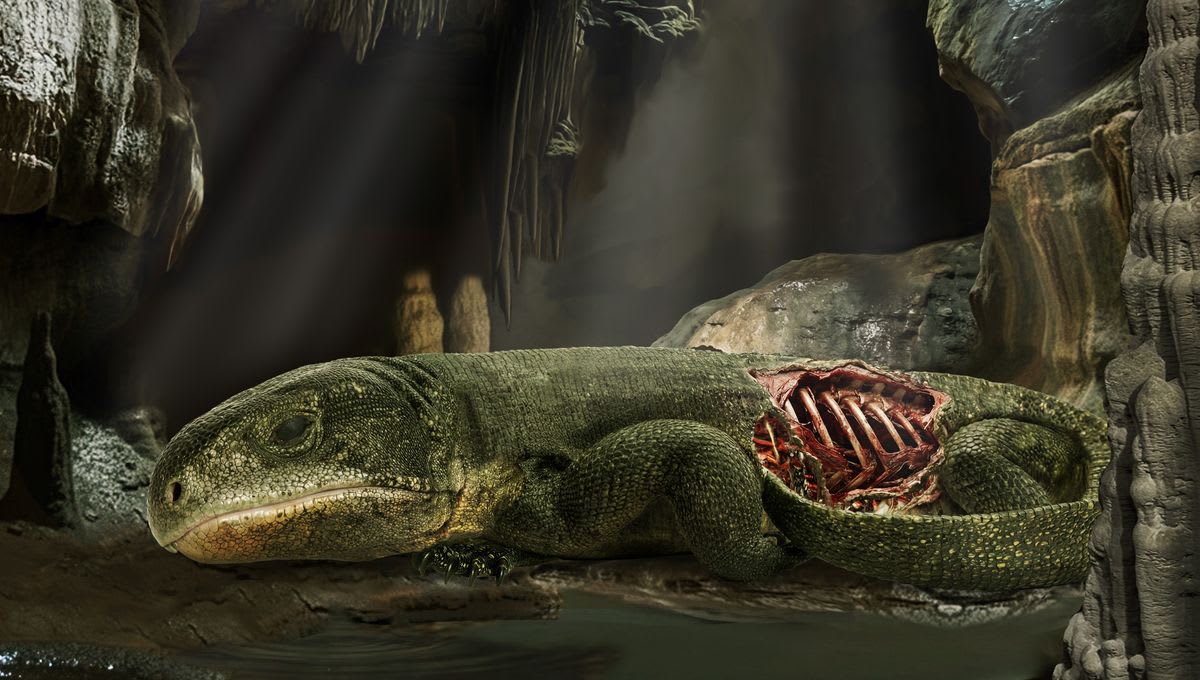
Researchers found the remains of Captorhinus aguti, a lizard-like creature, in a cave near Richards Spur, Oklahoma. The animal died 289 million years ago during the Permian period, but extraordinary cave conditions preserved not just its bones but also its skin, cartilage, and even remnants of protein.
That protein preservation is remarkable. The previous record holder for fossilized proteins is almost 100 million years younger than this specimen.
Ethan Mooney, a graduate researcher from Harvard University, discovered the fossil while studying at the University of Toronto. He worked with Professor Robert Reisz to analyze the specimen using specialized neutron computed tomography in Australia, a technique that let them peek inside the rock without damaging the ancient creature.
What they found changed our understanding of early life on land. The fossil revealed a segmented cartilaginous sternum, specialized ribs, and structures connecting the ribcage to the shoulder girdle.
"I started to see all these structures wrapped around the bones," Mooney said. The scaly skin had a wonderful accordion-like texture with concentric bands covering much of the body from the torso up to the neck.
This was the breakthrough. The team could reconstruct an entire ancient breathing system, one that worked like ours rather than the throat-pumping method amphibians still use today.
Why This Inspires
This tiny fossil represents a turning point in life on Earth. Captorhinus belongs to the amniote family tree, the group that eventually gave rise to all reptiles, birds, and mammals, including us.
The breathing system they discovered allowed these early animals to adopt much more active lifestyles. Before this innovation, land animals were limited by inefficient breathing that required them to use their throat muscles to pump air.
Rib-assisted breathing was a game changer. It freed up energy, allowed for greater endurance, and opened up possibilities for animals to thrive in diverse environments across the planet.
The fossil now rests in the Royal Ontario Museum in Toronto, available for future scientists to study. The Richards Spur cave system continues to yield treasures, holding the most diverse collection of ancient land vertebrates from the late Paleozoic era.
One small creature's final resting place became a window into the moment life on land truly began to flourish.
More Images



Based on reporting by Google News - Science
This story was written by BrightWire based on verified news reports.
Spread the positivity!
Share this good news with someone who needs it
%2Fhttps%3A%2F%2Ftf-cmsv2-smithsonianmag-media.s3.amazonaws.com%2Faccounts%2Fheadshot%2FSara_-_Headshot_thumbnail.png)