300-Million-Year-Old Fossils Rewrite Life on Land Story
Scientists in Chicago discovered perfectly preserved baby fossils that reveal early land animals skipped the tadpole stage entirely. This groundbreaking find rewrites how we understand the journey from water to land.
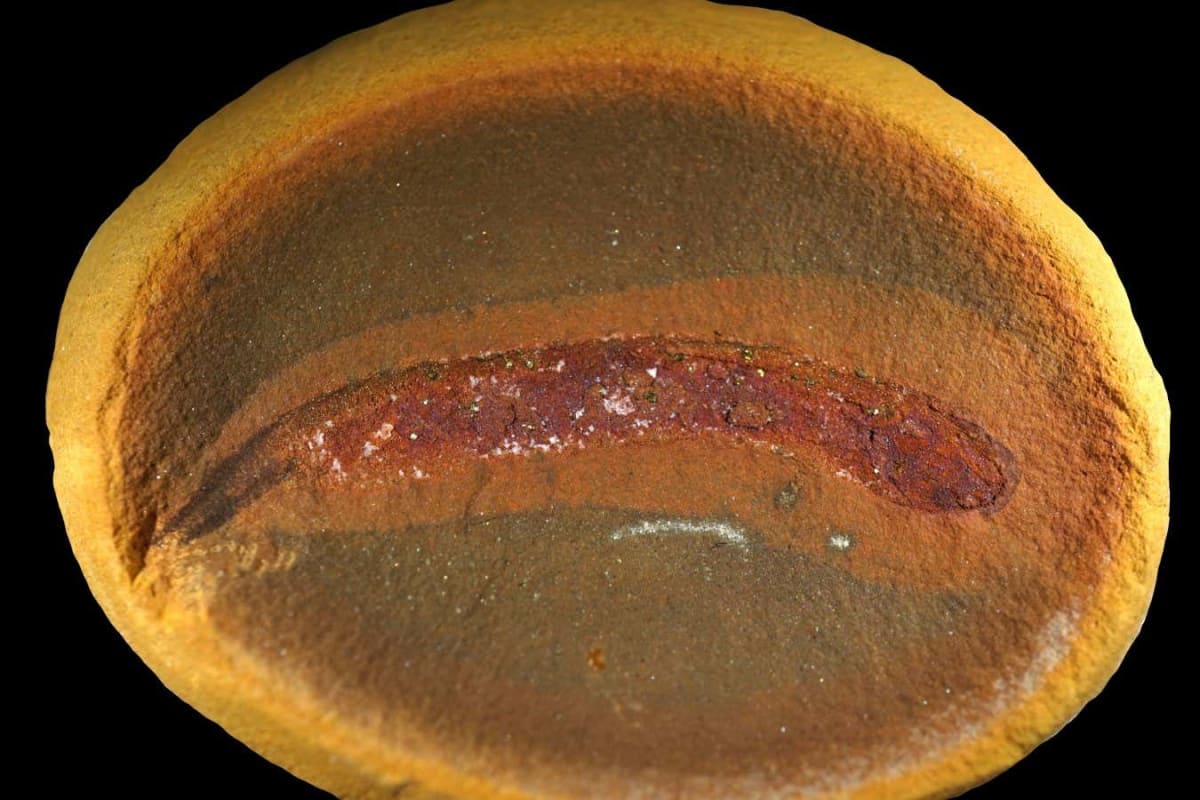
Scientists just uncovered something amazing hidden in a museum drawer for decades: baby fossils so perfectly preserved they still show traces of egg yolk, revealing a stunning surprise about how life conquered land.
Researchers at the Field Museum of Natural History in Chicago examined fossils collected between the 1960s and 1990s from Mazon Creek, Illinois. The tiny creatures lived 308 million years ago during the Carboniferous Period, when our earliest four-legged ancestors were just learning to walk on land.
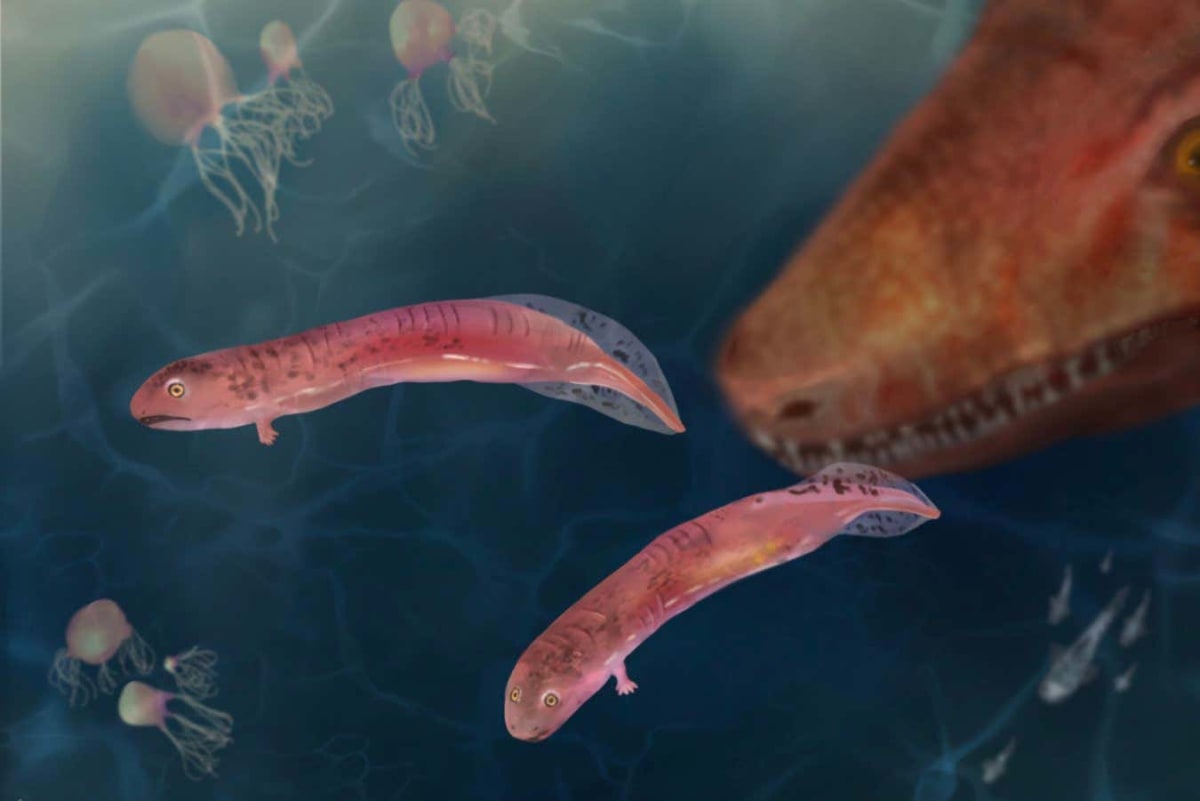
The fossils belonged to embolomeres, massive 2-meter-long predators that dominated ancient waters but could clamber onto land with small legs. Scientists Jason Pardo and Arjan Mann found two baby embolomeres just 2 centimeters long, preserved so exquisitely they could see soft tissues and even the yolk sac still attached.
Here's what stunned them: these babies looked like miniature adults. They had no external gills like tadpoles do, and their yolk sacs sat outside their bodies like fish, not inside like amphibians.
For years, scientists assumed our earliest land-dwelling ancestors went through dramatic transformations like modern frogs and salamanders. Baby tadpoles look nothing like adult frogs, breathing underwater with gills before sprouting legs and lungs.
But these fossils tell a different story. "The absence of external gills across early development in these animals is the smoking gun," says Pardo.
The team examined two other early tetrapod species from the same time and place. None showed evidence of a tadpole stage either.
Why This Inspires
This discovery reveals that conquering land didn't require the dramatic metamorphosis we see in modern amphibians. Our earliest terrestrial ancestors grew more like humans do: getting bigger and changing proportions, but fundamentally working the same way from birth to adulthood.
The finding fills a crucial gap in understanding how vertebrates made one of evolution's most important transitions. It shows that ancient four-limbed creatures found a simpler, more direct path from egg to adult, challenging assumptions scientists have held for generations.
Sometimes the most important discoveries sit waiting patiently in museum collections, ready to rewrite history when the right eyes finally see them.
More Images

Based on reporting by New Scientist
This story was written by BrightWire based on verified news reports.
Spread the positivity!
Share this good news with someone who needs it