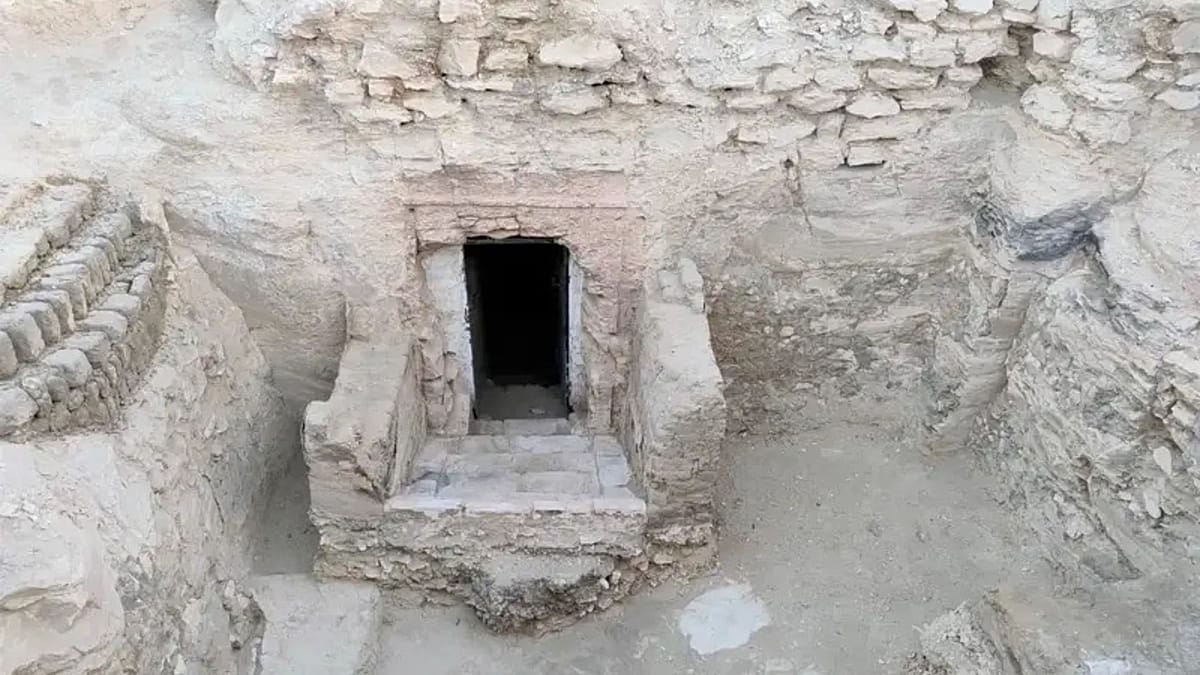
3,000-Year-Old Egyptian Tomb Uncovered Near Luxor
Dutch archaeologists have discovered a stunning 3,000-year-old tomb near Luxor, Egypt, filled with vivid paintings showing ancient beliefs about the afterlife. The tomb belonged to a man named Paser and features colorful scenes of worship and eternal feasting that have survived three millennia.
After years of careful excavation, researchers from Leiden University have uncovered a breathtaking window into ancient Egyptian life that's been hidden beneath the desert for 3,000 years.
The tomb, discovered in the Sheikh Abd El-Qurna necropolis near Luxor, belongs to a man named Paser who lived during Egypt's Ramesside period, when pharaohs like Ramesses II ruled the land. Inside, the walls tell stories through vivid paintings that have survived remarkably well.
The artwork shows Paser worshipping Egyptian gods and sitting beside his wife at an offering table. These weren't just decorations. Ancient Egyptians believed these painted scenes would provide the deceased with an eternal supply of food and drink in the afterlife.
Led by archaeologist Carina van den Hoven, the Dutch team has been working at the site since 2018 in partnership with Egypt's Supreme Council of Antiquities. The tomb follows the classic layout of elite New Kingdom burials, with an open courtyard leading to a rock-cut chapel and underground burial chambers.
Researchers also found a mudbrick bench designed to hold a funerary stela and a staircase descending to the entrance. The site sits within the UNESCO-listed Theban Necropolis, one of ancient Egypt's most important burial grounds for priests and high-ranking officials.
Why This Inspires
This discovery reminds us that human hopes and dreams connect us across vast stretches of time. Paser wanted to be remembered, to ensure his loved ones were cared for in the afterlife, and to honor the gods he believed in. Three thousand years later, his story is being told again.
The team expects to find even more painted decoration as conservators carefully remove thin layers of dirt covering parts of the walls. Each brushstroke revealed adds another detail to our understanding of how ancient Egyptians viewed life, death, and eternity.
Hisham Al-Leithy, secretary-general of the Supreme Council of Antiquities, confirmed the team will continue documenting and studying the tomb to fully reconstruct the identities of those buried within.
In an age when so much feels temporary, there's something deeply moving about art and devotion that endures for millennia, still vibrant enough to inspire wonder today.
More Images
Based on reporting by Euronews
This story was written by BrightWire based on verified news reports.
Spread the positivity!
Share this good news with someone who needs it