307M-Year-Old Fossil Rewrites Plant-Eating History
Scientists discovered a football-sized ancient animal that munched plants 307 million years ago, pushing back the timeline of vegetarian eating by millions of years. The fossil skull from Nova Scotia reveals nature's earliest veggie experiments happened way sooner than we thought.
A tiny skull found in Nova Scotia is rewriting the story of when animals first decided to go green.
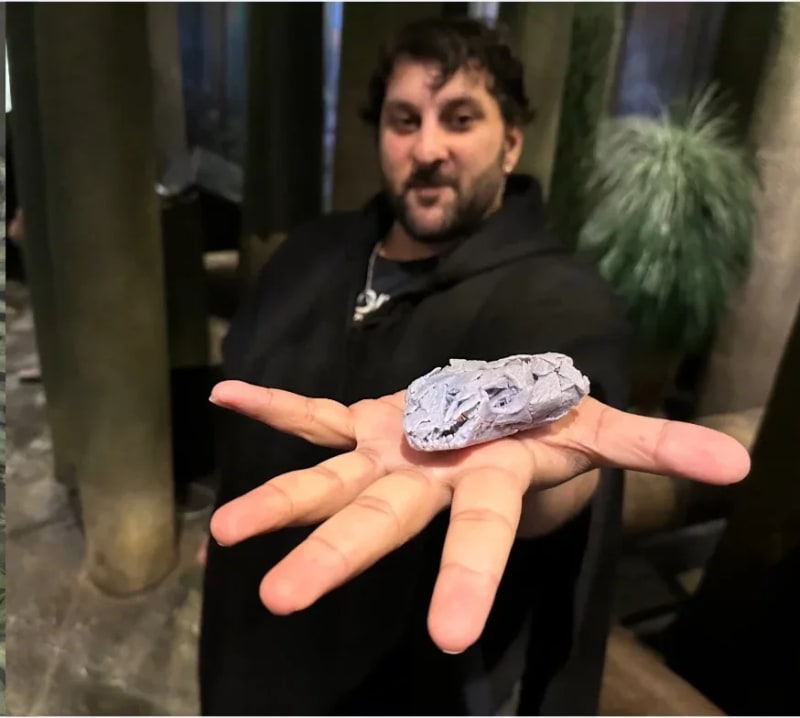
Scientists have discovered Tyrannoroter heberti, a 307-million-year-old creature that was one of the first backboned land animals to eat plants. The fossil pushes back our understanding of herbivory by millions of years, showing that the earliest four-legged land animals were already experimenting with vegetarian diets.
The skull was discovered by Brian Hebert, an amateur paleontologist, inside a fossilized tree stump on Cape Breton Island. He was racing against the world's highest tides, working on rocky cliffs where the ocean could sweep in at any moment.
The animal itself was about a foot long and shaped like an American football. When scientists at Chicago's Field Museum scanned the fossilized skull with CT imaging, they found something remarkable: a mouth packed with specialized teeth built for grinding tough plant material.
The skull had fossilized shut, so the team couldn't see inside until they created a 3D model from X-ray slices. That's when they spotted extra teeth on the roof of the mouth, arranged like a grinding toolkit perfectly designed to mash leaves and stems.
These ancient creatures didn't survive on salad alone, though. Scientists believe Tyrannoroter likely snacked on insects and small animals alongside its vegetation, making it more of an omnivore than a strict vegetarian.
Why This Inspires
This discovery shows us that innovation in nature started earlier than we imagined. For millions of years after animals moved onto land, they mostly ate each other. Finding evidence that some brave creatures were trying something completely different 307 million years ago reminds us that experimentation and adaptation have always been part of life's story.
The research also reveals how modern ecosystems took shape, with plants at the bottom, plant eaters in the middle, and predators at the top. Understanding when this layered system began helps scientists piece together how life on Earth evolved into the rich, complex web we see today.
Even better, the fossil came from an unlikely hero: an amateur scientist working dangerous cliffs against racing tides. Brian Hebert's dedication to exploring his local landscape led to a discovery that's changing textbooks worldwide.
This little football-shaped creature proves that some of life's biggest leaps forward start with small experiments in trying something new.
More Images



Based on reporting by Google: fossil discovery
This story was written by BrightWire based on verified news reports.
Spread the positivity!
Share this good news with someone who needs it