Scientists Unlock "Impossible" Nanocrystals for New Tech
University of Chicago chemists just solved a chemistry puzzle that stumped researchers for decades, creating tiny crystals from tough materials that could transform everything from flexible phones to medical implants. The breakthrough opens doors to technologies scientists could only dream about before.
Imagine materials so tough they've been "impossible" to work with, suddenly becoming the building blocks for bendable electronics you could print like photos or weave into clothing.
That's exactly what chemists at the University of Chicago and Argonne National Laboratory just achieved. They figured out how to create nanocrystals from metal nitrides, a group of incredibly useful materials that had resisted every previous attempt at this kind of synthesis.
Metal nitrides are already everywhere in our lives. Gallium nitride lights up LED bulbs and laptop screens. Titanium nitride makes medical implants safer. Niobium nitride powers industrial superconductors.
But until now, these materials could only be made into rigid films. The new breakthrough changes everything.
"This expands the boundaries of the field beyond what were previously fundamental constraints," said Dmitri Talapin, chemistry professor at UChicago and senior author of the study published in Nature. The team successfully created nanocrystals from nearly a dozen different metal nitride materials.
The challenge came down to chemistry stubbornness. Metal nitrides form such strong bonds that their atoms refuse to rearrange properly during crystal formation. Picture dancers who won't change partners during a square dance, and you get the problem.
"If bonds cannot break during this process, that's a death sentence for nanocrystals," Talapin explained. "Once you make an incorrect bond, everything goes south."
The solution required completely rethinking the approach. Graduate student Ruiming Lin and the team discovered a "sweet spot" combining molten salts, precise temperatures, and ammonia pressure that convinced those stubborn bonds to relax and reform correctly.
"This process is very unusual. It goes against every bit of common sense in the field," said Talapin.
The Ripple Effect
The implications ripple far beyond the lab. These nanocrystals could be mixed into polymers, printed using inkjet techniques, or woven into fabrics. Imagine phones that bend without breaking, medical implants customized with precision printing, or clothing that generates light.
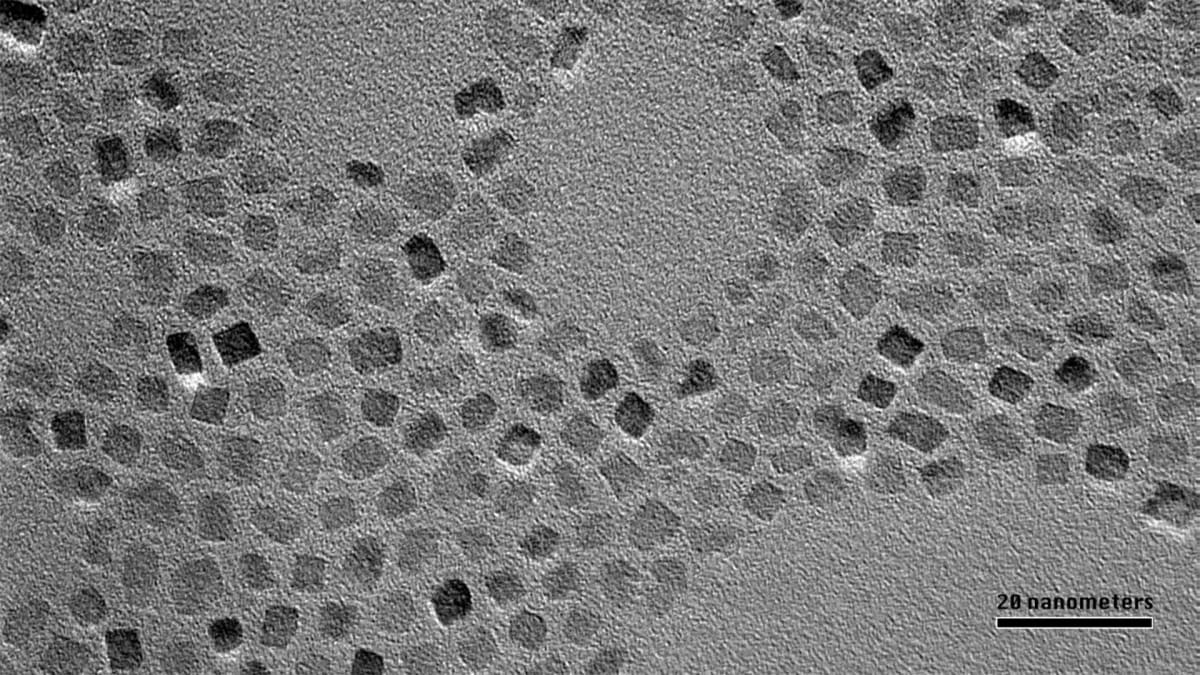
"You always hope something you discovered will wind up in applications," said Lin, remembering the first time he saw the crystals through an electron microscope. "I think there will be many uses."
The materials involved are both powerful and affordable, making widespread adoption realistic rather than a distant dream. What was once confined to rigid industrial applications could soon appear in everyday flexible devices.
A chemistry problem that seemed unsolvable just opened up an entirely new world of possibilities.
Based on reporting by Science Daily - Technology
This story was written by BrightWire based on verified news reports.
Spread the positivity!
Share this good news with someone who needs it