315-Million-Year-Old Fossil May Be First Plant-Eating Animal
Scientists in Canada discovered a football-sized creature with specialized teeth that could grind plants 315 million years ago, potentially rewriting the timeline of when animals first became vegetarians. The fossil, found embedded in an ancient tree stump on Cape Breton Island, suggests plant-eating evolved millions of years earlier than previously thought.
A tiny ancient creature no bigger than a football is challenging everything scientists thought they knew about when animals first started munching on plants. The fossil discovery on Cape Breton Island in Nova Scotia reveals that herbivory may have emerged far earlier than anyone imagined.
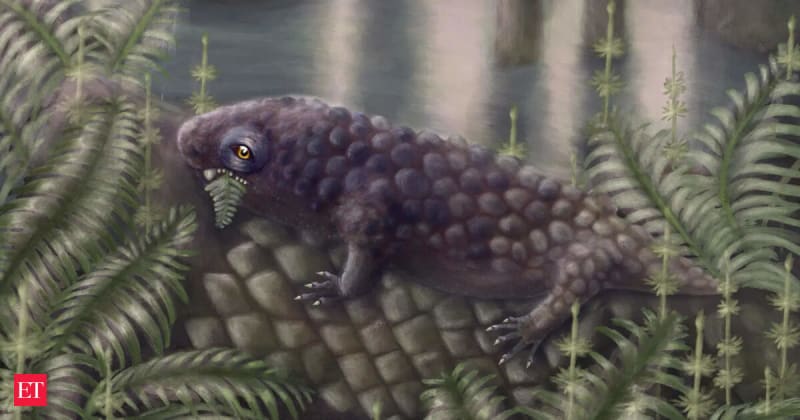
Meet Tyrannoroter heberti, a lizard-like animal that lived 315 million years ago during the late Carboniferous Period. Paleontologist Brian Hebert found much of its skull embedded in the roots of a massive petrified tree stump along a seaside cliff about nine years ago.
The species name honors Hebert's discovery, while "Tyrannoroter" means "tyrant digger." Despite the fierce name, this creature was only about five to 10 centimeters long with a squat body and large rib cage built for digging.
What makes this fossil extraordinary are its teeth. Tyrannoroter had multiple rows of "Hershey-kiss" shaped chompers designed specifically for grinding tough plant matter like shoots and leaves. This dental design was incredibly advanced for its time and represents a major evolutionary leap.
Before this discovery, scientists believed the earliest plant-eating four-legged animal was Desmatodon, which lived 303 to 306 million years ago. If confirmed as an herbivore, Tyrannoroter pushes that timeline back by about 12 million years.
The timing matters because when Tyrannoroter lived, most four-legged animals were still eating insects and other creatures. The ability to digest plants hadn't yet evolved in most species, making this little digger a true pioneer.
Tyrannoroter belonged to microsaurs, small creatures that came before reptiles and mammals but were part of the same broader family tree. These animals first emerged on land about 375 million years ago during the Devonian Period.
The Ripple Effect
This discovery does more than add another name to the fossil record. It reveals how quickly evolution can work when animals face new challenges and opportunities.
The shift from meat-eating to plant-eating represented a massive change in how animals interacted with their environment. Plants offered an abundant food source that was literally everywhere, but accessing that nutrition required specialized equipment like grinding teeth and different digestive systems.
By showing that herbivory emerged earlier than expected, Tyrannoroter suggests that evolution experimented with plant-eating multiple times across different animal groups. This trial-and-error process eventually led to the incredible diversity of plant-eaters we see today, from elephants to rabbits.
The study, published in Nature Ecology and Evolution, reshapes our understanding of life's timeline on Earth. Lead author Arjan Mann notes that finding plant-adapted teeth this early in the fossil record changes how scientists think about dietary evolution.
Every fossil tells a story about life finding new ways to survive and thrive, even 315 million years ago.
More Images



Based on reporting by Google: fossil discovery
This story was written by BrightWire based on verified news reports.
Spread the positivity!
Share this good news with someone who needs it