500-Million-Year-Old Fossil Fills Gap in Life's Story
A spiky fossil that sat unnoticed in a museum drawer for 60 years is rewriting what scientists thought was a dark chapter in Earth's history. The discovery suggests ancient oceans teemed with life during a period once believed to be nearly barren.
Scientists just turned a supposed extinction crisis into a story of hidden abundance, all thanks to a forgotten fossil collecting dust since 1962.
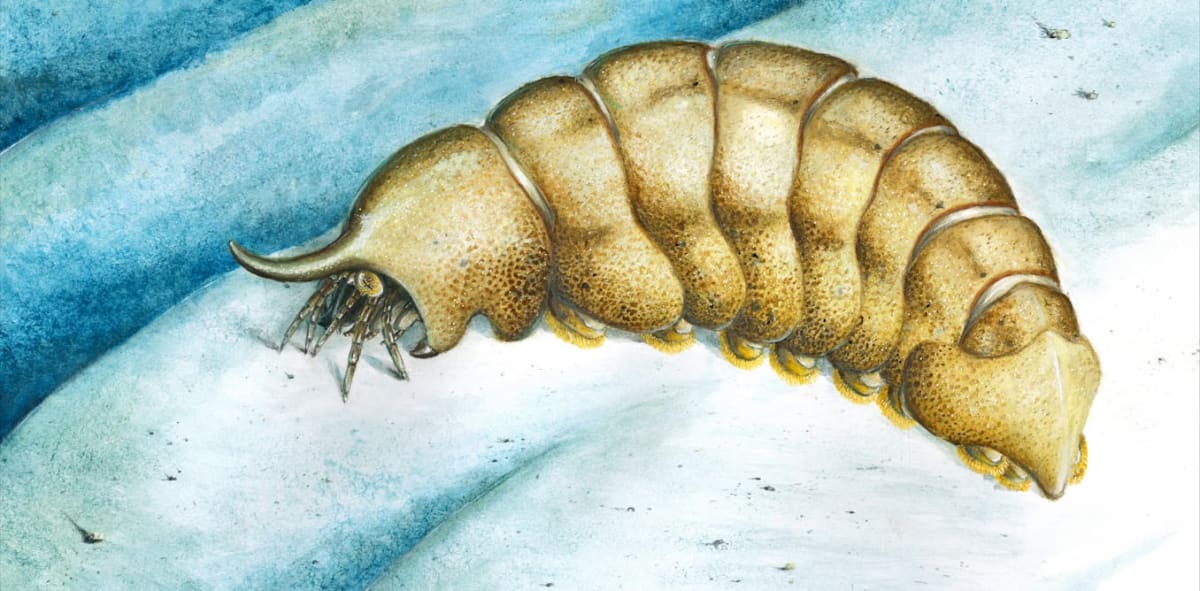
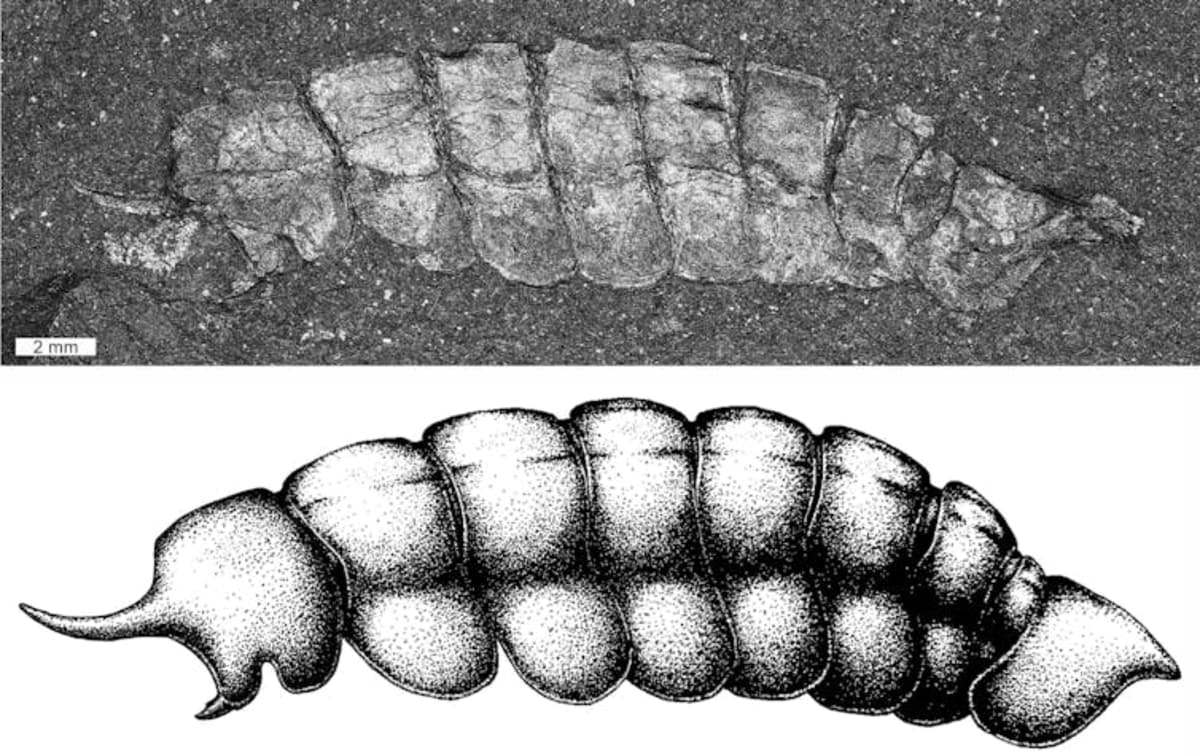
Researchers studying rocks from Quebec have identified Magnicornaspis garwoodi, a 500-million-year-old arthropod with two impressive forward-pointing spines on its head. The creature belongs to a rare group of ancient animals related to modern spiders and scorpions, and it comes from a time paleontologists call the "Furongian gap."
For years, scientists thought this period represented a biological collapse. The fossil record seemed to go nearly silent during this slice of the Cambrian period, sandwiched between two explosions of biodiversity. Researchers blamed environmental disasters, changing ocean chemistry, plummeting oxygen levels, or cooling climates for wiping out most life.
But this new fossil tells a different story. The specimen was collected during routine geological mapping near Sainte-Anne-de-la-Pocatière and then sat largely ignored in the Smithsonian National Museum of Natural History in Washington DC. Nobody realized its significance until now.
The fossil came from mudstones deposited in deep marine environments, the kind of quiet offshore conditions where fine sediment settles slowly. These rocks have received little attention from paleontologists, which turns out to be exactly the problem.
The discovery reveals something hopeful about scientific knowledge: sometimes gaps in our understanding say more about where we've looked than what actually existed. Recent fossil finds from China and Sweden during the same time period support this idea. Ancient ecosystems may have remained diverse and complex throughout the late Cambrian, thriving in places scientists simply hadn't thought to search carefully.
The Bright Side
Museum collections around the world contain enormous quantities of specimens gathered during surveys and expeditions over the past century. Many sit under-studied, waiting for modern techniques and fresh perspectives to reveal their secrets. The next major paleontological breakthrough might not require an expedition to a remote desert. It could be sitting in a cabinet right now, collected decades ago by someone who didn't realize what they'd found.
This Quebec fossil also expands our geographic understanding. It proves the ancient Appalachian margin was a site of excellent fossil preservation, hinting that similar deposits await discovery elsewhere across the ancient continent of Laurentia.
Each newly discovered site from this period narrows the supposed gap a little more. Entire groups of organisms and possibly complete ecosystems may still await recognition, already collected and cataloged but not yet understood.
The late Cambrian spanned millions of years across vast ancient oceans, yet scientists have systematically explored only a tiny fraction of its environments. What looked like silence in Earth's history may simply be the sound of stones left unturned and drawers left unopened.
More Images

Based on reporting by Google: fossil discovery
This story was written by BrightWire based on verified news reports.
Spread the positivity!
Share this good news with someone who needs it