3,500-Year-Old Bronze Axe Discovered in Swiss Valley
A volunteer archaeologist using a metal detector just uncovered a stunning Bronze Age axe and pin in Switzerland, hidden on a steep slope for 3,500 years. The finds suggest an ancient ritual site where Bronze Age communities once honored their gods.
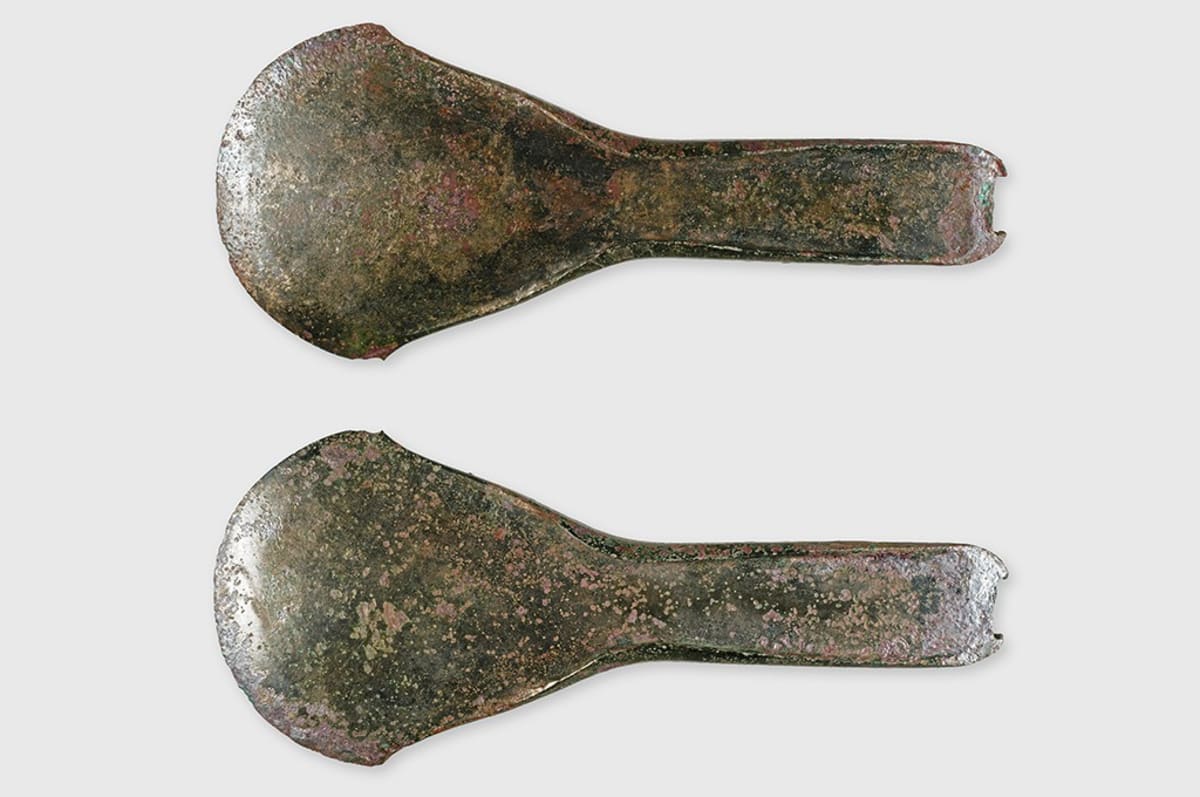
A volunteer with a metal detector just made the discovery of a lifetime on a Swiss hillside. Buried in a rocky crevice near the village of Burg im Leimental, a massive bronze axe has been waiting 3,500 years to tell its story.
The axe measures just 22 centimeters long, but its solid bronze construction and exceptional craftsmanship make it feel monumental. Archaeologists from Archäologie Baselland announced the discovery this week, calling it one of the most impressive Bronze Age finds in northwestern Switzerland.
A bronze garment pin was found nearby, adding to the mystery. What makes this discovery even more remarkable is that it's not the first ancient treasure found at this exact spot.
Back in 1858, someone discovered a bronze sickle on the same steep slope below Schlossfelsen rock outcrop. All the objects found here date to around 1500 BC, during the Middle Bronze Age.
Archaeologists now believe this rocky hillside may have been a sacred place where Bronze Age people left offerings to their deities. During that era, communities across Europe deliberately deposited valuable metal objects in the ground, in rock crevices, and even in rivers and wetlands as spiritual gifts.
The axe belongs to a style called the "Grenchen type," named after a similar collection of axes, sickles, and sword fragments found at a spring in 1856. This pattern shows that Bronze Age communities across the Jura region shared designs and likely traded with each other regularly.
The Ripple Effect
The volunteer surveyor's patience with systematic searching paid off in a way that benefits everyone. This discovery helps archaeologists understand how Bronze Age communities connected across the Jura mountains, revealing trade networks and shared beliefs that linked people 3,500 years ago.
The find also demonstrates how modern technology like metal detectors, combined with careful archaeological methods, can uncover pieces of human history that might otherwise stay hidden forever. Each artifact adds another chapter to the story of how our ancestors lived, what they valued, and how they understood the world.
Today's quiet Swiss village near the French border was once part of a strategic and spiritually significant landscape. The location connected important routes between the Rhine and Rhône valleys, making it a crossroads for Bronze Age travelers and traders.
These ancient offerings remind us that humans have always sought meaning beyond daily survival, creating beauty and honoring something greater than themselves.
Based on reporting by Google: archaeological discovery
This story was written by BrightWire based on verified news reports.
Spread the positivity!
Share this good news with someone who needs it