Egypt Uncovers Ancient Tomb Treasures in Heliopolis
Archaeologists in Egypt have discovered a nearly complete set of ancient funerary items at the Panehsy tomb in Matariya, including gold-framed scarabs and cosmetic tools that reveal how Egyptians honored their dead. The rare find helps unlock secrets of life and death in one of Egypt's most sacred ancient cities.
Archaeologists in Egypt just struck gold—literally—in a 2,000-year-old tomb that's rewriting what we know about ancient Heliopolis.
The Ministry of Tourism and Antiquities announced the discovery of a hidden cache of burial treasures at the Panehsy necropolis in Matariya, just outside Cairo. This marks the first nearly complete funerary furniture set ever found in the area, giving researchers an unprecedented window into how ancient Egyptians prepared for the afterlife.
The Egyptian archaeological mission from the Supreme Council of Antiquities made the find while excavating a mudbrick burial structure. Beneath the remains, they uncovered a concealed chamber packed with ceremonial objects that had been carefully placed there centuries ago.
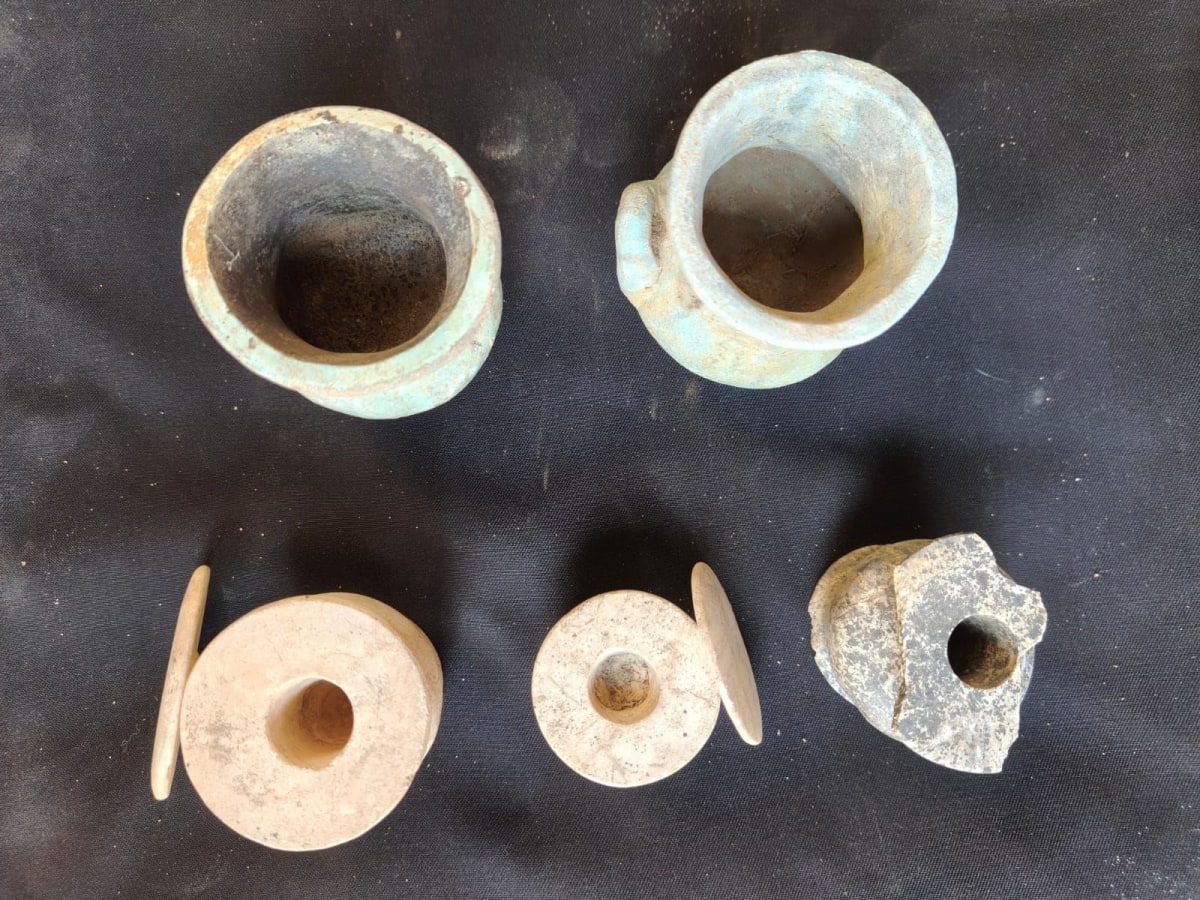
Inside the cache, the team found a copper mirror and three containers for kohl, the dark eye makeup ancient Egyptians wore both in life and death. One container was carved from rare black obsidian, a volcanic glass prized for its beauty. Two light-blue faience vessels held an even bigger surprise: six intricately carved scarabs, including two set in gold frames that still gleamed after all these centuries.
The discovery adds to earlier finds at the site that included limestone coffins with gilded decorations and red hieroglyphic inscriptions. One coffin contained remains believed to belong to a military figure, along with a Roman-era coin that helps date the burial.
Why This Inspires
This discovery reminds us that curiosity about death and memory connects us across thousands of years. The mirror, makeup containers, and protective scarabs weren't just objects—they were expressions of love and hope that the deceased would need these items in their next life.
Ancient Heliopolis, known as "Oun" to its inhabitants, served as Egypt's main center for worshipping the sun god Re. The Panehsy necropolis became a burial ground for prominent citizens from the Late Period through Roman times and into the Christian era, making it a timeline of how beliefs evolved across different civilizations.
Each artifact tells a story about people who wanted to send their loved ones into eternity with beauty, protection, and dignity. The gold-framed scarabs especially speak to this care—someone chose the finest materials to ensure safe passage to the afterlife.
The site continues to yield secrets about how funeral practices, religious beliefs, and social structures changed as different cultures ruled Egypt, offering researchers a rare chance to study cultural continuity and transformation in one location.
Ancient hands placed these treasures in darkness thousands of years ago, and modern hands have brought them back into the light.
More Images




Based on reporting by Google: archaeological discovery
This story was written by BrightWire based on verified news reports.
Spread the positivity!
Share this good news with someone who needs it