3D-Printed Robot Legs Cost $2,500, Open Research to All
A new open-source design lets researchers build humanoid robot legs for just $2,500 using 3D printers and off-the-shelf parts. The breakthrough could democratize robotics research and speed up AI development by making experiments affordable for labs everywhere.
Building and testing humanoid robots just became accessible to researchers who don't have Silicon Valley budgets.
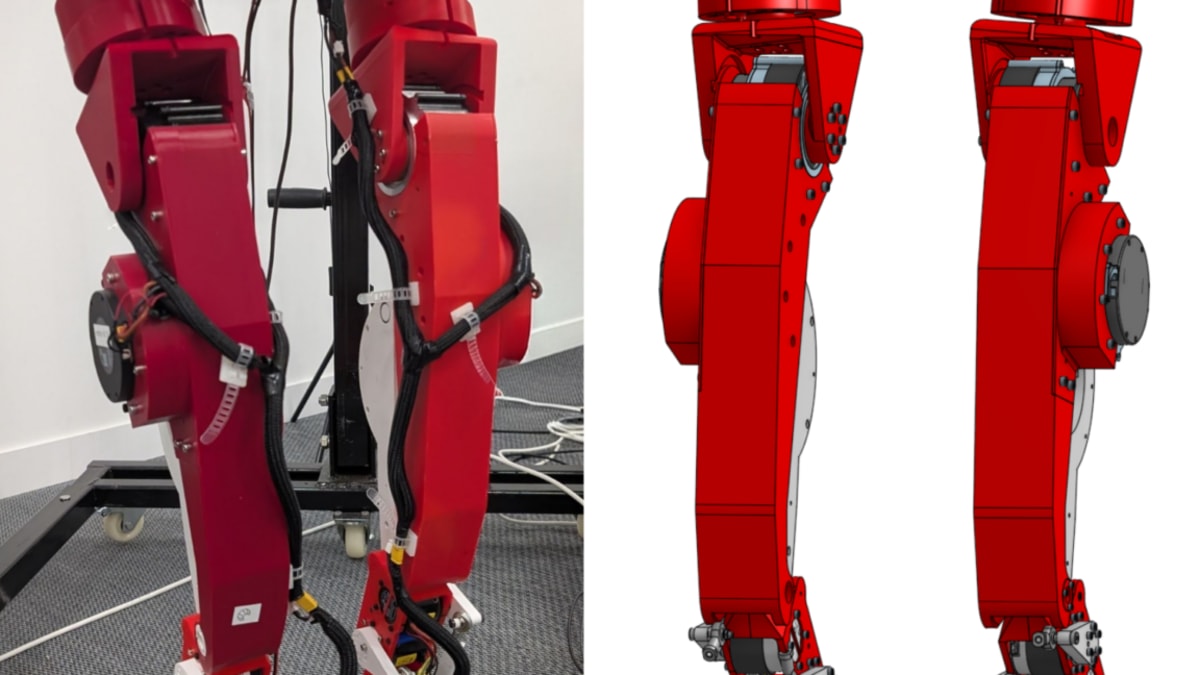
Hugging Face, a machine learning platform, released plans for fully functional humanoid robot legs that anyone can build for around $2,500. The LeRobot Humanoid project includes everything needed: 3D-printable parts, assembly instructions, wiring diagrams, and software to control the robot both physically and in simulation.
The goal isn't to create the world's most advanced robot. Instead, the team wanted something researchers could actually build, fix, modify, and learn from without spending tens of thousands of dollars.
"If you are looking for a humanoid you can build, understand, repair, instrument, simulate, and use for learning experiments, this is the robot we are trying to make," wrote Virgile Batto, a robotics engineer at Hugging Face. The design prioritizes affordability and ease of assembly over cutting-edge performance.
This matters because commercial humanoid robots typically cost between $30,000 and $150,000. That price tag puts serious robotics research out of reach for smaller universities, independent labs, and students who want to develop AI-powered movement systems.
The Hugging Face design changes that equation. Researchers can now test robot behaviors in the real world, gather data, and use those findings to improve their simulations. When something breaks, they can print a new part instead of ordering expensive replacements.
The company is backing open source robotics partly to prevent big corporations from dominating the field. Hugging Face CEO Clem Delangue previously told TechCrunch that affordable robots could level the playing field for innovation.
The robot legs are just the beginning. The team plans to add an upper body and more advanced behaviors in future releases. They've already created a 3D-printable robotic arm, and they're working on a full humanoid called HopeJR with a target price of $3,000.
The Ripple Effect
The push for affordable robotics is gaining momentum worldwide. Venture capital funding for robotics has tripled since 2023, surpassing $40 billion last year. Chinese companies like Unitree Robotics are selling robots for under $20,000, while Hyundai is reportedly preparing to mass-produce humanoid robots at a Georgia electric vehicle plant.
Lower costs mean more researchers can experiment, test ideas, and share improvements. When robotics research moves faster, breakthrough applications arrive sooner, from helping in disaster zones to assisting people with mobility challenges.
By making the designs open source, Hugging Face ensures that improvements made by one lab can benefit everyone else. That collaborative approach has already accelerated progress in software development and could do the same for physical robots.
Affordable humanoid robots might not win marathons yet, but they're helping researchers sprint toward the future.
More Images


Based on reporting by Ars Technica
This story was written by BrightWire based on verified news reports.
Spread the positivity!
Share this good news with someone who needs it