40-Year Project Saves Little Terns on Norfolk Beaches
After four decades of dedicated conservation work, little terns are thriving on Norfolk beaches with a record 700 nests this season. Volunteers donate thousands of hours protecting these tiny birds that travel 3,000 miles from Africa to nest on UK shores.
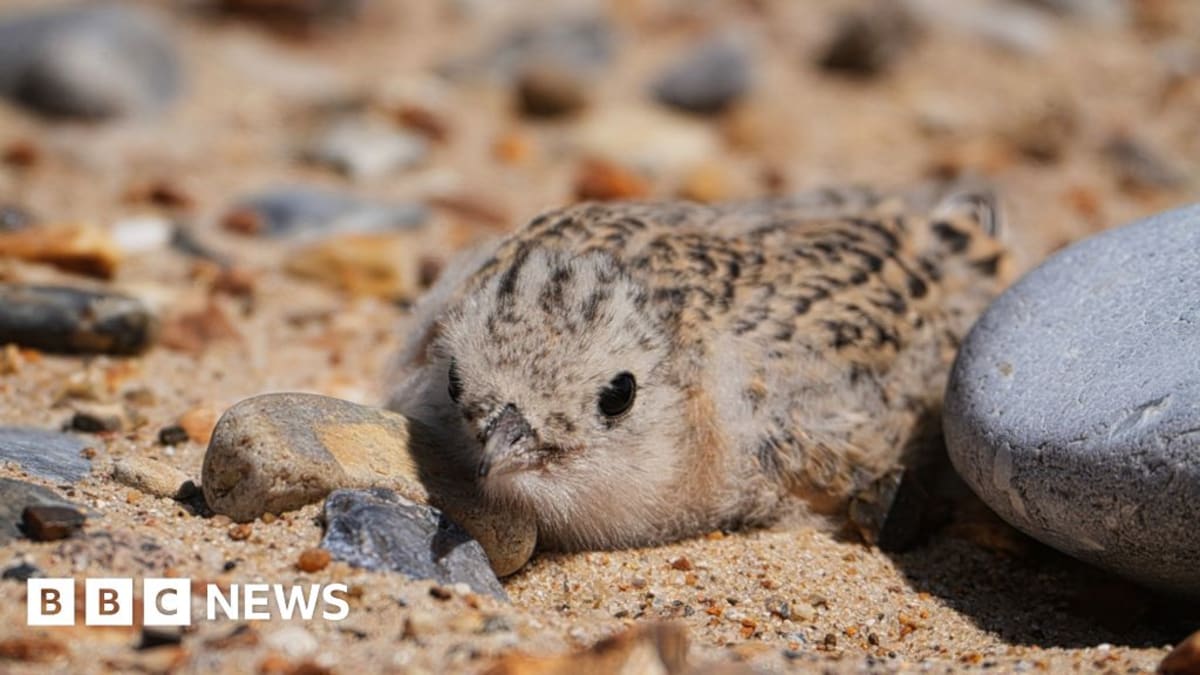
A tiny bird chick, barely visible against the sand and pebbles, represents one of conservation's quiet victories unfolding on Norfolk's beaches.
Little terns once faced a grim future in the UK, but 40 years after a protection project began, these feisty seabirds are making an incredible comeback. This season alone, 700 nests dot the Norfolk coastline, a record number that proves what dedicated humans can achieve for wildlife.
Every spring, little terns complete an exhausting 3,000-mile journey from west Africa to breed on British beaches. But their ground nests face constant threats from high tides, predators, and beachgoers who might accidentally trample them.
That's where volunteers step in. Through the RSPB's Tern Around project, 81 volunteers have already donated nearly 2,000 hours this year patrolling beaches, maintaining protective fencing, and educating visitors about keeping their distance.
Mick Davies, one devoted volunteer, admits he's "hooked" on the work despite getting pooed on nearly every day. "I just can't get enough of the noise because they don't stop chatting," he said, describing how the birds are "very feisty" once they settle in.
The volunteers witness intimate moments of bird life that most people never see. They watch adult terns teach fledglings to fly, showing them how to glide "like a kite" once they lose their fluff and develop primary feathers.
Fellow volunteer Nora Dobson said the experience offers constant learning opportunities. "You can watch the way they feed, you see them mating, you can see them just getting involved in life," she explained.
The Ripple Effect
The little tern's recovery story shows what happens when communities rally around a shared mission. Finn Duncan, community and volunteering officer for the project, believes the birds wouldn't be thriving without this "concerted effort of many, many people."
But it's not just about volunteers patrolling beaches. Local residents and visitors have embraced the conservation work, respecting fenced areas and keeping dogs at safe distances. Dog walkers who once unknowingly threatened nests now become ambassadors for the birds.
The collaboration ensures more little tern fledglings successfully make their journey back to Africa each year. These tiny travelers, having learned to fish from their parents in Norfolk waters, carry forward a species that was once in serious decline.
The work continues because threats remain: human disturbance, predators, unpredictable tides, poor weather, and coastal development all challenge the birds. Yet the steady increase in breeding pairs proves that conservation works when people commit for the long haul.
Dobson called it "a real privilege" to be part of the project, and she's right to feel that way about helping secure a species' future one nest at a time.
More Images

Based on reporting by BBC Science
This story was written by BrightWire based on verified news reports.
Spread the positivity!
Share this good news with someone who needs it
%2Ffile%2Fattachments%2Forphans%2Fozz1astreetmuralpromotingrhinoconservationinthetownofHluhluweKwaZuluNatalimagetonycarnie_225511.jpg)

