40,000-Year-Old Markings May Be Early Form of Writing
Ancient crosses and dots carved into Stone Age figurines show the same complexity as early Mesopotamian writing, revealing our ancestors may have been communicating sophisticated ideas tens of thousands of years earlier than we thought. This discovery rewrites what we know about human communication.
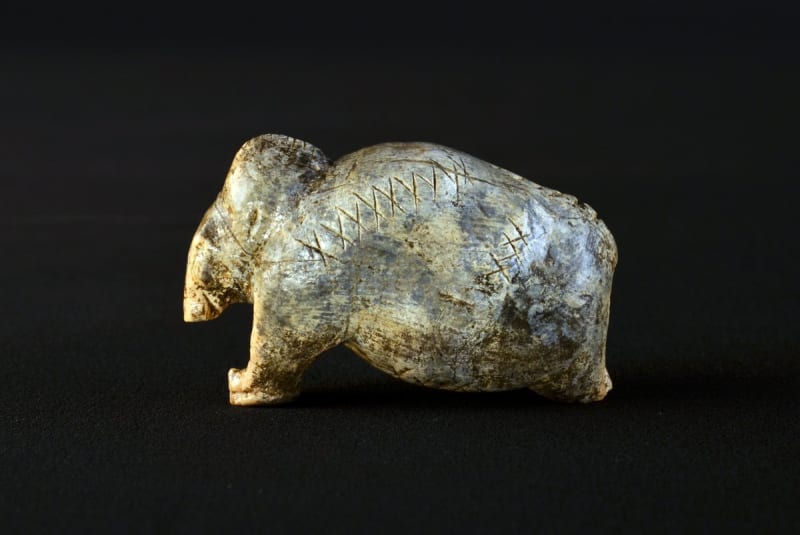
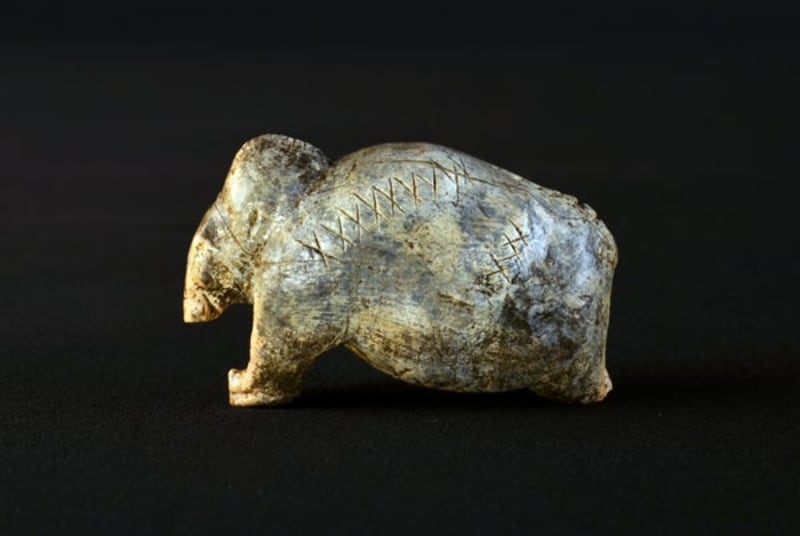
A tiny mammoth figurine carved 40,000 years ago in what is now Germany holds a secret that could change how we understand human history. The crosses and dots etched into its ivory surface weren't just decorative doodles.
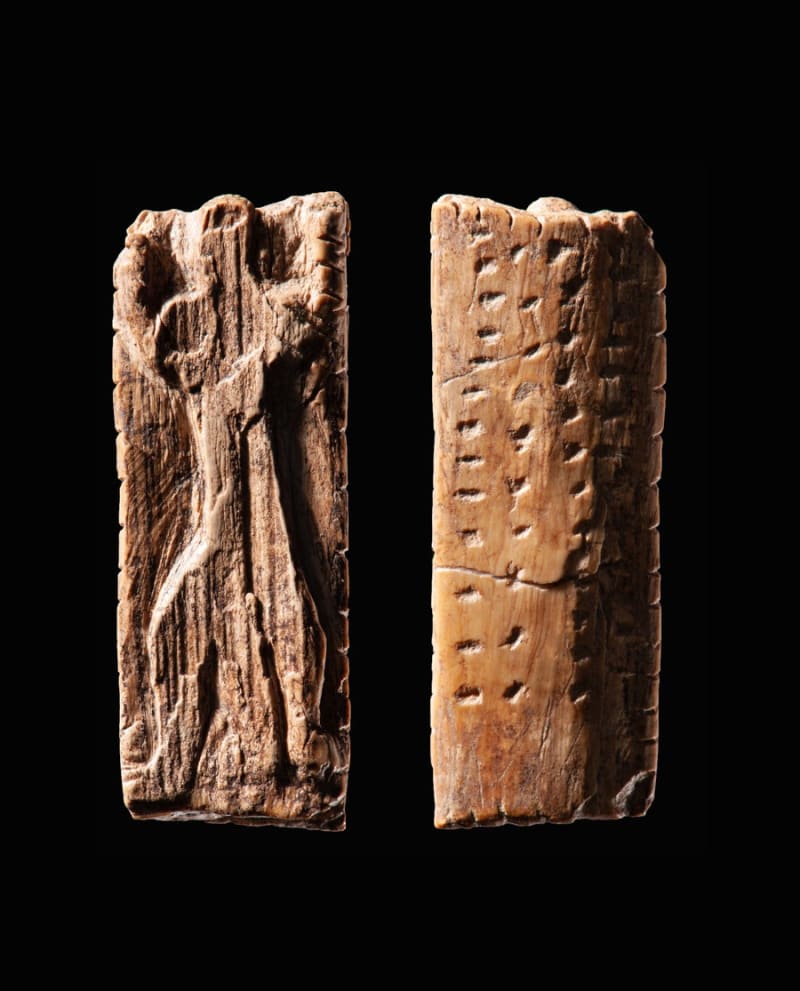
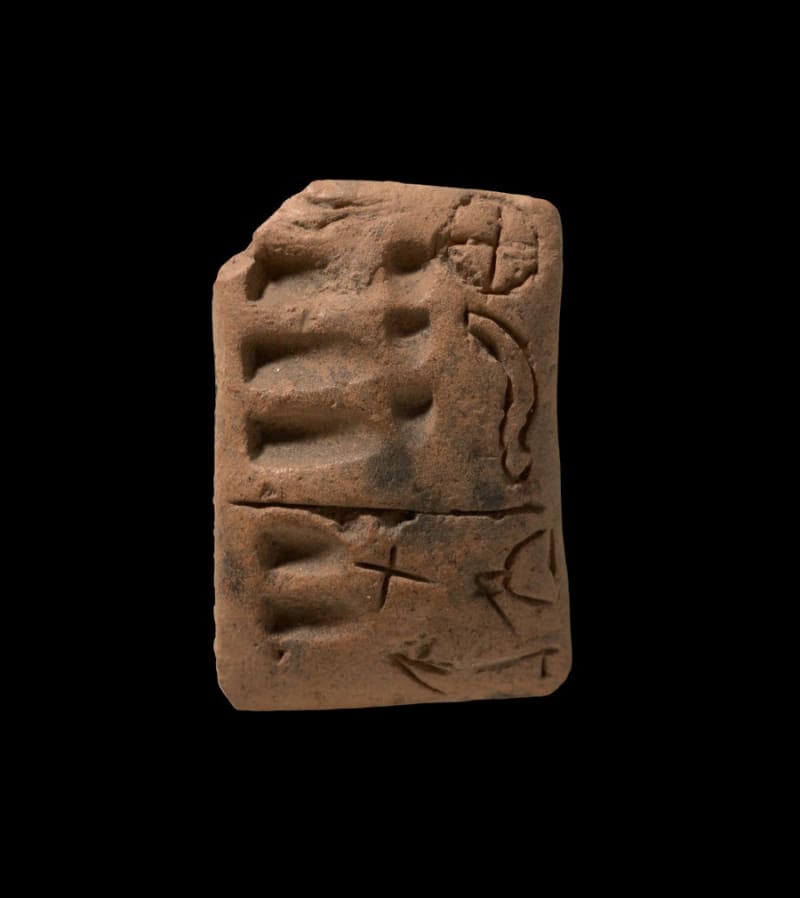
Researchers analyzed over 3,000 markings on 260 Stone Age objects found in German caves, and what they discovered was astonishing. The patterns match the statistical complexity of protocuneiform, the earliest known form of writing from ancient Mesopotamia dated to around 3,500 BCE.
That means our Stone Age ancestors might have been communicating complex ideas more than 36,000 years before we invented what we traditionally call "writing." The study, published Monday in PNAS, reveals that these ancient marks show intentional patterns and repetition, the hallmarks of meaningful communication rather than random decoration.
Ewa Dutkiewicz from Berlin's Museum of Prehistory and Early History worked with linguist Christian Bentz to digitize the ancient markings and compare them to modern writing systems. When Bentz saw the results, he couldn't believe it and checked the data multiple times.
The markings weren't scattered randomly across objects. Ivory figurines like the mammoth carried more information-dense marks than tools did. Crosslike marks never appeared on human figures, while dots never showed up on tools, suggesting these symbols held specific meanings.
"The organization points to the transmission of more complex ideas," says paleoanthropologist Genevieve von Petzinger, who studies the origins of writing. While decoding the exact meanings may be impossible after 40,000 years, the patterns prove these weren't simple scratches.
The discovery spans far beyond Germany. Similar markings exist on ancient objects worldwide, and this new method gives researchers a tool to analyze whether other prehistoric peoples were also developing early forms of symbolic communication.
Why This Inspires
This finding celebrates something deeply human: our need to share ideas and connect with each other. For 40,000 years, humans have been trying to communicate complex thoughts, to leave messages that outlast our lives, to say "I was here and this mattered."
Those Stone Age artists didn't just create beautiful figurines. They embedded them with meaning, with stories, with information they hoped would survive. And incredibly, it did.
The discovery reminds us that our ancestors were far more sophisticated than we often imagine. They weren't just surviving; they were thinking symbolically, organizing information, and building the foundations of written language millennia before the first alphabet.
Every generation stands on the shoulders of those who came before, and now we know that foundation stretches back further than we ever dreamed. The human drive to communicate, to preserve knowledge, to share our inner worlds with others has been with us from the very beginning.
More Images

Based on reporting by Scientific American
This story was written by BrightWire based on verified news reports.
Spread the positivity!
Share this good news with someone who needs it