440-Year-Old Coin Found Exactly Where Historical Records Said
Archaeologists in Chile discovered a ceremonial silver coin placed in 1584 by Spanish colonists, found in the exact spot where 440-year-old writings said it would be. The discovery confirms historical accounts and opens new doors to understanding a tragic settlement lost to time.
Sometimes history hides in plain sight, waiting centuries for someone to look in just the right place.
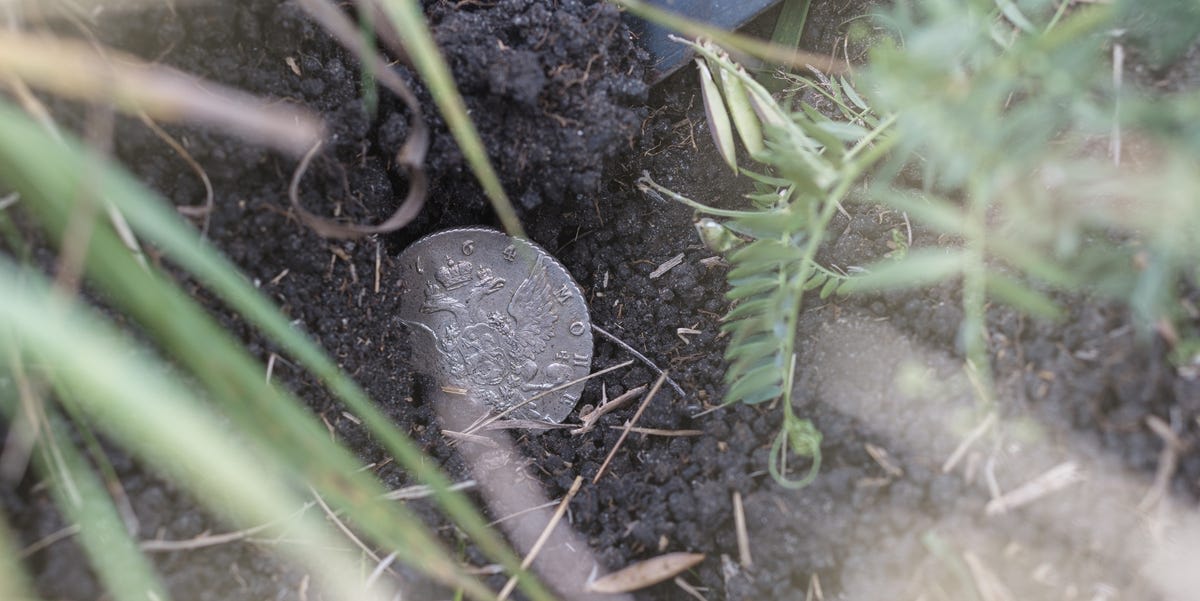
Archaeologists in southern Chile recently uncovered a silver coin tucked beneath the cornerstone of a church, placed there by Spanish navigator Pedro Sarmiento de Gamboa on March 25, 1584. The ceremonial "real de a ocho" had remained untouched for 440 years, marking the founding of the doomed Spanish colony Rey Don Felipe at the tip of South America.
The colony itself tells a heartbreaking story. Located along the strategic Strait of Magellan, Rey Don Felipe was Spain's attempt to control this crucial passage between the Atlantic and Pacific oceans. But harsh conditions at "the ends of the Earth" proved too much for the 350 settlers, and within three years, most had tragically perished from starvation and exposure.
When English navigator Thomas Cavendish arrived around 1587, he found devastation and renamed it Puerto del Hambre, or "Port of Famine." The settlement faded into historical oblivion, reduced to mere references in old documents.
For centuries, historians knew the colony existed but couldn't pinpoint its exact location. That changed when researchers from Chile's Center for Historical Studies and Humanities used high-precision geolocation systems and advanced metal detectors to map the area. One promising spot led them to the founding church.
The Ripple Effect
The coin's discovery does more than confirm an old story. It validates the detailed writings of Sarmiento de Gamboa, whose accounts had already helped researchers locate two bronze cannons at the site in 2019. Now, with the founding church's exact location confirmed, archaeologists have a reliable reference point for finding other structures mentioned in surviving 16th-century maps.
Lead researcher Soledad Gonzalez Diaz told Live Science that this discovery creates "a rare and powerful point of convergence between written sources and archaeological evidence." The team can now work to reconstruct the settlement's layout, including houses and storage areas, painting a fuller picture of how these colonists lived during their brief time in this unforgiving landscape.
The silver coin itself carries its own fascinating story. Minted in Potosi, in what's now Bolivia, it features a Jerusalem cross on one side and King Philip II's coat of arms on the other. These coins circulated across three continents as one of the world's first truly global currencies.
What makes this discovery particularly moving is its precision: the coin was found resting on a stone surface exactly as Sarmiento described in his writings four centuries ago, as if waiting patiently to prove his words true.
More Images



Based on reporting by Google: archaeological discovery
This story was written by BrightWire based on verified news reports.
Spread the positivity!
Share this good news with someone who needs it
%2Fhttps%3A%2F%2Ftf-cmsv2-smithsonianmag-media.s3.amazonaws.com%2Ffiler_public%2F95%2F43%2F9543c0d6-d8e6-41b5-acd2-e351ebf3f44a%2Fvikingesoelvskat-rebild-2026-6-2048x1365.jpeg)