450-Million-Year-Old Fossil Preserves Delicate Sea Creature
Scientists discovered exceptionally rare soft tissue in a 450-million-year-old sea creature fossil, offering a stunning glimpse into how Earth's earliest reef animals lived. The discovery came from a specimen quietly stored in a small community-funded museum.
A fossil sitting in a small museum's collection just revealed secrets about life on Earth more than 200 million years before dinosaurs existed.
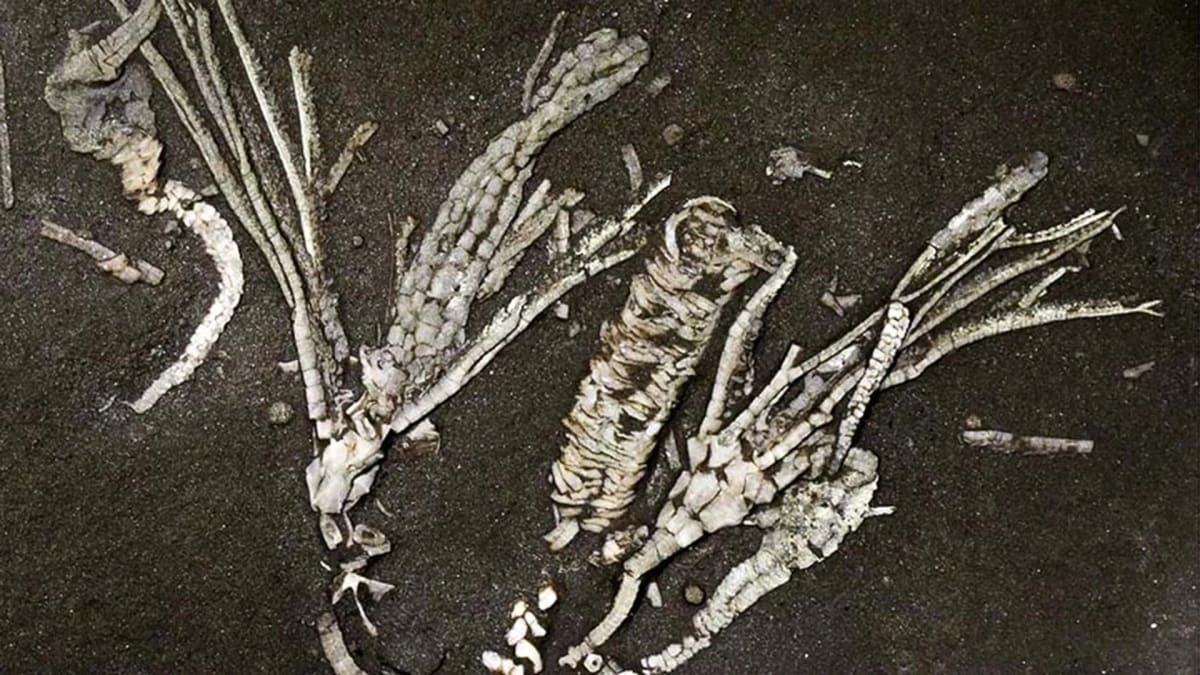
University of Oklahoma paleontologists identified preserved soft tissue in a 450-million-year-old crinoid fossil. These ancient relatives of starfish looked like flowers on stalks swaying beneath prehistoric seas.
The discovery is exceptionally rare. Of millions of known crinoid fossils, only two have ever been found with soft tissue intact.
"After an animal dies, soft tissues like skin, eyes, or internal organs are the first things to decay," said Dr. Lena Cole, OU paleontologist and assistant curator at the Sam Noble Oklahoma Museum of Natural History. "Soft tissues are only preserved when the environment acts almost like a natural refrigerator or vacuum-sealer."
The fossil preserves tube feet, delicate structures the ancient animal used for feeding. These tiny features can reveal how the creature lived in much the same way teeth tell us about what mammals ate.
When researchers compared the 450-million-year-old specimen with modern crinoids, they found notable differences in anatomy. The findings suggest feeding strategies in these animals changed dramatically over hundreds of millions of years.
The discovery happened during a research visit to Montréal's Musée de paléontologie et de l'évolution, a small museum operating entirely on community donations. The fossil had been carefully stored and cataloged for years before crinoid specialists recognized its scientific importance.
Why This Inspires
This discovery shows how preserved knowledge can spark new understanding generations later. Museum workers and community donors who supported the collection never knew they were protecting such a significant piece of Earth's history.
The finding also demonstrates that major scientific breakthroughs don't always require expensive expeditions to remote locations. Sometimes the most important discoveries are already sitting on shelves, waiting for the right expertise to unlock their secrets.
"We don't always know the full significance of the specimens we collect," said Dr. David Wright, who co-authored the study. "New technologies, ideas or expertise often find surprising ways to utilize existing specimens to make new discoveries."
The fossil offers scientists a rare window into ancient ocean ecosystems when crinoids flourished in some of Earth's earliest coral reefs. Every new soft tissue specimen greatly increases what researchers know about how early complex life developed and evolved.
A community's dedication to preserving the past just illuminated 450 million years of evolutionary history.
Based on reporting by Google: fossil discovery
This story was written by BrightWire based on verified news reports.
Spread the positivity!
Share this good news with someone who needs it