450-Million-Year-Old Fossil Preserves Rare Soft Tissue
Scientists discovered ancient sea creature soft tissue preserved for 450 million years, offering a stunning glimpse into life before dinosaurs. The one-in-a-million find reveals how Earth's earliest reef animals fed and evolved.
A delicate fossil tucked away in a small museum has just rewritten what scientists know about life in ancient oceans, preserving tissues that should have vanished hundreds of millions of years ago.
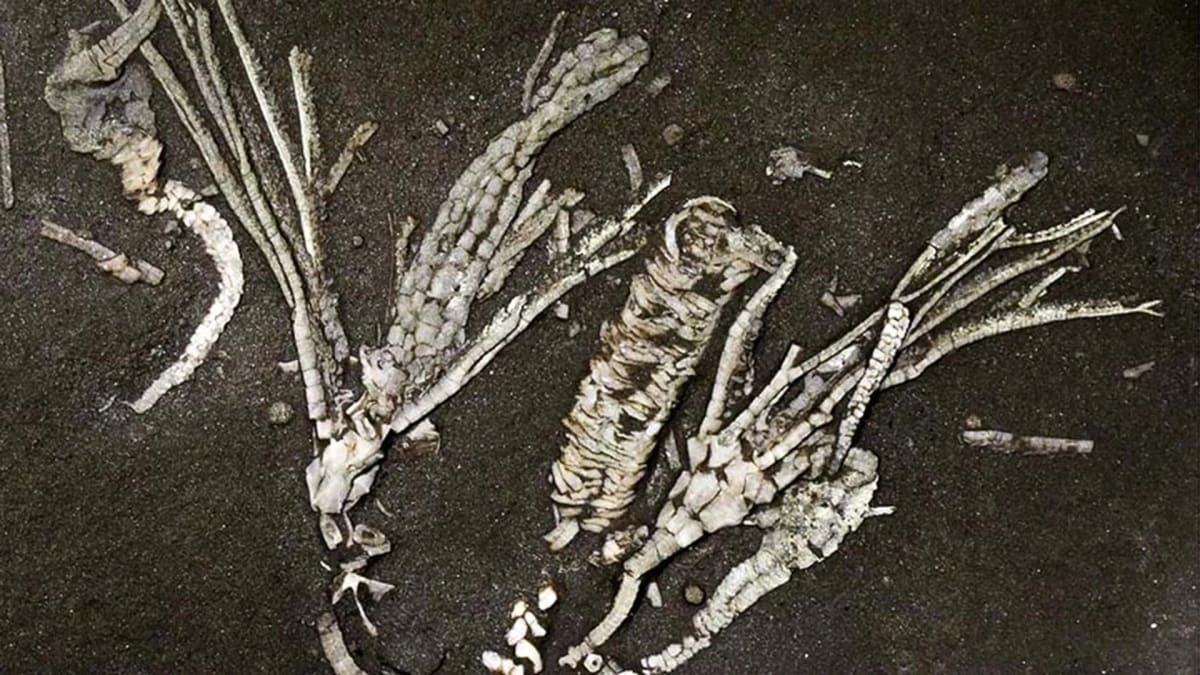
Researchers at the University of Oklahoma identified exceptionally rare soft tissue in a 450-million-year-old crinoid fossil. These ancient relatives of starfish once flourished in Earth's earliest coral reefs, long before dinosaurs existed or plants spread across land.
The fossil preserves tube feet, delicate structures crinoids used for feeding that almost never survive after death. Dr. Lena Cole, a paleontologist at the Sam Noble Oklahoma Museum of Natural History, explained that soft tissues like skin and organs typically decay first, leaving only hard parts like bones or shells behind.
Out of millions of known crinoid fossils, only two have ever been found with preserved soft tissue. This specimen is the oldest ever discovered.
"Preservation like this is truly one in a million," Cole said. The tissues survived because environmental conditions acted like a natural refrigerator, creating the perfect circumstances for fossilization.
The ancient soft tissue predates the earliest dinosaurs by more than 200 million years. Co-author Dr. David Wright noted that tube feet function similarly to mammal teeth, revealing important details about diet and lifestyle based on their structure and spacing.
When researchers compared the fossil with living crinoids, they found significant anatomical differences. These variations offer new insights into how feeding strategies evolved over hundreds of millions of years and help reconstruct the ecology of ancient reef ecosystems.
Why This Inspires
This discovery shows how patience and careful preservation pay off in unexpected ways. The fossil had been housed for years at the Musée de paléontologie et de l'évolution in Montreal, a small museum supported entirely by community donations.
Its scientific importance only became clear when crinoid specialists Cole and Wright examined it during a research visit. Without dedicated people caring for museum collections, this window into ancient life would have remained closed.
Wright emphasized that major discoveries don't always come from remote expeditions. Sometimes the most important finds are already sitting in collections, waiting for new technologies or expertise to reveal their secrets.
Every new specimen of preserved soft tissue greatly increases what scientists understand about ancient ecosystems, feeding behavior, and evolutionary change. This tiny fossil is helping reveal patterns of adaptive evolution spanning hundreds of millions of years, showing what factors shaped the world we know today.
Based on reporting by Science Daily
This story was written by BrightWire based on verified news reports.
Spread the positivity!
Share this good news with someone who needs it