450-Million-Year-Old Jellyfish Fossil Found in Quebec
Scientists discovered a perfectly preserved ancient jellyfish ancestor in Quebec, filling a 450-million-year gap in evolution. The rare find shows how fragile ocean life survived against impossible odds.
A fossil that should never have existed just rewrote the story of how jellyfish came to be.
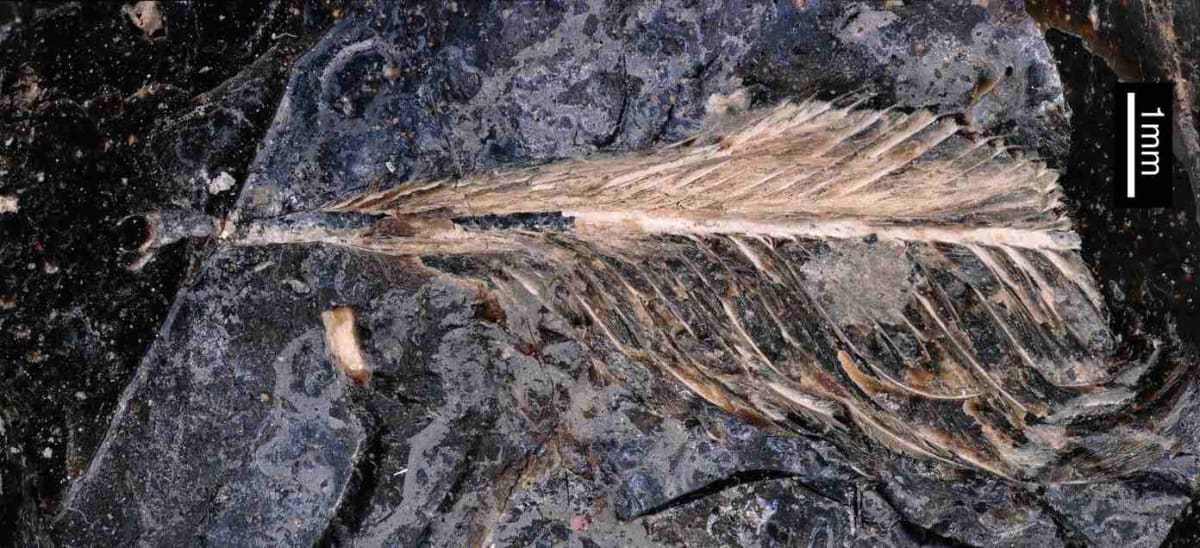
Scientists in Quebec discovered a 450-million-year-old ancestor of modern jellyfish, perfectly preserved in conditions that normally erase soft-bodied creatures from history. The tiny animal, named Paleocanna tentaculum, lived inside a narrow tube with feathery tentacles that filtered food from ancient oceans.
Amateur fossil collector John Iellamo first found the specimens in 2010 near Saint Joachim, northeast of Quebec City. He recognized their importance and donated them to science, allowing researchers to study 135 specimens trapped in 15 slabs of rock.
The discovery matters because soft-bodied animals almost never become fossils. Their bodies break down within hours or days, leaving nothing behind. Yet somehow, these delicate creatures survived 450 million years with their tentacles intact.
"Soft-bodied organisms do not preserve as well as hard-bodied organisms, usually making any soft-bodied fossil more valuable to understanding the history of life," said Louis Philippe Bateman, co-author of the study. This find fills a missing chapter that scientists have been searching for.
Each creature stood about 1.5 inches tall with a ring of 12 finger-like tentacles. Some lived alone while others formed small colonies sharing a base. The tentacles reveal they likely fed by capturing tiny particles drifting in the water, living calm lives anchored to the seafloor.
Why This Inspires
This discovery proves that patience and curiosity can unlock secrets hidden for millions of years. The fossils survived because they were buried quickly in low-oxygen mud that slowed decay, similar to the famous Burgess Shale fossils in British Columbia.
When researchers compared Paleocanna with 69 other species, they found it sits closer to modern jellyfish than any other ancient tube-dwelling animal. It bridges the gap between early ocean life and the jellyfish floating in oceans today.
The Quebec site, once considered less glamorous than western Canadian fossil beds, now ranks among the most species-rich Ordovician fossil locations on Earth. "Discoveries like this one show that many things have yet to be discovered and described here," Bateman said.
The fossils now rest at the Musée de Paléontologie et de l'Évolution in Montreal, where they continue teaching scientists about life that thrived long before dinosaurs walked the Earth. Sometimes the most fragile things endure the longest.
Based on reporting by Google: fossil discovery
This story was written by BrightWire based on verified news reports.
Spread the positivity!
Share this good news with someone who needs it