5,000-Year-Old Circle Found Under Scottish Island With No Dig
Scientists discovered a hidden 5,000-year-old ritual circle beneath a Scottish island without ever touching a shovel. Using advanced scanning technology, they mapped an entire prehistoric monument that had been buried under peat for millennia.
Archaeologists just found a 5,000-year-old ceremonial monument on Scotland's Isle of Arran without digging a single hole in the ground.
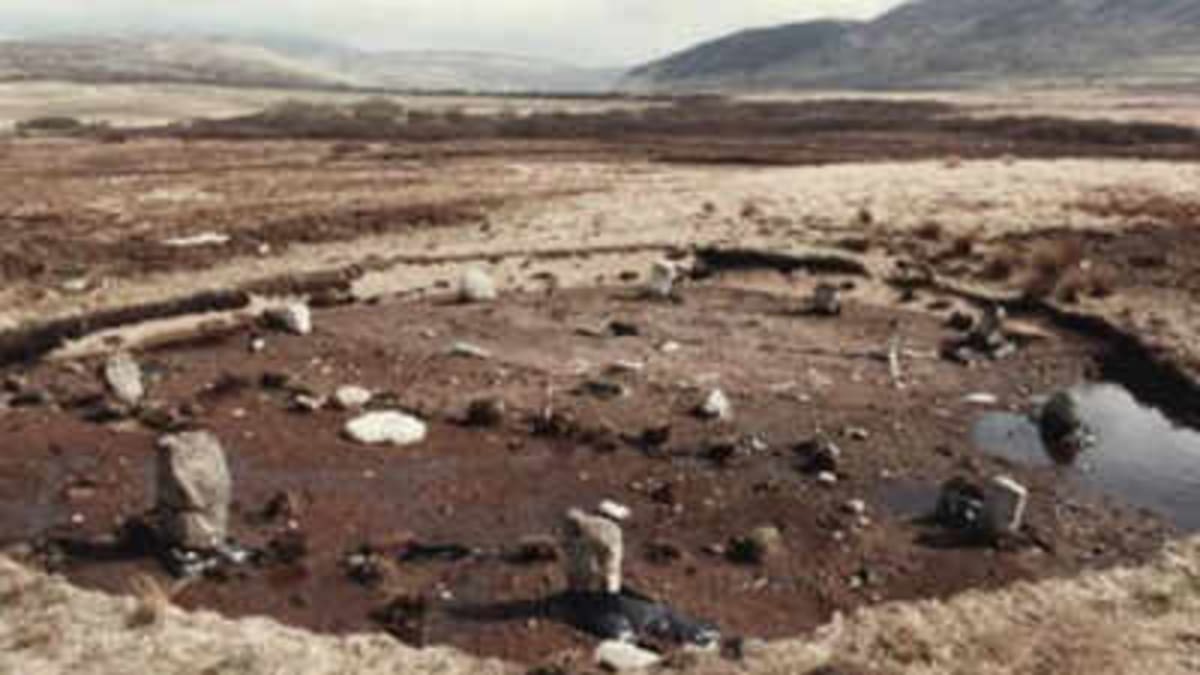
Using geophysical scanning equipment, researchers from Historic Environment Scotland detected a ring of 12 buried pits beneath the peat at Machrie Moor. The circular arrangement spans 28 meters across and likely dates back to the Neolithic or Bronze Age, when ancient farming communities gathered for rituals and ceremonies.
The team wasn't even looking for new monuments. They were simply testing how well modern survey technology works in peat-covered landscapes when they stumbled upon the hidden circle.
"We are tremendously excited about this new discovery," said Dr. Nick Hannon, Senior Heritage Recording Manager at Historic Environment Scotland. "We know that there is a lot of archaeology yet to uncover at Machrie Moor, but the discovery of a new circle completely surpassed our expectations."
The scanning equipment gets pushed across the ground and detects magnetic changes beneath the surface. This allows scientists to create detailed maps of buried features without disturbing ancient remains or damaging fragile sites.
The 12 pits sit about 6.5 meters apart in a perfect circle. Two unusually wide gaps suggest that two more pits once existed, meaning the monument might have originally contained 14 wooden posts or standing stones.
Interestingly, the scans found no evidence of buried stones in the pits today. Researchers believe the circle was either built with timber posts that rotted away over thousands of years, or any stones that once stood there were removed long ago.
Why This Inspires
This discovery shows how technology is transforming our relationship with history. Instead of excavating and potentially damaging ancient sites, archaeologists can now peek beneath the surface while leaving everything perfectly preserved for future generations.
The scanning also revealed new details about monuments already visible at Machrie Moor. At one existing stone circle, the survey found evidence suggesting it originally contained 14 standing stones rather than the seven or eight reconstructed today.
Machrie Moor is already one of Scotland's richest prehistoric landscapes, home to standing stones, burial cairns, and ceremonial monuments dating from 3500 BC to 1500 BC. The existing circles align with a notch in nearby Machrie Glen where the midsummer sun would have risen, suggesting ancient communities held astronomical ceremonies there.
Whether the newly discovered circle shared this cosmic connection remains unknown. But its location within this ceremonial landscape makes it a strong possibility.
Dr. Hannon emphasized how these advances help uncover Scotland's past while protecting it. "The tools we use to learn about what's underground are constantly developing, and we can learn more and more about our buried history without disturbing the earth and potentially damaging archaeological remains."
For now, the buried monument waits beneath the peat, adding another chapter to Machrie Moor's incredible story while proving that sometimes the best way to discover the past is by leaving it untouched.
More Images



Based on reporting by Google: archaeological discovery
This story was written by BrightWire based on verified news reports.
Spread the positivity!
Share this good news with someone who needs it