520-Million-Year-Old Fossil Solves Evolution Mystery
Scientists discovered the missing piece of Earth's evolutionary puzzle buried in ancient Chinese rocks. The tiny fossils finally prove when every major animal group appeared on our planet.
Scientists just solved a mystery that has puzzled them for decades, and it was hiding in half-billion-year-old rocks in southern China.
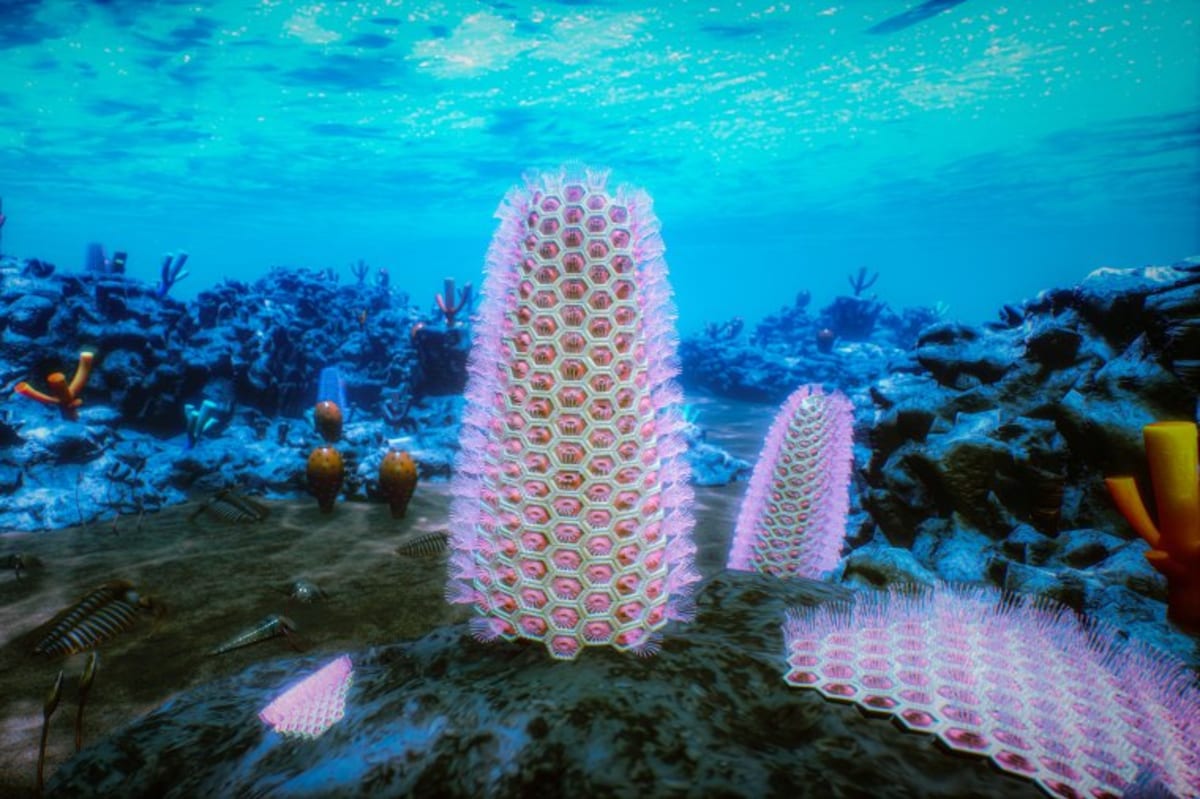
An international research team found fossils of bryozoans, tiny filter-feeding creatures that still live in our oceans today, dating back 520 million years to the Cambrian explosion. This discovery fills the last gap in the fossil record from when nearly all major animal groups first appeared on Earth.
"Bryozoa has been the elephant in the room of Cambrian paleontology for a long time," explained Dr. Timothy Topper of Northwest University and the Swedish Museum of Natural History. "Every other major animal phylum had a Cambrian representative, except bryozoans."
Until now, the oldest known bryozoan fossils came from 50 million years later. This gap left scientists wondering why these creatures seemed to miss the greatest diversification of life in Earth's history.
The newly discovered fossils came remarkably well preserved from the Xiannüdong Formation in Shaanxi Province. Researchers found colonies just a few millimeters wide, perfectly intact in three dimensions, with internal soft tissues mineralized by phosphate over millions of years.
Under inspection, the team identified delicate muscle fibers, membrane sacs, and the creatures' signature hexagonal skeleton pattern. Professor Zhifei Zhang of Northwest University called the specimens "nothing short of extraordinary" for preserving soft tissues inside their original skeletal housing after half a billion years.
Why This Inspires
This discovery does more than complete a fossil collection. It rewrites our understanding of when life diversified on Earth.
The fossils show these weren't simple early organisms but complex, organized colonies already thriving during the Cambrian period. Their advanced features suggest bryozoans might have originated even earlier, possibly before the Cambrian explosion began.
For years, these fossils likely remained hidden because bryozoans lived in shallow reef environments, while most Cambrian fossil sites preserve deeper-water creatures. Sometimes the biggest answers are right where we least expect to look.
The findings confirm that life's great diversification was even more complete than scientists realized, with every branch of the animal family tree represented in that explosive period of evolution.
Based on reporting by Google: fossil discovery
This story was written by BrightWire based on verified news reports.
Spread the positivity!
Share this good news with someone who needs it