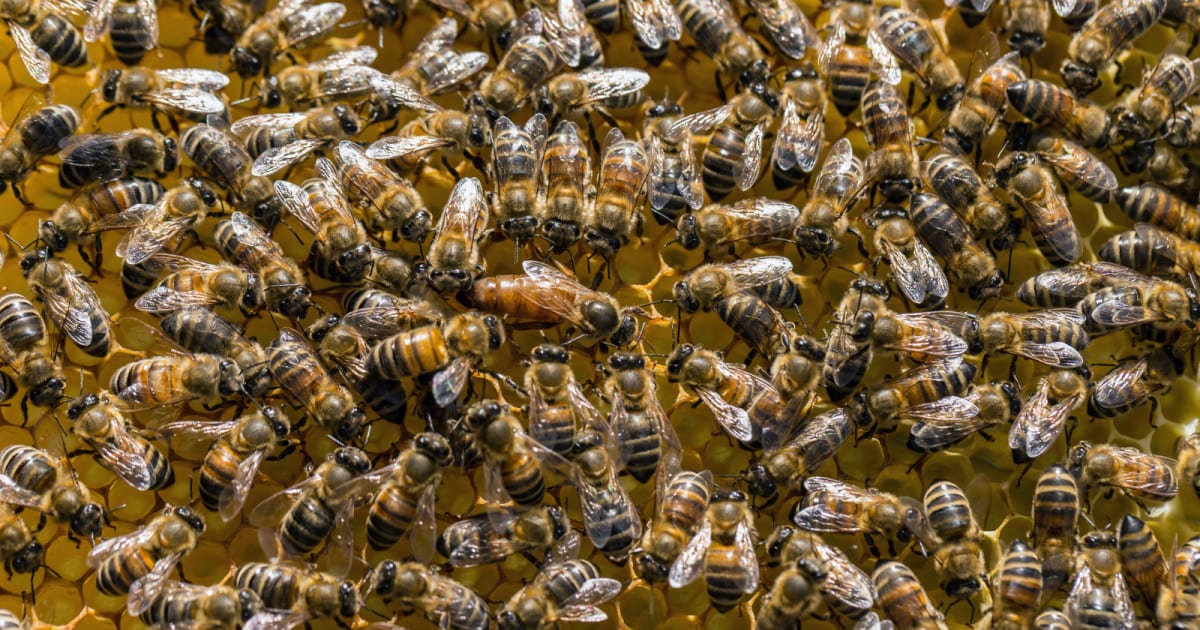
5.5 Million Wild Bees Found Under New York Cemetery
A Cornell lab technician trying to avoid a parking fee discovered one of the largest wild bee colonies ever documented—5.5 million mining bees living beneath a historic cemetery in Ithaca, New York. The accidental find is already changing how scientists understand urban pollinators and protect them.
Rachel Fordyce was just trying to save a few bucks on parking when she stumbled onto millions of hidden neighbors.
In spring 2022, the Cornell University lab technician took a shortcut through East Lawn Cemetery in Ithaca, New York, and noticed bees streaming out of the ground between headstones. She scooped a handful into a jar and brought them to work. That casual detour led to one of the most remarkable bee discoveries in modern science.
The insects turned out to be Andrena regularis, or regular mining bees. Using mesh emergence traps placed across the cemetery, researchers counted over 3,000 insects and scaled the numbers across the 1.5-acre site. The result stunned even veteran bee scientist Bryan Danforth: an estimated 5.5 million wild bees living underground in a single location.
These aren't hive dwellers. Mining bees are solitary, with each female digging her own burrow, stocking underground chambers with pollen and nectar, laying eggs, then sealing the entrance. Millions of them simply chose the same patch of dirt, like neighbors who never knock on each other's doors.
The cemetery turned out to be perfect bee real estate. The sandy, well-drained soil that made gravedigging easier in 1878 also makes tunneling easy for bees. Unlike farms or suburban lawns, the site has minimal pesticides, diverse flowers, and soil that rarely gets disturbed. Specimens collected there date back to 1935, meaning this massive aggregation has thrived quietly for nearly a century.
The Ripple Effect
The discovery matters far beyond one graveyard. About 75 percent of all bee species live underground and alone, yet honeybees get almost all the attention and conservation focus. These mining bees emerge earlier than most wild bees, right when New York's apple orchards bloom just 500 meters away.
Earlier Cornell research found native bees pollinate apples two to three times better than honeybees because they actually touch the reproductive parts while collecting pollen. New York is America's second-largest apple producer. Millions of unmanaged wild bees had likely been doing critical agricultural work for decades while everyone overlooked them.
Now Danforth is surveying cemeteries across New York State and has launched a citizen science project on iNaturalist so anyone can log ground-nesting bees. The project is revealing that old cemeteries, with their untreated grass and undisturbed soil, may be crucial urban wildlife refuges hiding in plain sight.
What started as a parking shortcut became a window into an invisible world doing enormous good right beneath our feet.
More Images




Based on reporting by Google News - Science
This story was written by BrightWire based on verified news reports.
Spread the positivity!
Share this good news with someone who needs it