6 Indian Folk Arts Saved by Master Artisans
Across India, ancient crafts that nearly vanished are thriving again thanks to artists who refused to let centuries of culture disappear. From painted scrolls to carved bamboo, these living traditions connect modern hands to timeless stories.
While the world races toward digital screens and mass production, a quiet resistance is unfolding across India. Master artisans in villages from Rajasthan to Jharkhand are keeping folk arts alive that should have disappeared decades ago.
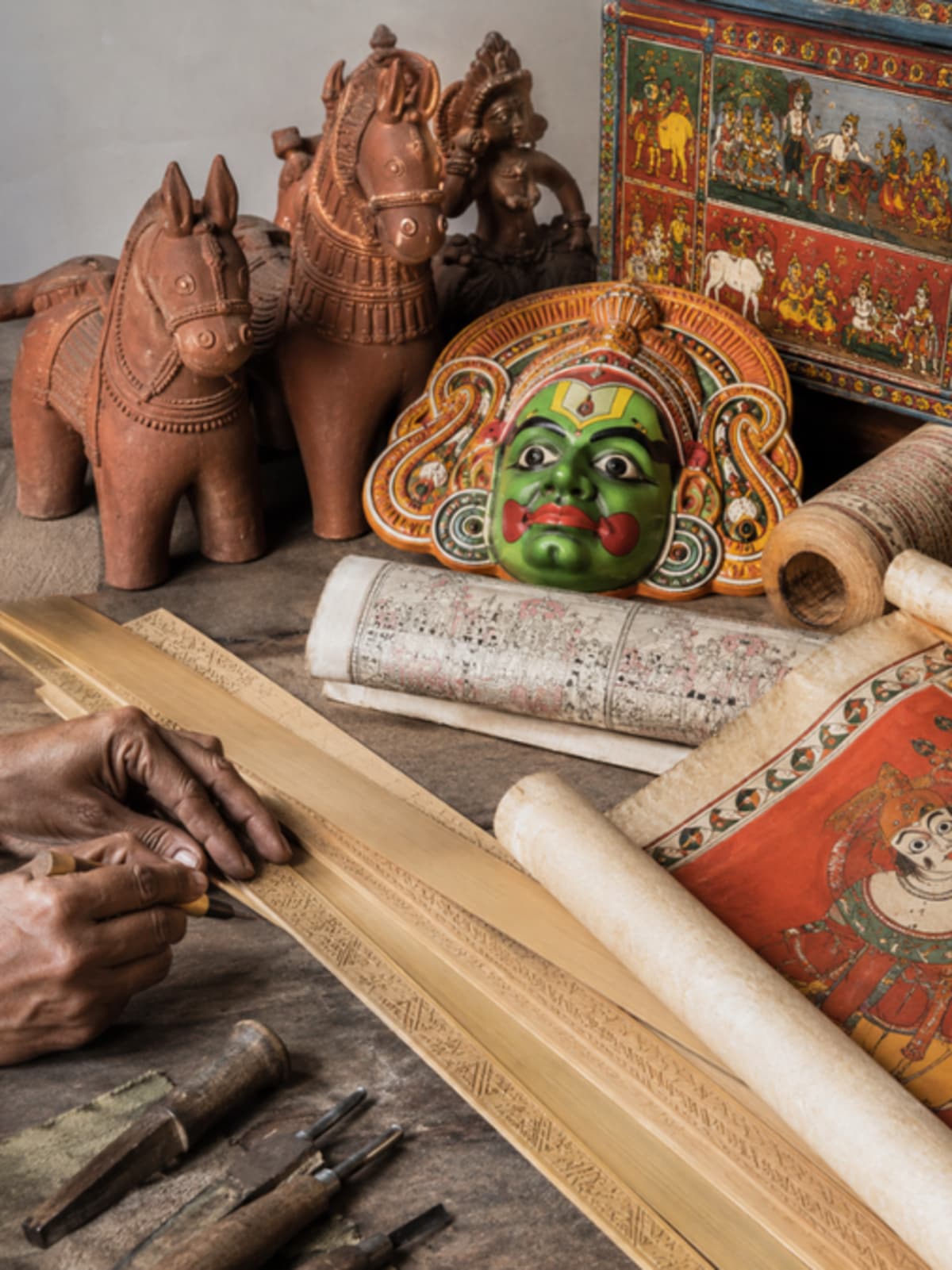
In Jharkhand's Chotanagpur region, artists still carve ancient scripts into bamboo strips by hand. They boil mature bamboo, dry it carefully, and transform it into flat surfaces for stories and cultural records. Each letter takes patience and precision, turning a simple plant into living memory.
West Bengal and Bihar's terracotta toy makers shape clay horses, deities, and village figures from riverbed soil the same way their ancestors did. They clean the clay, mix it with sand, mold it by hand, fire it in kilns, and paint each piece with vibrant colors. These aren't museum pieces but toys children still play with today.
In Tamil Nadu, Therukoothu performers paint bold masks and faces for folk theater. Green, red, and blue colors define gods and villains on stage. Artists sketch intricate patterns, add dots and lines, and create characters that have captivated audiences for generations.
Rajasthan's 700-year-old Phad painting tradition tells epic stories on long cotton scrolls. Artists prepare cloth with starch, polish it smooth, and paint narrative scenes using colors from natural stones, flowers, and leaves. Each scroll unfolds like an ancient comic book, depicting folk deities like Pabuji and Devnarayan.
Telangana's Cheriyal scroll painters work in bold colors to illustrate epics and folk tales. These scrolls once traveled with village storytellers who would unroll each section like chapters in a visual book. Bihar's Manjusha art decorates boxes and scrolls with the legend of Bihula and the serpent goddess, outlined in black and filled with pink, green, and yellow.
Why This Inspires
These crafts survived because artists chose dedication over convenience. They passed techniques through families, taught young apprentices, and adapted without compromising their heritage. Their work proves that ancient traditions can thrive when people refuse to let them fade.
Every carved bamboo strip and painted scroll connects today's India to centuries of storytelling, proving that some things are worth saving with your own two hands.
Based on reporting by The Better India
This story was written by BrightWire based on verified news reports.
Spread the positivity!
Share this good news with someone who needs it