6 Indian Innovations Turn Waste Into Wonder
From pollution-capturing devices to edible spoons, Indian inventors are solving everyday problems with ingenious solutions. These homegrown technologies prove that the best innovations often come from understanding local challenges.
Engineers and craftspeople across India are transforming waste, pollution, and everyday struggles into smart solutions that work for real life.
Back in 1968, orthopaedic surgeon P K Sethi and craftsman Ram Chandra Sharma noticed something critical at SMS Hospital in Jaipur. Prosthetic limbs from abroad didn't work for people who squatted, sat cross-legged, or walked on uneven village paths.
Their Jaipur Foot moves in three planes, letting amputees do all those things naturally. The design later spread from India to users worldwide through BMVSS.
Fast forward to 2016, when three IIT Delhi alumni tackled the black soot billowing from diesel generators. Arpit Dhupar, Kushagra Srivastava, and Prateek Sachan invented the Chakr Shield, which captures 70 to 90 percent of the particulate matter before it enters the air. Even better, they process that captured soot into pigment for ink and paint.
After the devastating 2001 Gujarat earthquake, potter Mansukhbhai Prajapati wanted to help people who'd lost power access. He developed MittiCool, a clay refrigerator that uses water evaporation to keep vegetables, fruits, and milk fresh without electricity.
In Kanpur, the team at Phool spotted something unusual in 2017 while working with discarded temple flowers. A fibrous mat growing on flower waste became the inspiration for Fleather, a leather-like material made from fermented marigold, rose, and daisy petals. Now that flower waste becomes wallets, bags, and upholstery.
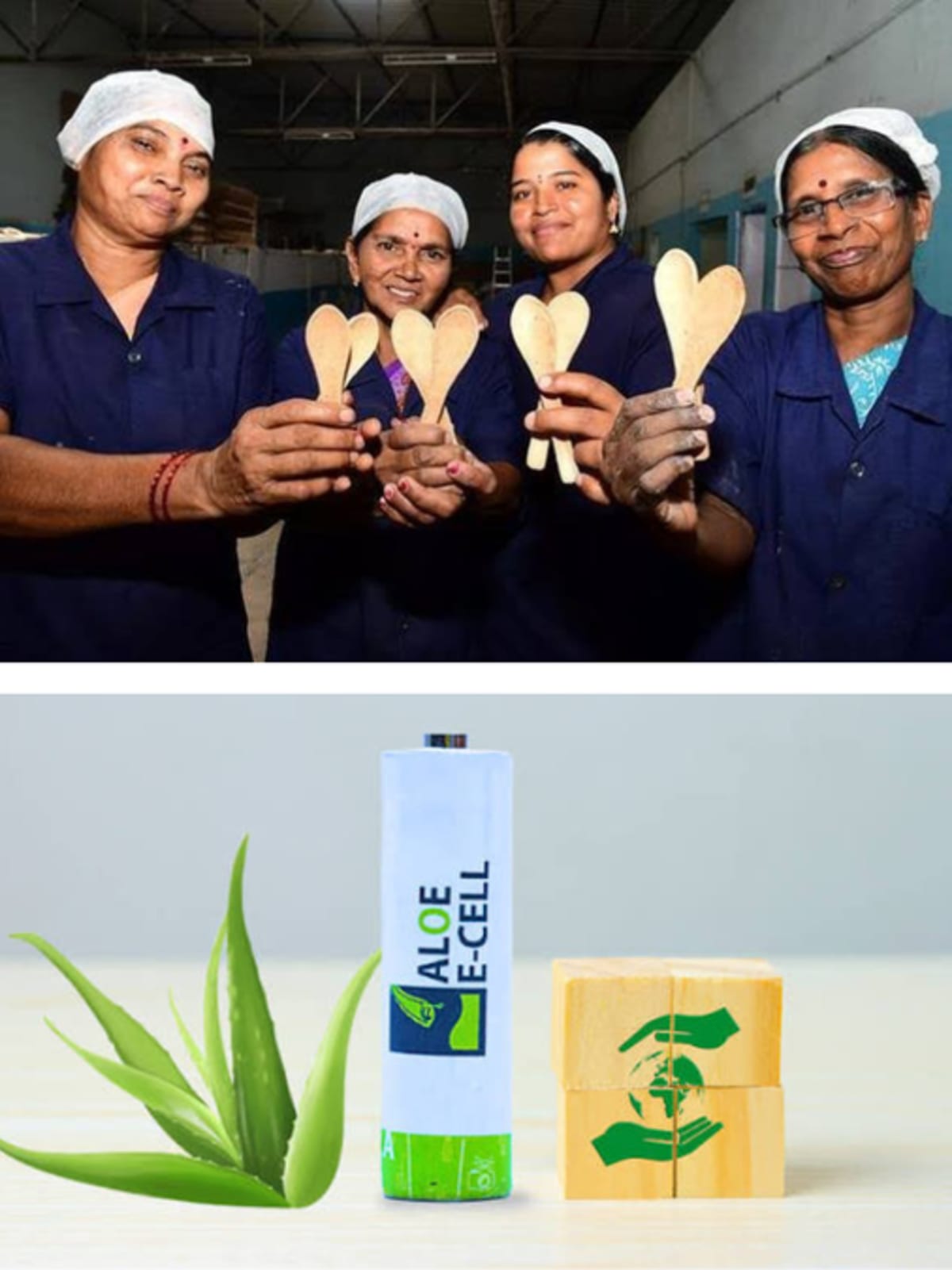
Lucknow startup Aloe E-Cell spent years testing 21 biomaterials before landing on aloe vera for biodegradable batteries. Their 1.5V AA battery earned patents, BIS approval, and backing from India's Technology Development Board in 2023.
Hyderabad researcher Narayana Peesapaty watched plastic waste pile up and had a bold idea in 2007. After years of testing through his company Bakeys Foods, he perfected edible cutlery made from sorghum, rice, and wheat flour. The baked spoons stay sturdy with hot food and can be eaten afterward.
The Ripple Effect
These six innovations share something powerful in common. They started with people paying attention to problems right in front of them, whether that was pollution, electricity shortages, or plastic waste. Each inventor looked at local challenges and created solutions that work for how Indians actually live, then watched those solutions spread far beyond their original purpose.
The clay fridge cools food where power fails, the prosthetic fits Indian lifestyles, and the soot collector turns pollution into products. These aren't flashy tech concepts but practical answers to real needs.
When innovators design for their own communities' struggles, they often create solutions the whole world can use.
Based on reporting by The Better India
This story was written by BrightWire based on verified news reports.
Spread the positivity!
Share this good news with someone who needs it