60 Lab Chimps Get Second Chance at Sanctuary in Liberia
Chimpanzees who spent decades in hepatitis B vaccine experiments are now receiving compassionate healthcare at a forest sanctuary in Liberia. The health checks represent a new chapter for animals who endured invasive research from the 1970s through early 2000s.
After decades in medical laboratories, 60 chimpanzees are finally getting the care they deserve at a sanctuary nestled in Liberia's mangrove forests.
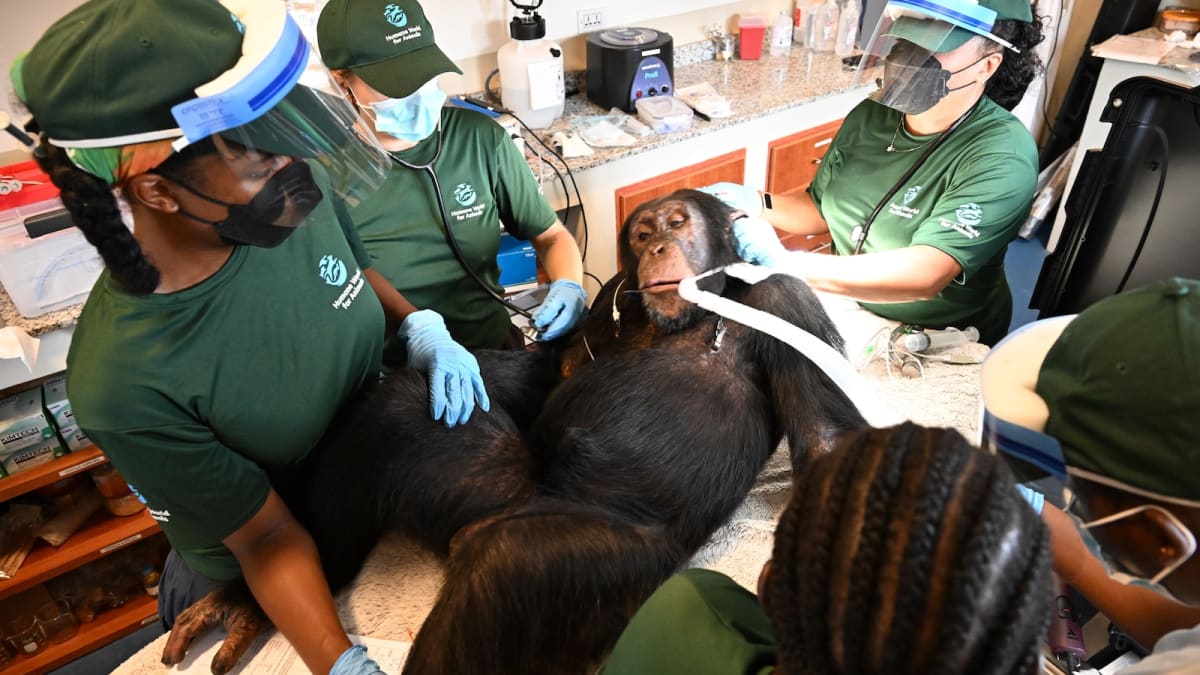
The West African chimps, many captured from the wild as infants, spent years in hepatitis B vaccine experiments conducted by American researchers between the 1970s and early 2000s. Now under the care of Humane World for Animals' Second Chance Chimpanzee Refuge, they're receiving comprehensive health assessments that include dental exams, X-rays, blood tests, and even pedicures.
"They were used in very invasive research and went through a lot of experiments and pain," said Liliana Pacheco Ricote, the sanctuary's director. The organization took permanent responsibility for the chimps in 2015 when the research program ended.
The health checks go beyond basic care. Veterinarians examine everything from hearts and lungs to nervous systems, looking for early signs of disease and creating personalized care plans as the chimps age. Each assessment, conducted under anesthesia, helps staff understand the long-term impacts of their laboratory years.
Most of the chimps, now between 30 and 35 years old, live on forest-covered islands that allow them social connection and natural surroundings. It's a stark contrast to their previous confinement, where they faced social disruption and lasting psychological harm.
Why This Inspires
This story reminds us that it's never too late to offer dignity and healing. These chimpanzees, classified as critically endangered, are getting a chance to experience life beyond laboratory walls.
The sanctuary staff see the emotional weight the chimps still carry. Yet watching them respond to compassionate care offers hope that trauma can be met with tenderness, even years later.
"Seeing how much they hurt about what we've done, it gives me a lot of pleasure to give them this second chance to live with dignity the life that they deserve," Ricote said.
The chimps are finally getting what they always needed: respect, space, and care that prioritizes their wellbeing above all else.
More Images




Based on reporting by Google News - Health
This story was written by BrightWire based on verified news reports.
Spread the positivity!
Share this good news with someone who needs it