60-Year-Old Museum Fossil Rewrites Evolution History
A forgotten fossil stored in a museum drawer since 1962 just solved a 500-million-year mystery about life on Earth. Scientists say the discovery proves ancient oceans teemed with life during a period once thought nearly empty.
A fossil sitting in storage for six decades is rewriting what scientists thought they knew about evolution.
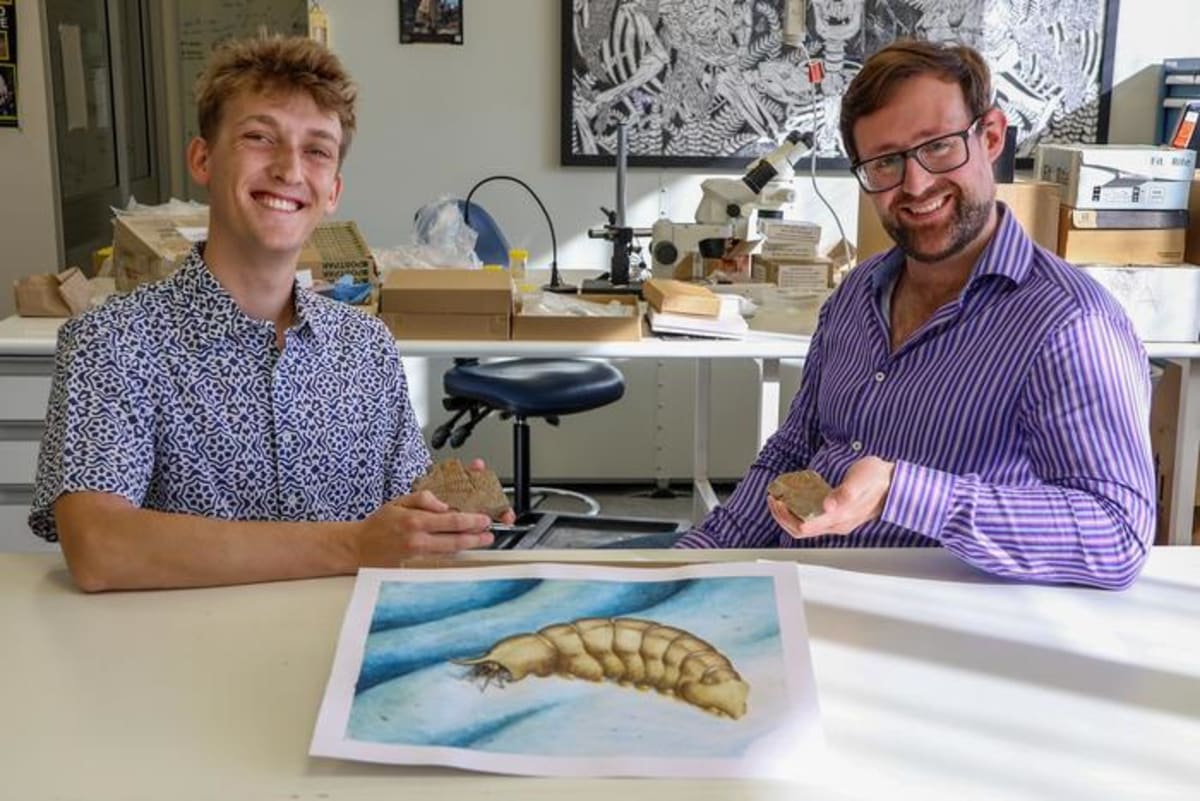
Researchers at Flinders University discovered that a specimen collected in 1962 near Québec belongs to a previously unknown species that lived 500 million years ago. The creature, now named Magnicornaspis garwoodi, features broad head shields, segmented bodies, and defensive spines that place it in the family tree leading to modern spiders and scorpions.
The finding challenges a long-standing puzzle called the "Furongian gap." Scientists believed this period between 497 and 485 million years ago showed dramatically fewer fossils than the times before or after it. Many wondered if oceans had become too toxic or climates too harsh for life to thrive.
Dr. Russell Bicknell from Flinders University says the answer is simpler. "Perhaps we haven't been looking at the right rocks or fossil-bearing deposits to get a clear picture of the organisms which inhabited the planet at that time," he explains.
The fossil was preserved in black shale from the Rivière-du-Loup Formation, deposited in deep ocean environments. It comes from a geological setting not previously recognized for exceptional preservation, opening new places for scientists to search.
Dr. Julien Kimmig from Germany's Karlsruhe Institute of Technology notes this discovery fits a broader pattern. Over the past two decades, more Furongian fossils keep turning up. "The Furongian may not represent a true collapse in biodiversity, but rather a gap in where scientists have looked," he says.
The Bright Side
This breakthrough didn't require expensive expeditions to remote locations. Dr. Bicknell found it while reviewing specimens at the American Museum of Natural History during a research fellowship. The fossil had been sitting in the Smithsonian collections in Washington DC for decades, waiting for someone to recognize its importance.
Museum collections worldwide contain enormous quantities of under-studied material gathered during geological surveys over the past century. Revisiting these collections with modern techniques can fundamentally reshape understanding of ancient ecosystems without disturbing new sites.
Each new Furongian fossil discovery narrows the supposed gap and reveals increasingly sophisticated ecosystems that thrived during the late Cambrian. Together, these discoveries suggest that Furongian oceans remained diverse and ecologically complex, just preserved in places paleontologists hadn't thought to search.
The fossil honors Russell Garwood, a Manchester University paleontologist who spent his career understanding how ancient arthropods evolved. His work helped create the foundation that made identifying this specimen possible.
Sometimes the biggest discoveries are already sitting on museum shelves, waiting for fresh eyes to reveal their secrets.
More Images
Based on reporting by Google: fossil discovery
This story was written by BrightWire based on verified news reports.
Spread the positivity!
Share this good news with someone who needs it