6,151 Girls Build AI Solutions for Real India Problems
When young women from India's smallest towns were given AI tools and mentorship, they built 373 working prototypes solving real problems they face daily. From medicine vending machines for remote villages to smart emergency alerts using existing CCTVs, their innovations prove technology works best when designed by the people who need it most.
In a north Karnataka village where the nearest pharmacy sits 20 kilometers away, a young woman named Pallavi asked a simple question: what if medicines could be dispensed like cash from an ATM?
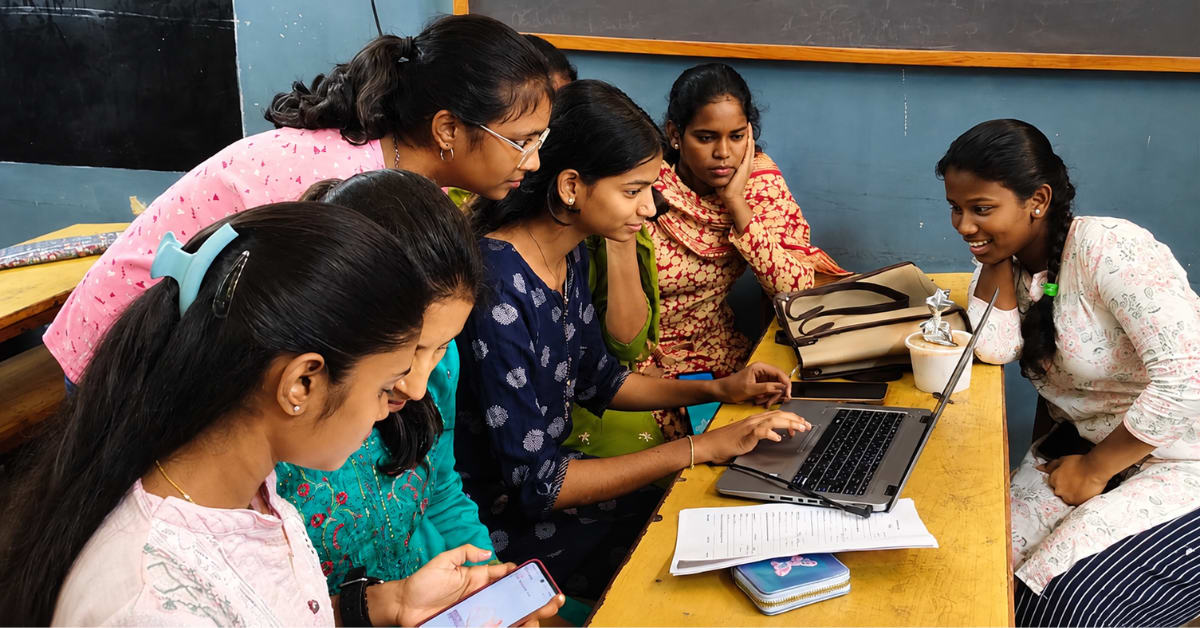
That idea became reality this June when Pallavi joined 6,151 young women at WitchHunt 2026, India's first girls-only AI hackathon. The event brought together participants from 23 states, most from small towns and overlooked villages, to build AI solutions for problems they actually face in their daily lives.
The HopeWorks Foundation organized the hackathon alongside AI4India and Karnataka's Digital Economy Mission. For six years, the foundation has worked toward getting a million girls from underserved communities into college and meaningful careers, but when AI exploded onto the scene, founder Jacintha Jayachandran noticed something worrying.
The girls they worked with began viewing artificial intelligence as just another barrier stacked against them. Jayachandran realized lectures wouldn't help; these young women needed to use AI themselves, solving problems they recognized from their own neighborhoods.
The results exceeded expectations. Of 1,250 teams that formed, 779 submitted ideas, and 373 delivered working prototypes, a 30 percent success rate that organizers say doubles the typical industry average for hackathons.
Nearly 300 mentors spent over a month helping teams develop their concepts. Healthcare drew the most attention with 275 submitted ideas and 128 prototypes, many addressing gaps in rural medical access or supporting overworked health workers and high-risk pregnancies.
One participant from a Tier II city noticed her town's CCTV cameras recorded everything but alerted no one. She built an AI layer that pushes real-time alerts to hospitals and emergency responders the moment an accident occurs, transforming passive surveillance into active lifesaving infrastructure.
Smart cities generated 235 ideas, education produced 178, and climate action, though the smallest category, still yielded 92 concepts. What united them all was practical, locally rooted thinking grounded in everyday experience.
The Ripple Effect
The hackathon deliberately ignored pedigree. A participant from a small town competed using the same mentors, resources, and learning platform as students from premier technology institutes.
Women made up 73 percent of participants, and 98 percent were between 18 and 30, a demographic India's innovation ecosystem has historically struggled to reach in underserved regions. The top 40 teams competed at the Bengaluru finale on June 13-14, with winning teams sharing an 18 lakh rupee prize pool.
The foundation plans to release a white paper distilling lessons from the journey, and several jury members are offering internships to finalists. For Jayachandran, the real victory isn't just the prototypes but proving that when you give young women from India's smallest towns the right tools and support, they don't just catch up with technology, they lead it.
More Images
.png)
%2Fenglish-betterindia%2Fmedia%2Fmedia_files%2F2026%2F06%2F23%2F4-2026-06-23-16-35-51.png)

Based on reporting by The Better India
This story was written by BrightWire based on verified news reports.
Spread the positivity!
Share this good news with someone who needs it