65-Foot Dinosaur Found Under Brazil Road Links Two Continents
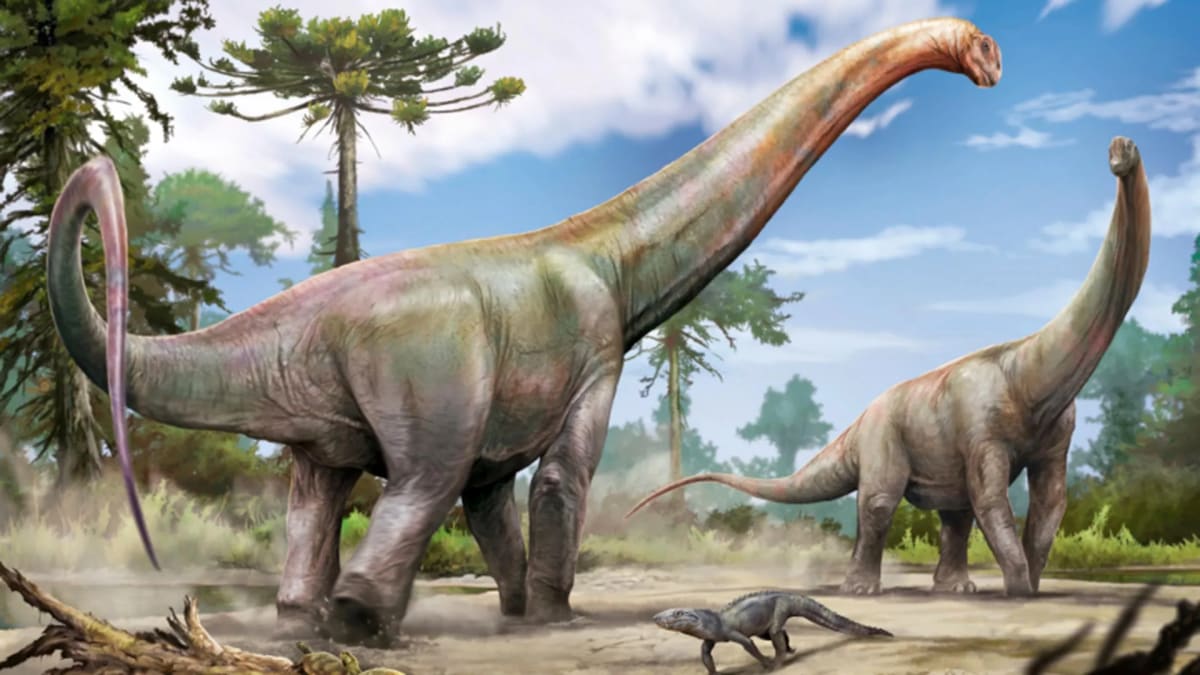
Construction workers in Brazil uncovered a 65-foot dinosaur that lived 120 million years ago, revealing an ancient connection between South America and Europe. The discovery shows how giant creatures once traveled between continents that are now separated by an ocean.
A giant dinosaur unearthed during a routine construction project is rewriting what scientists know about how prehistoric creatures traveled between continents.
Workers building a road and rail terminal in Davinópolis, Brazil, discovered the fossils of Dasosaurus tocantinensis eight meters underground. The massive creature stretched 65 feet long and roamed northeastern Brazil 120 million years ago.
The discovery became even more exciting when researchers realized this Brazilian giant's closest relative lived thousands of miles away in what is now Spain. This unexpected family connection suggests these enormous animals crossed ancient land bridges between Europe, Africa, and South America when the continents were still joined together in the supercontinent Gondwana.
Professor Elver Luiz Mayer from the Federal University of the São Francisco Valley was called in after archaeologists monitoring the construction site initially mistook the bones for prehistoric mammal remains. He immediately recognized something far older and assembled a team of specialists to study the find.
The fossil is remarkably complete for a dinosaur of its size. Researchers recovered tail vertebrae, a five-foot-long thigh bone, ribs, foot bones, and limb fragments, making it one of the most informative sauropod discoveries in the region.
The dinosaur earned its name from the landscape where it was found. "Daso" means forest in reference to Maranhão's dense woodland, which early Portuguese explorers described as tangled maranhão. "Tocantinensis" honors the nearby Tocantins River.
Analysis of the dinosaur's bone structure revealed growth patterns that blend features from older sauropods with characteristics of titanosaurs. This finding suggests some evolutionary adaptations that allowed dinosaurs to grow to enormous sizes may have developed earlier than scientists previously thought.
The Bright Side
The discovery highlights an unexpected benefit of development projects. While construction can threaten fossil sites, it also exposes rock layers that would otherwise remain hidden beneath Brazil's dense tropical vegetation. Paleontologists rely on these human activities to reveal ancient treasures that traditional excavation methods might never reach.
The fossils now rest in São Luís at the State Center for Natural History and Archaeology Research. Researchers believe more bones from the same specimen remain buried at the construction site, waiting to tell us more about life on Earth 120 million years ago.
This construction site surprise reminds us that our planet's most amazing stories are still being written, one discovery at a time.
Based on reporting by Science Daily
This story was written by BrightWire based on verified news reports.
Spread the positivity!
Share this good news with someone who needs it
%2Fhttps%3A%2F%2Ftf-cmsv2-smithsonianmag-media.s3.amazonaws.com%2Faccounts%2Fheadshot%2FSarahKuta.png)