7 Vaquitas Left: Science Says Recovery Still Possible
The world's rarest porpoise is down to single digits, but new genetic research reveals something surprising. Scientists say the vaquita can still recover if one critical threat is eliminated now.
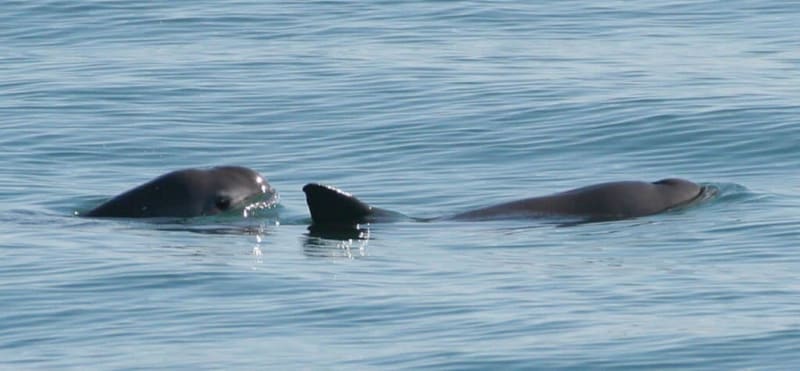
Only 7 to 10 vaquitas remain in the entire world, all living in a small stretch of Mexico's Gulf of California. Yet against all odds, conservation scientists are delivering a message of hope: recovery is still biologically possible.
The vaquita, the world's smallest living cetacean, faces a clear and fixable threat. These rare porpoises die as accidental bycatch in illegal gillnets set to catch totoaba, a fish whose swim bladder is trafficked internationally. When trapped in these nets, vaquitas drown before they can escape.
Recent calves spotted in 2023 and 2024 proved that the remaining animals are still reproducing. While no new calves were confirmed in 2025, the population has stabilized rather than continuing its freefall decline.
Here's where the science gets exciting. Researchers studying vaquita genetics made a groundbreaking discovery: these porpoises have been naturally rare for nearly 250,000 years, with populations historically only in the thousands. This long history of small numbers appears to have reduced the harmful genetic variants that usually make inbreeding so devastating.
For the vaquita, genetics aren't the death sentence everyone feared. The real killer is human activity, specifically those illegal gillnets.
Why This Inspires
The vaquita's story challenges everything we thought we knew about species on the brink. When populations crash to single digits, conventional wisdom says inbreeding doom is inevitable. But the vaquita proves nature can be more resilient than we imagine.
Scientists emphasize that the window for action remains open. If gillnet fishing can be completely eliminated from vaquita habitat, the remaining animals have the biological capacity to rebuild their population. Males and females are still present, still healthy, and still capable of producing viable offspring.
The challenge isn't biology anymore. It's protection. Every illegal net removed from the Gulf of California gives these tiny porpoises another chance to breed, another season to grow their numbers, another opportunity to step back from the edge.
Conservation groups are working with Mexican authorities to increase enforcement and protect the vaquita's limited range. Recent monitoring efforts show that when habitats are properly protected, even critically endangered species can surprise us.
The vaquita's survival now depends entirely on whether humans can eliminate the one threat pushing them toward extinction. The science says recovery is possible; the genetics support it; the animals are ready. What happens next is up to us, and for once, the solution is straightforward: remove the nets, save the species.
More Images


Based on reporting by Google: species saved endangered
This story was written by BrightWire based on verified news reports.
Spread the positivity!
Share this good news with someone who needs it