70 Bee-Eaters in Tamil Nadu Signal Thriving Ecosystem
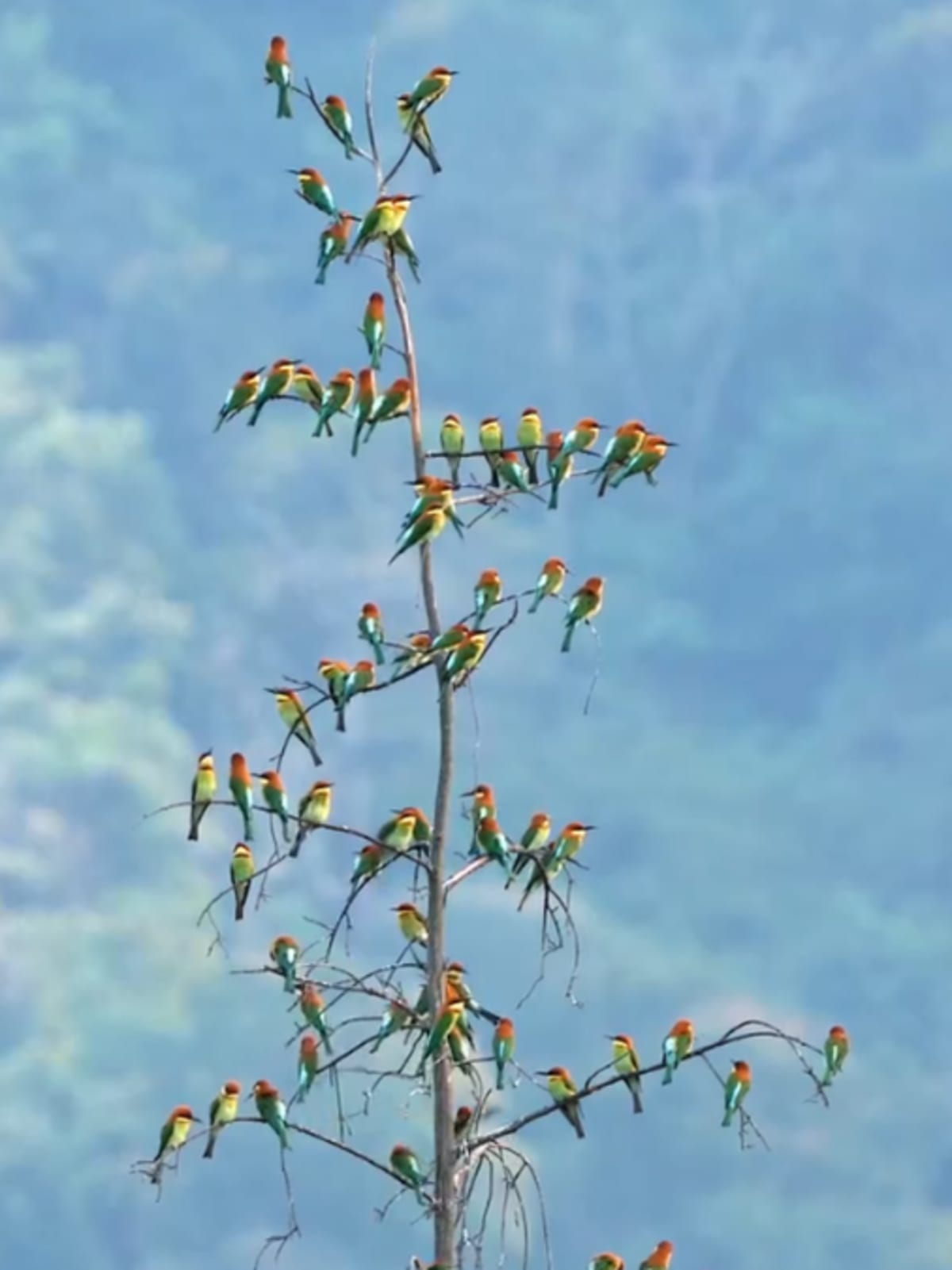
A stunning flock of 70 chestnut bee-eaters spotted flying in perfect sync at Tamil Nadu's Anamalai Tiger Reserve reveals what happens when nature is left undisturbed. The rare sighting shows a healthy, balanced ecosystem quietly thriving.
Imagine 70 birds moving through the air like a single organism, their synchronized flight looking almost choreographed but entirely wild. That's exactly what wildlife conservationist Sriram Murali captured on video at the foothills of Tamil Nadu's Anamalai Tiger Reserve, and it tells a bigger story than just beauty.
These chestnut bee-eaters, locally known as "Senthalai Panchuruttan" or red-headed bee-eaters, don't just gather for show. When a flock this size appears, it signals something crucial about the landscape: there's enough insect life to sustain them, pointing to a stable and healthy food chain.
The birds feed on flying insects like bees, wasps, and hornets, catching them mid-air with remarkable agility. Their presence helps control insect populations naturally, making them valuable allies to farmers and key indicators of ecological balance.
Bee-eaters are deeply social creatures who flock, hunt, and roost together. Their high-pitched chirps and acrobatic flights create a rhythm that feels like nature breathing in unison, a sight that only unfolds when multiple elements stay in harmony: the right species, habitat, and food sources.
The Anamalai Tiger Reserve provides the perfect backdrop for this moment. The protected area supports around 300 recorded bird species and demonstrates what's possible when human interference stays minimal and conservation efforts succeed.
The Ripple Effect
This sighting matters beyond its visual magic. It shows how conservation creates space for entire ecosystems to function as they should, with each species playing its role in an intricate web of life.
The synchronized flock also reflects how birds respond together to shared environmental cues like food availability, seasonal changes, and habitat quality. When conditions are right, nature finds its rhythm again, and moments like these become possible.
In a world facing ecological stress, watching 70 birds move as one offers proof that when we protect wild spaces, they protect themselves. The Anamalai landscape shows that thriving biodiversity isn't just a hope for the future, it's happening right now in places we choose to preserve.
Based on reporting by The Better India
This story was written by BrightWire based on verified news reports.
Spread the positivity!
Share this good news with someone who needs it