70-Year-Old Farmer Creates Disease-Resistant Papaya in India
A self-taught farmer in West Bengal spent years cross-breeding papaya plants to create a disease-resistant variety that now earns him $27,000 annually. Krishna Chandra Halder is sharing his techniques with neighboring farmers to boost their incomes too.
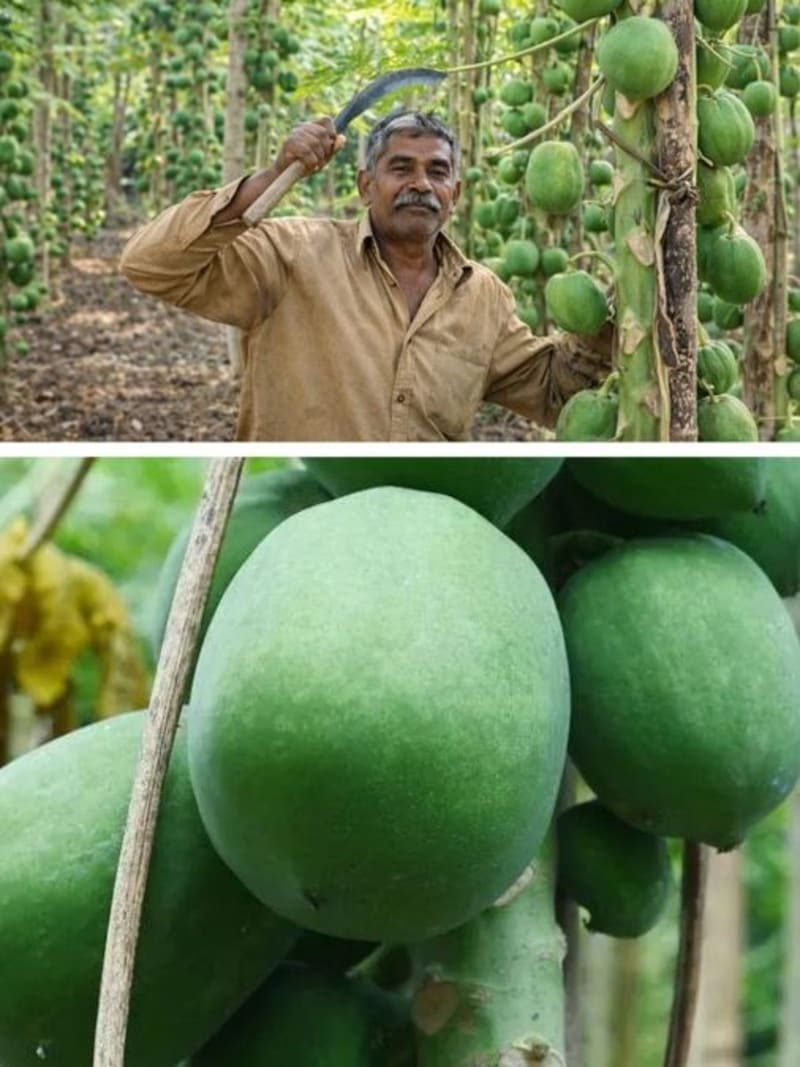
When native papaya plants kept failing on his small farm, 70-year-old Krishna Chandra Halder decided to create his own variety from scratch.
The school dropout from Hooghly, West Bengal, has been farming his late father's land since 1976. After growing various crops for decades, he noticed his papaya plants consistently produced poor yields and struggled with diseases.
So Halder taught himself cross-pollination. Using hand-pollination techniques, he carefully crossed Red Lady 786 papaya with native varieties, experimenting for years until fruit finally appeared on his hybrid plants.
His patience paid off spectacularly. The new variety produces elongated fruits weighing 500 to 750 grams each, with sweetness and aroma that quickly became popular in Kolkata markets.
Today, Halder grows about 1,875 plants on three and a half bighas of land (roughly 1.2 acres). He harvests around 75,000 kilograms of papaya annually, earning approximately 22.5 lakh rupees (about $27,000) from sales alone.
The Ripple Effect
The impact extends far beyond Halder's own farm. His variety thrives year-round, meeting constant market demand in a region where reliable papaya production was previously difficult.
Halder credits Bidhan Chandra Krishi Viswavidyalaya agricultural university for advice on soil management and plant care that helped refine his techniques. He spaces plants six to eight feet apart, uses clay soil, supports them with bamboo, and replaces them after two years for optimal yields.
Now he's training other farmers in his region to grow the hardy variety. By sharing his knowledge freely, he's helping increase both local yields and farmer incomes across the area.
His dedication to agriculture runs deep. Early in life, Halder was selected for army service but chose farming instead, finding genuine joy and purpose in working the land.
From a small plot and simple observations about struggling plants, one farmer's innovation is changing livelihoods and proving that agricultural breakthroughs don't require fancy labs or advanced degrees.
Based on reporting by The Better India
This story was written by BrightWire based on verified news reports.
Spread the positivity!
Share this good news with someone who needs it