Woman Turns Childhood Landfill Memory Into Rs 1 Crore Brand
What Kanika Ahuja once mistook for a hillock was actually a mountain of plastic waste. That childhood moment sparked a business that now upcycles 12 tonnes of plastic yearly while supporting 500 workers.
Kanika Ahuja wanted to climb what looked like a small hill near her home. Her parents stopped her just in time, explaining it wasn't a hill at all but a towering landfill of plastic waste.
That childhood memory stayed with Kanika through engineering school, an MBA program, and a career in market research. By 2016, she joined her parents' nonprofit Conserve India, but something felt incomplete about their work.
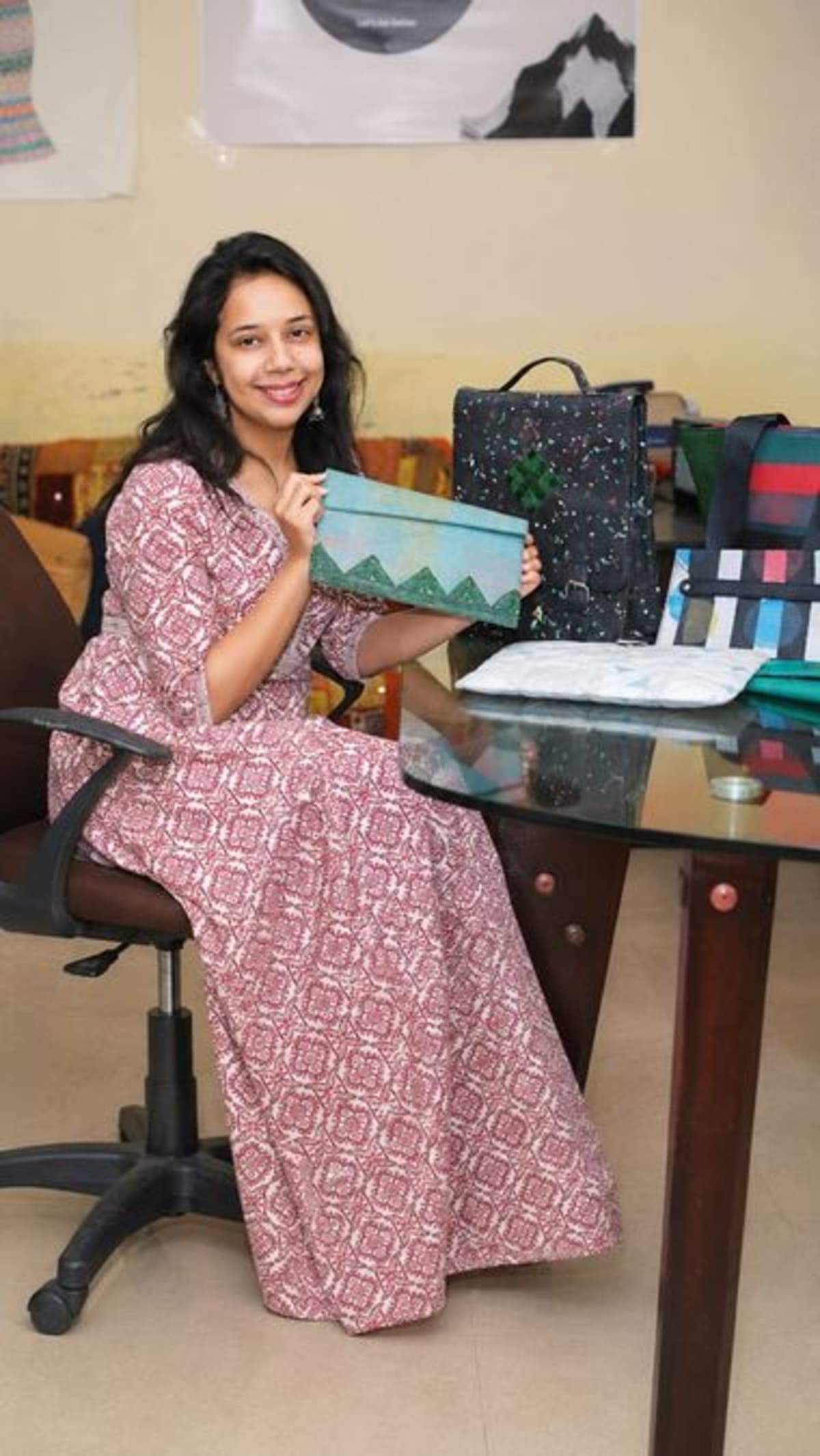
The team paused to rethink their approach. That reflection led Kanika to launch Lifaffa in 2017, a social enterprise with a bold mission: turn discarded plastic bags into beautiful fabric.
"We developed a technology to convert single-use plastic into a new fabric," Kanika explains. The plastic's varied colors became the brand's signature feature, creating vibrant patterns instead of ending up in landfills.
Just months after launch, Lifaffa received an invitation to Lakme Fashion Week. Showcasing bags and wallets alongside high fashion designs gave the startup immediate credibility and visibility.
The numbers tell a powerful story. Lifaffa now upcycles nearly one tonne of plastic monthly and close to 12 tonnes each year. By 2022, the brand had crossed Rs 1 crore in revenue.
The Ripple Effect
Beyond the environmental impact, Lifaffa has created meaningful work for over 500 people. The team includes 200 waste workers and 300 artisans, with women making up a significant portion of the workforce.
The brand also partnered with Afghan refugee women skilled in traditional handicrafts. This collaboration gives these women both income and a way to preserve their cultural heritage in a new country.
The challenges haven't disappeared. "People still ask why they should spend money on buying something that is made out of 'waste,'" Kanika says honestly.
But Lifaffa proves that waste is just potential waiting to be reimagined. That hillock of plastic from Kanika's childhood is slowly shrinking, one colorful bag at a time.
Based on reporting by The Better India
This story was written by BrightWire based on verified news reports.
Spread the positivity!
Share this good news with someone who needs it