70,000-Year-Old Hand Art Rewrites Human History
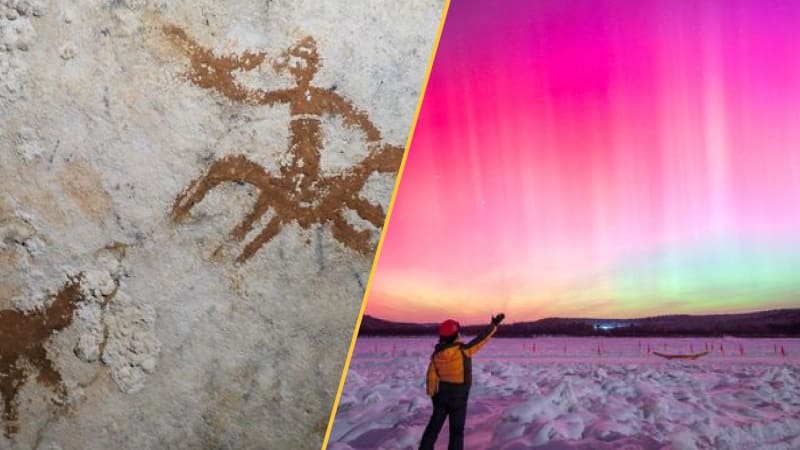
Scientists discovered the oldest known rock art in an Indonesian cave: a 70,000-year-old hand stencil that reveals new secrets about humanity's ancient journey across Southeast Asia. The find fills a major gap in understanding how our ancestors reached Australia.
A human hand reached out in a cave 70,000 years ago, and scientists just found the mark it left behind.
Researchers discovered the world's oldest known rock art in Sulawesi, Indonesia: a stencil of a human hand that predates any other cave art ever found. The ancient artist was likely an ancestor of Indigenous Australians, making their mark during humanity's great migration across Southeast Asia.
The discovery does more than break records. It fills a crucial missing piece in the story of how early humans traveled from mainland Asia through Indonesia's islands to reach Australia, a journey that required crossing open ocean and navigating unfamiliar terrain.
This wasn't the only ancient surprise this week. Scientists also found a 2.6 million-year-old fossil jaw of Paranthropus, an extinct human relative nicknamed "Nutcracker Man," hundreds of miles farther north than researchers thought possible. Our ancient cousins traveled farther and settled in more places than we ever imagined.
Other time capsules revealed themselves too. Archaeologists uncovered a 2,400-year-old shrine to Hercules outside ancient Rome, 1,400-year-old Anglo-Saxon burials in the U.K., and a medieval shipwreck off Denmark's coast.
The Bright Side
Each discovery rewrites what we thought we knew about human history, and each rewrite makes the story richer. The hand stencil in Sulawesi shows that even 70,000 years ago, humans felt the urge to say "I was here" and leave their mark for the future.
Modern science also delivered wins this week. An expedition confirmed a massive freshwater reservoir beneath the East Coast seafloor, stretching from New Jersey to Maine. The reservoir could supply a city the size of New York for 800 years and likely formed when rainwater got trapped underground during the last ice age.
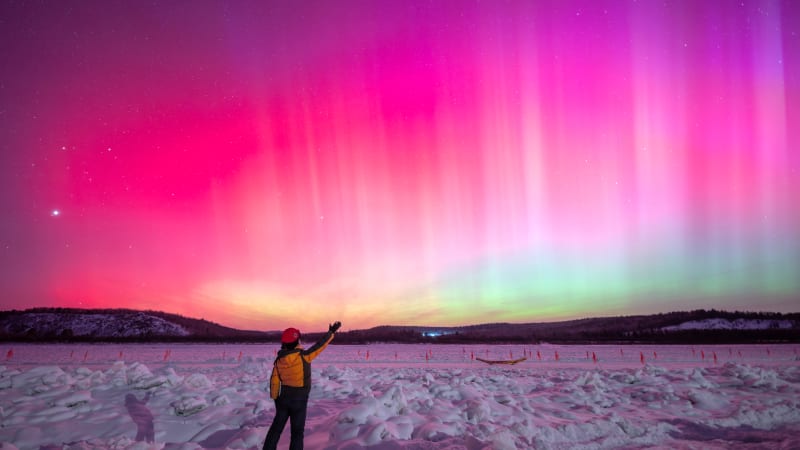
The sky put on its own spectacular show when Earth experienced its biggest solar radiation storm in over two decades. Auroras danced across night skies as far south as Southern California, Arizona, and New Mexico, turning a scientific event into a shared moment of wonder for millions.
Meanwhile, the James Webb Space Telescope continued upending our understanding of black holes, revealing that these cosmic giants formed earlier and grew faster than previously thought possible.
From ancient caves to distant galaxies, this week proved that every answer we find opens doors to even better questions.
More Images


Based on reporting by Live Science
This story was written by BrightWire based on verified news reports.
Spread the positivity!
Share this good news with someone who needs it