8-Year-Old's Backyard Find Rewrites Ant Science
A curious boy spotted something odd near an ant nest in his backyard, and his discovery just challenged what scientists thought they knew about ants for over a century. Thanks to Hugo Deans and his entomologist dad, we now understand a completely new way that ants, oak trees, and wasps work together in nature.
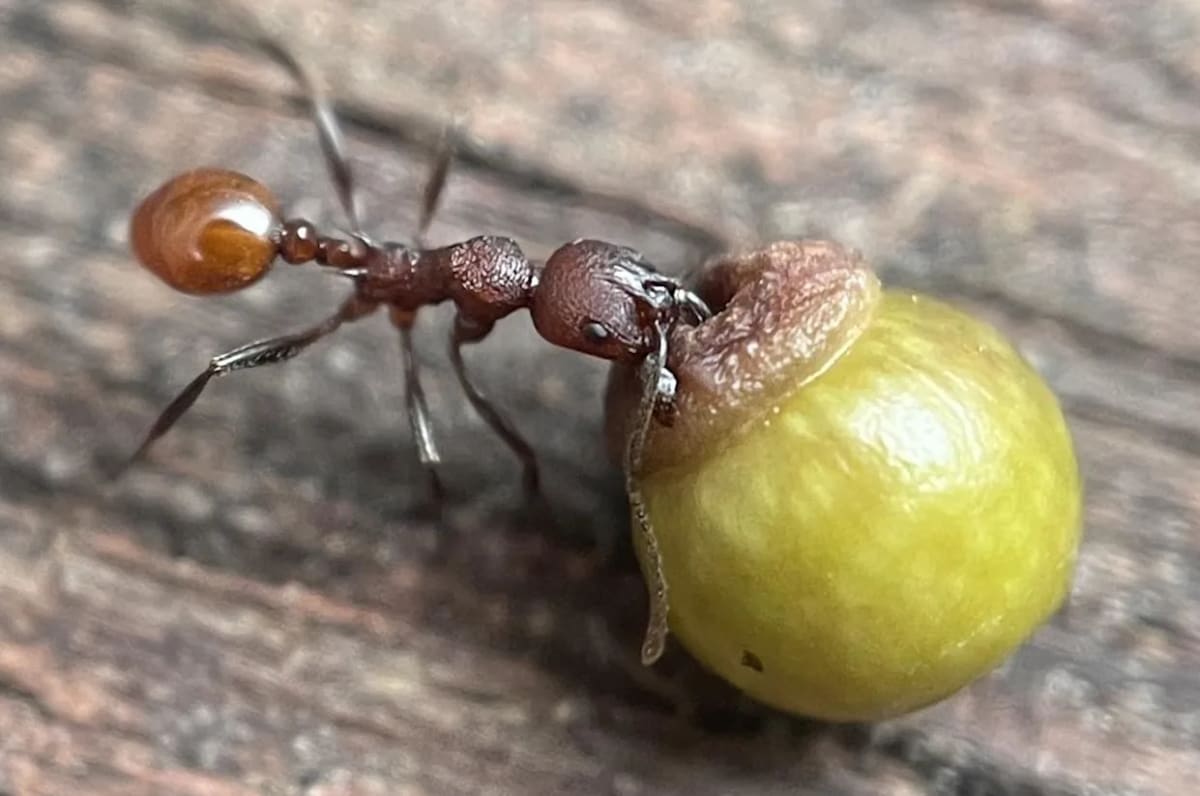
When 8-year-old Hugo Deans spotted what looked like seeds piled near an ant nest in his Pennsylvania backyard, he had no idea he'd just stumbled onto a scientific mystery. His sharp observation kicked off research that revealed ants don't just carry seeds—they're also transporting oak galls, tiny plant growths that house baby wasps.
Lucky for science, Hugo's dad Andrew Deans teaches entomology at Penn State University. He immediately recognized that something unusual was happening and teamed up with researchers at SUNY to investigate what the ants were actually doing.
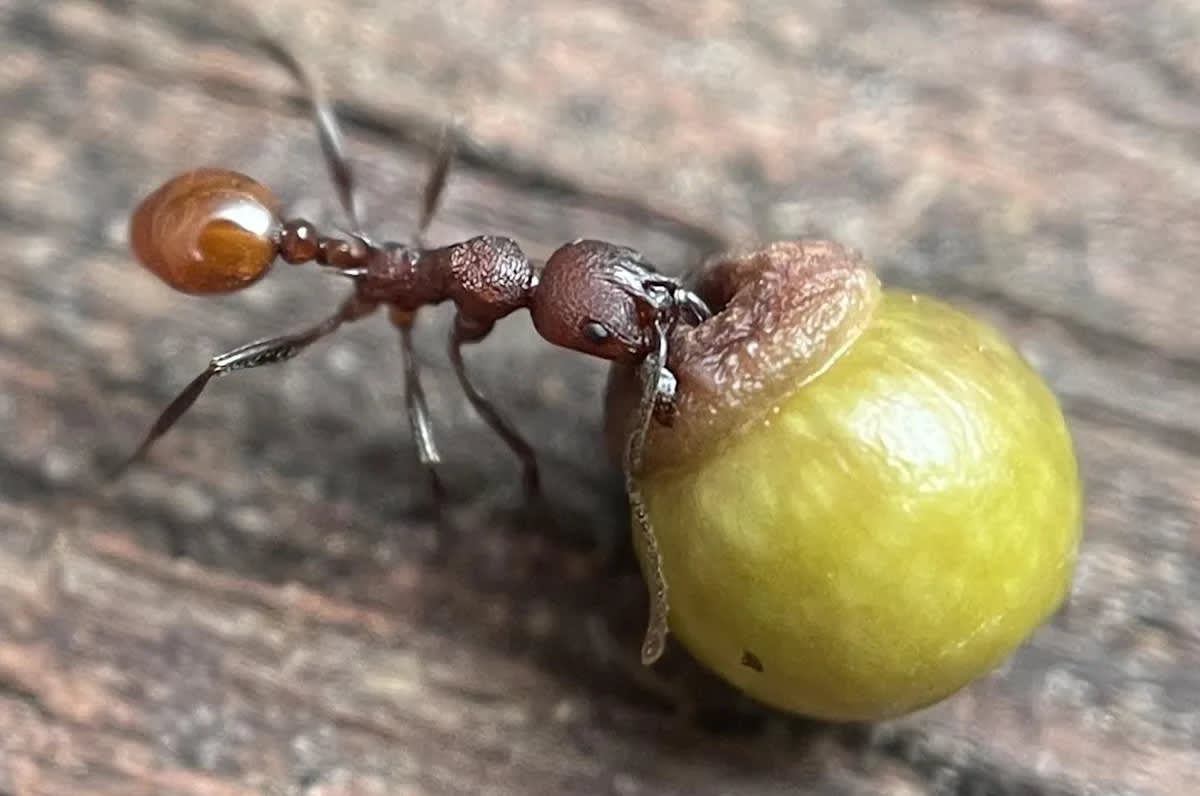
Oak galls are weird little structures that form on oak leaves when gall wasps lay their eggs inside. They create tiny protective rooms where wasp larvae can safely develop. These particular galls have a pale cap that researchers named the "kapéllo," Greek for "cap," which turned out to be the key to everything.
When oak leaves fall in late summer and autumn, ants collect these capped galls and haul them back to their nests. The team wanted to know if ants treated galls the same way they handle seeds, so they set up a clever test in a New York forest.
They placed dishes containing bloodroot seeds and galls side by side. The ants, especially a species called Aphaenogaster picea, grabbed both items at the same speed over 90 minutes. They gripped the galls by their caps just like they grab the fatty attachments on seeds called elaiosomes.
Here's where it gets really interesting. When researchers removed the caps from the galls, ants lost almost all interest in them. But they still went after isolated caps and whole galls enthusiastically, proving the cap was the main attraction.
Chemical tests revealed why. The kapéllo contains the same free fatty acids found in seed elaiosomes, the nutrient-rich parts that ants normally eat. The galls essentially learned to mimic seeds to hitchhike with ants.
The Ripple Effect
This discovery matters far beyond one backyard ant nest. It shows that tiny chemical signals can reshape entire forest ecosystems by controlling how insects, nutrients, and even predators move around. Scientists had assumed for more than 100 years that ants only dispersed seeds this way, but nature clearly has more tricks up its sleeve.
The research also highlights something beautiful about biodiversity. Countless small relationships like this one are quietly holding ecosystems together, and we're only just beginning to notice them. When ants carry galls to their nests, they're moving nutrients, creating new habitats for microbes, and potentially protecting wasp larvae from predators.
The best part? This breakthrough happened because a curious kid paid attention to the small wonders in his own backyard. Hugo's observation opened a window into hidden connections that scientists never knew existed, proving that anyone can contribute to our understanding of the natural world.
Sometimes the biggest discoveries start with the smallest observations.
More Images
Based on reporting by Google News - Science
This story was written by BrightWire based on verified news reports.
Spread the positivity!
Share this good news with someone who needs it