83-Million-Year-Old Lizard Fossil Discovered in France
Scientists in France have discovered a tiny jawbone that rewrites the history of an ancient lizard family whose only living relative is on the brink of extinction. The 83-million-year-old fossil pushes back the European presence of these rare reptiles by 30 million years.
A fragment of fossilized jaw smaller than a credit card is helping scientists understand a mysterious reptile family before it disappears forever.
Paleontologists working near the town of Villeveyrac in southern France have identified a new species of ancient lizard from a single upper jawbone measuring just over one inch long. The fossil dates back 83 million years to the Late Cretaceous period, making it the oldest evidence of its kind ever found in Europe.
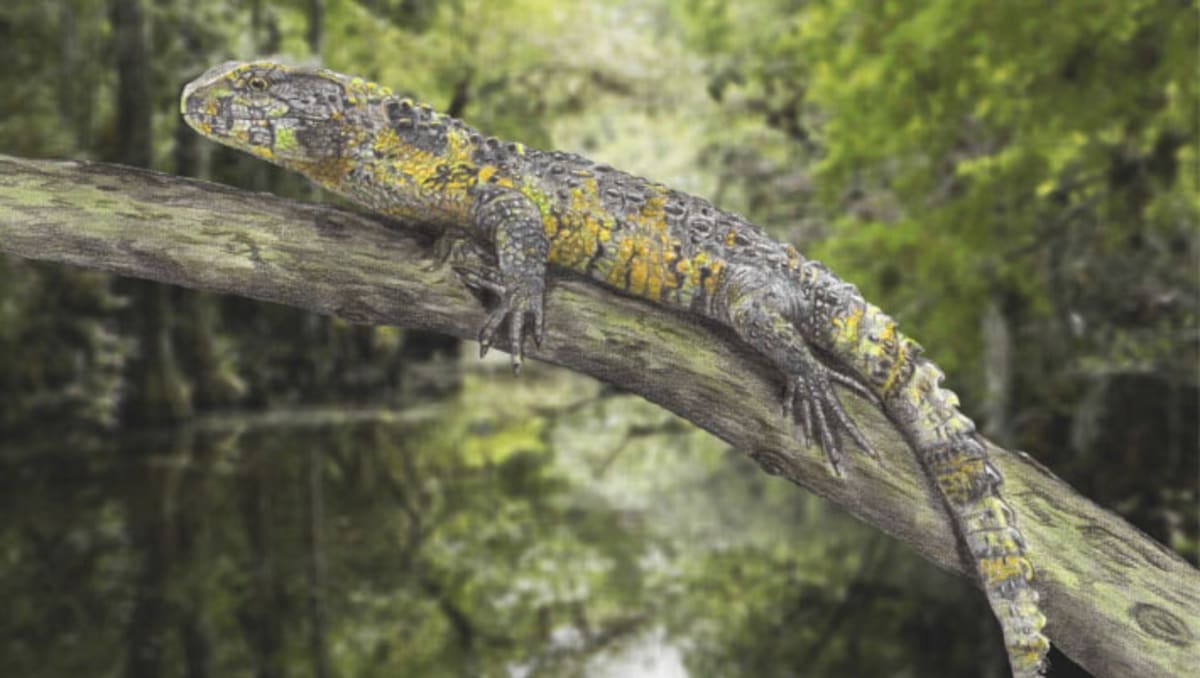
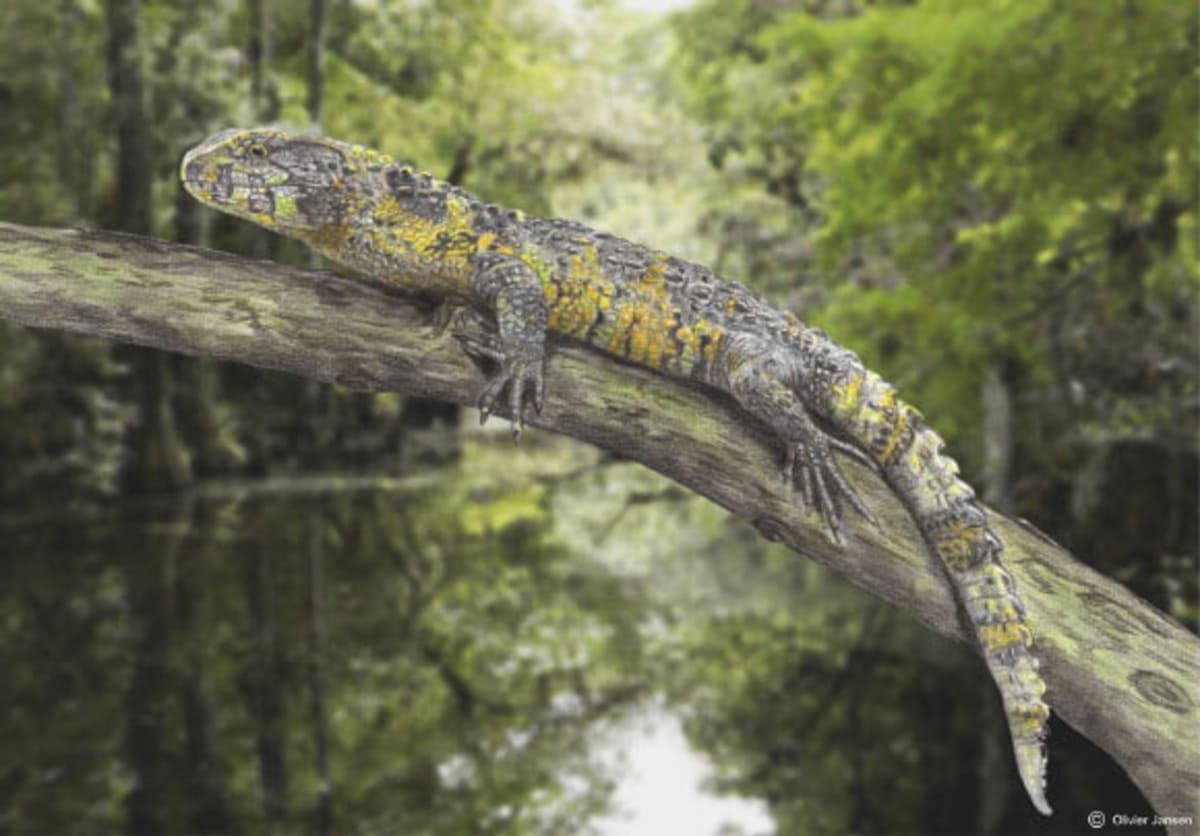
The newly named Acutodon villeveyracensis belongs to the same evolutionary family as the Chinese crocodile lizard, one of the rarest reptiles on Earth. Only a few hundred of these semi-aquatic creatures survive today in remote forest streams of southeastern China and northern Vietnam. They face threats from habitat destruction, poaching for the illegal pet trade, and climate change affecting their specialized stream habitats.
Dr. Olivier Jansen from the Université de Poitiers led the research team that examined the tiny jawbone's distinctive features. The specimen revealed slender, curved teeth with unique replacement structures called resorption pits, matching characteristics found in both living and extinct crocodile lizards. Based on skull proportions from modern relatives, scientists estimate this ancient predator stretched over three feet long.
The fossil suggests Acutodon villeveyracensis hunted fish and small animals like frogs and salamanders in the freshwater marshes that once covered southern France. It likely competed with other large reptiles in the same ecosystem, including terrestrial monstersaurs and freshwater mosasaurs.
Why This Inspires
This discovery arrives at a crucial moment. The Chinese crocodile lizard could vanish before scientists fully understand its evolutionary story, making every fossil find precious. Each ancient relative discovered helps researchers piece together how these specialized reptiles survived for millions of years across different continents.
The finding also raises new questions about how pan-shinisaur lizards spread across ancient Europe. The 30-million-year gap this fossil fills suggests scientists have barely scratched the surface of understanding these remarkable survivors. Every jawbone, tooth, and bone fragment becomes a window into a hidden world, preserving knowledge that might otherwise be lost forever alongside the species itself.
More Images
Based on reporting by Google: fossil discovery
This story was written by BrightWire based on verified news reports.
Spread the positivity!
Share this good news with someone who needs it