9,000-Year-Old City Shows Women Led First Communities
Scientists studying an ancient Turkish city discovered that women, not men, formed the core of family structures 9,000 years ago. This challenges long-held beliefs about how early human societies organized themselves.
A 9,000-year-old city in Turkey is rewriting what we know about ancient communities, and women are at the center of the story.
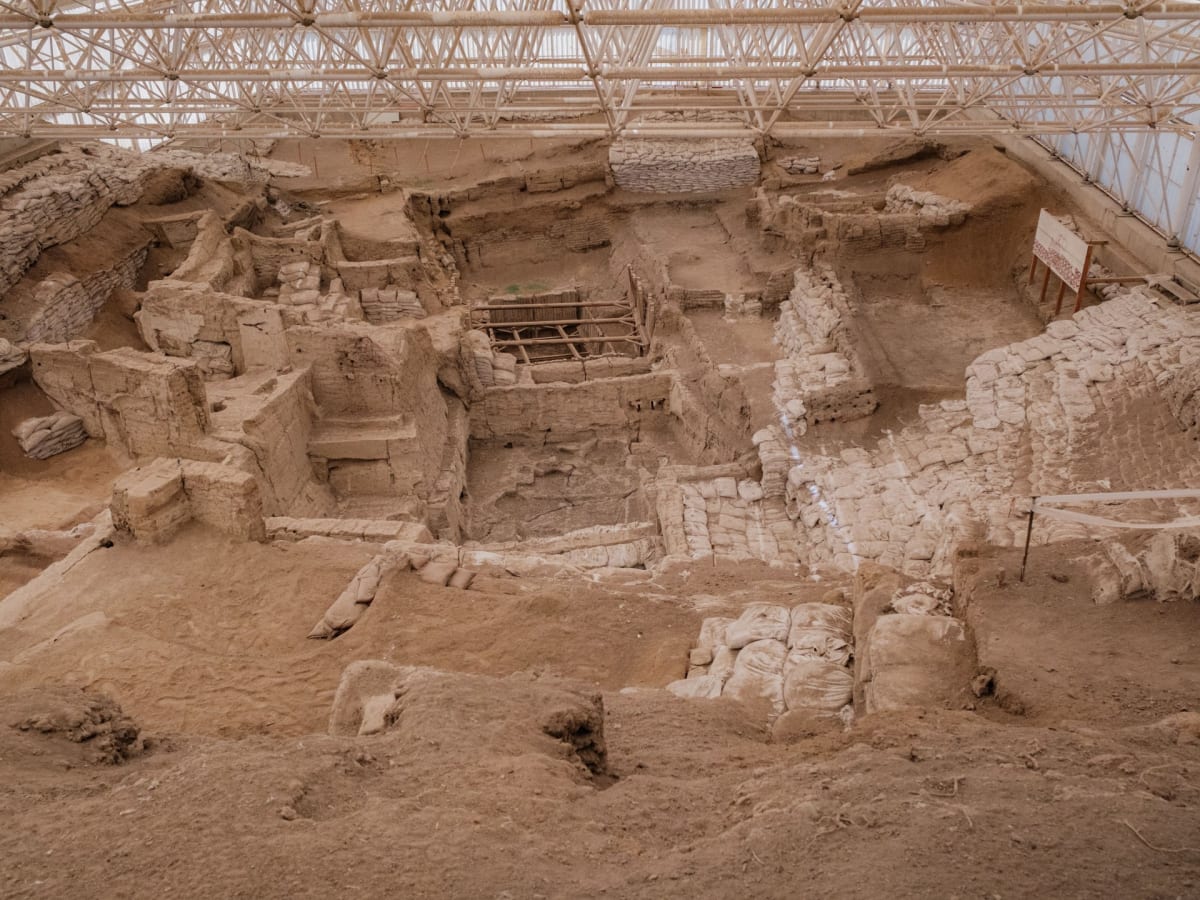
Archaeologists studying Catalhoyuk, one of the world's first cities, just confirmed something remarkable. Women stayed in their family homes for life while men moved away when they reached adulthood. This matrilineal system flips our understanding of early human society on its head.
The settlement sat on Turkey's Konya Plain and housed up to 8,000 people at its peak between 7000 and 6000 BC. Families built their homes so close together that residents walked across rooftops instead of streets and entered through hatches in the ceiling.
A team of 46 scientists analyzed the DNA of 131 skeletons found buried beneath home floors. They discovered that 70 to 100 percent of female children stayed connected to their birth homes across generations. Most other ancient European settlements show the opposite pattern, with women leaving and men staying put.
The research revealed another stunning detail. Young girls, even infants, received up to five times more burial goods like beads and pendants than boys did. This suggests daughters held special status in the community.
Polish archaeologist Arek Marciniak helped lead the study. Standing at the excavation site in 2022, he explained that examining children's remains showed equal numbers of boys and girls. But the girls consistently had more sophisticated burial items.
The city itself was extraordinary for its time. Residents farmed, created art, and decorated some homes with intricate wall paintings and bull horns set into clay platforms. No buildings stood out as palaces or temples, suggesting a society built on equality rather than hierarchy.
Why This Inspires
This discovery proves that rigid gender roles aren't hardwired into human nature. For thousands of years, communities thrived with women at their center, passing down homes and heritage through maternal lines.
Catalhoyuk shows us that the way we organize society today isn't the only way it's ever been done. Our ancestors experimented with different structures, and some placed women in positions of continuity and importance that shaped entire communities for a thousand years.
Based on reporting by Google: archaeological discovery
This story was written by BrightWire based on verified news reports.
Spread the positivity!
Share this good news with someone who needs it