9,000-Year-Old Lost World Found Beneath Lake Huron
Researchers have discovered an ancient hunting ground 100 feet below Lake Huron's surface, revealing how humans lived 9,000 years ago on a land bridge now lost to time. The preserved structures offer an untouched glimpse into how early Americans hunted caribou and survived in the ancient Great Lakes region.
Imagine an entire prehistoric landscape frozen in time, waiting 9,000 years to tell its story from the bottom of a lake.
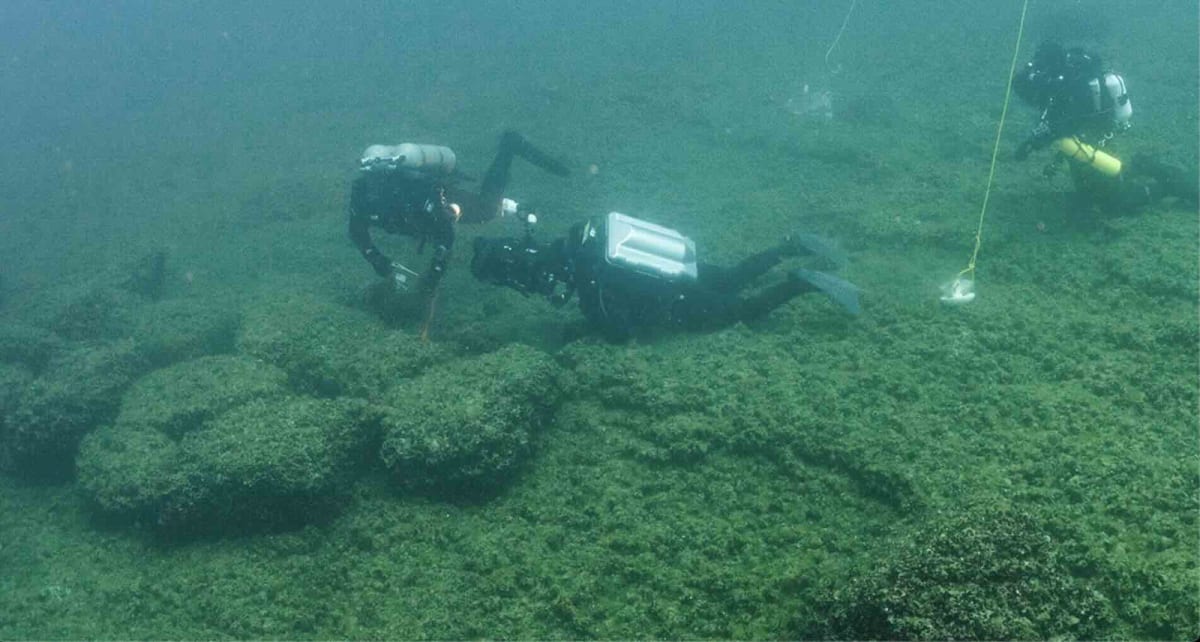
That's exactly what researchers at the University of Michigan have been uncovering since 2008, when they first spotted unusual stone structures more than 100 feet below Lake Huron's surface. What started as a curious discovery has become one of the most remarkable archaeological finds in North America.
Professor John O'Shea and his team have now identified 80 locations featuring ancient hunting structures built by early Americans who once lived on what's now the lake floor. These aren't just random rocks. They're carefully constructed drive lanes, hunting blinds, and stone caches that caribou hunters assembled to survive in this region.
The structures sit on the Alpena-Amberley ridge, a ten-mile-wide land bridge that stretched over 100 miles between Michigan and Ontario. For thousands of years after the Ice Age, this ridge stayed above water while glacial melt filled the surrounding basins. Ancient hunters used this unique landscape to their advantage, building stone guides similar to those used by modern Siberian reindeer herders.
O'Shea's breakthrough came from an unlikely combination of sources. NOAA had just published new data mapping the Great Lakes' underwater features. Around the same time, he was reading about how Siberian families manage reindeer herds by laying brush on the ground to guide animal movement. The connection sparked a high-risk research project that paid off.
Why This Inspires
What makes this discovery truly special is its pristine condition. Unlike most archaeological sites on land, these structures haven't been touched by farming, construction, or development. They exist exactly as ancient hunters left them nearly 9,000 years ago.
The find represents the earliest evidence of human activity ever discovered at the bottom of the Great Lakes. It's rewriting what we know about late Paleoindian-period life in North America. O'Shea continues presenting updates on new discoveries, most recently at the Society for Historical Archaeology meetings in Detroit this January.
The team will return to Lake Huron this summer to continue their work. Each season brings new insights into how small groups of families managed to hunt massive caribou herds using simple stone arrangements and deep knowledge of animal behavior. Many similar sites likely exist along coastal regions, but Lake Huron's unique conditions have preserved this ancient world like nowhere else.
Sometimes the most incredible human stories aren't lost at all, just waiting in unexpected places to remind us of our ancestors' ingenuity.
Based on reporting by Google: archaeological discovery
This story was written by BrightWire based on verified news reports.
Spread the positivity!
Share this good news with someone who needs it
%2Ffile%2Fattachments%2F2997%2F36Thulamela_Archaeological_Research_Field_Trip_Sept_2025_035_372816.jpg)