99-Million-Year-Old Wasp Had Venus Flytrap-Like Trap
Scientists discovered a parasitic wasp preserved in amber that caught prey with a movable trap like a Venus flytrap, something never seen before in insects. The 99-million-year-old creature used this bizarre mechanism to capture hosts for its eggs.
Imagine a tiny wasp from the age of dinosaurs with a spring-loaded trap on its body that worked like a carnivorous plant. Scientists just found exactly that preserved perfectly in amber.
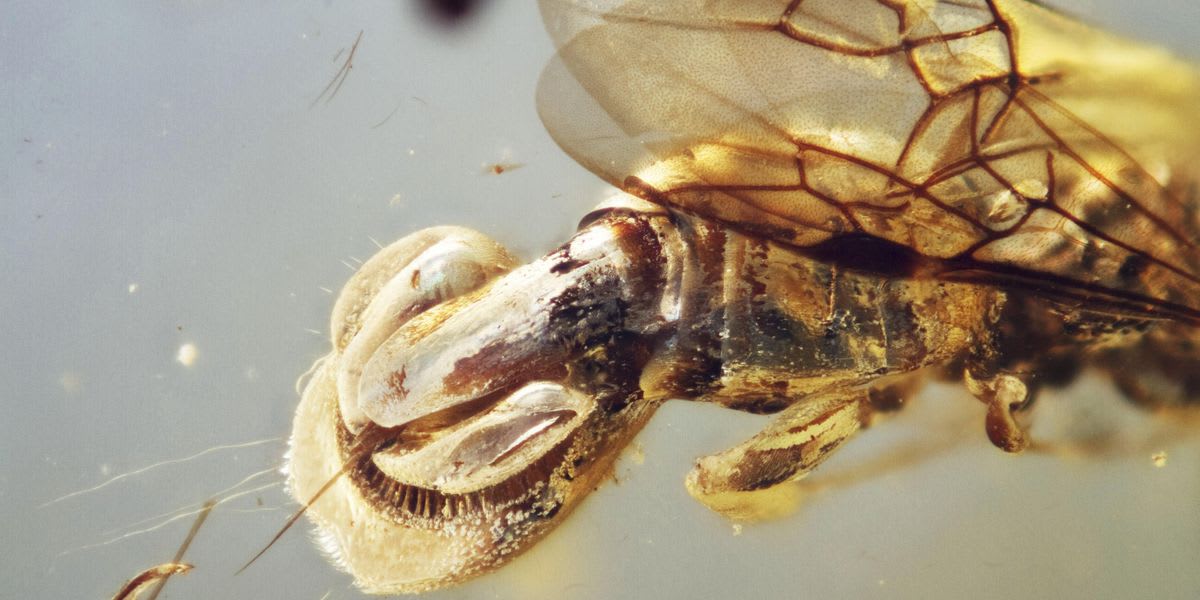
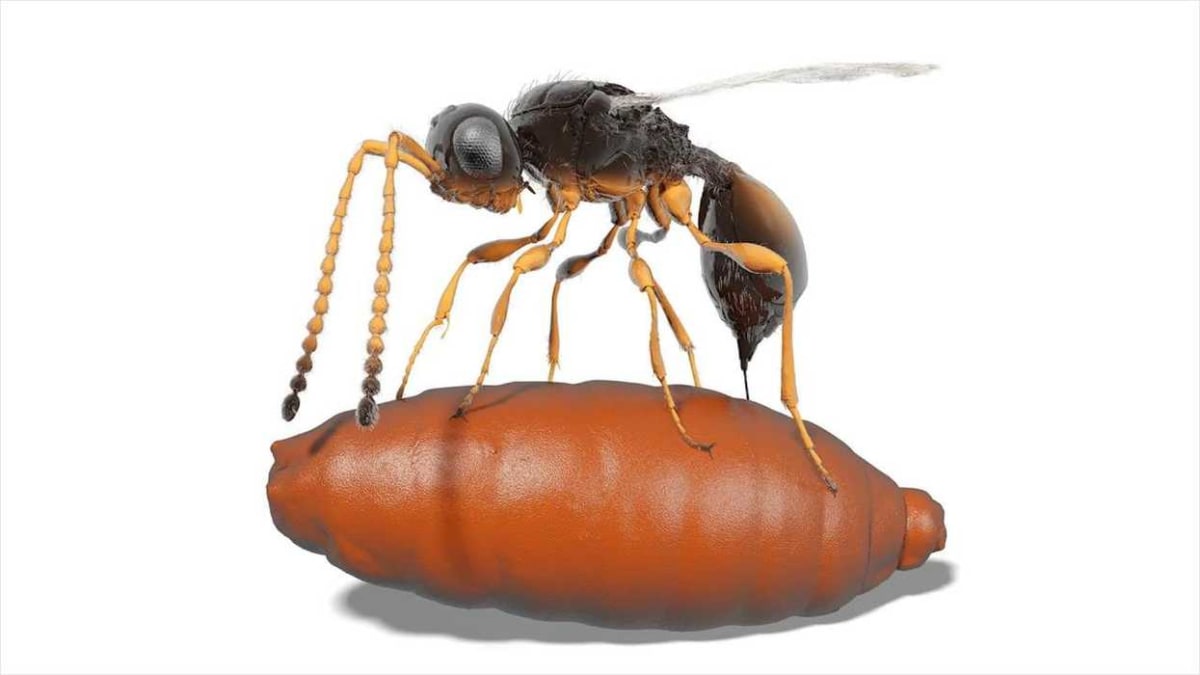
Researchers discovered 16 specimens of a new wasp species called Sirenobethylus charybdis encased in 99-million-year-old tree resin from Myanmar. When wasp expert Lars Vilhelmsen first examined the fossils at Denmark's Natural History Museum, he thought a strange bulge at the tip of the abdomen was just an air bubble.
But looking at more specimens revealed something extraordinary. The structure wasn't a bubble at all but a movable part of the wasp's body that could open and close like jaws.
"There's no real analog within insects," Vilhelmsen explained. "We had to go all the way out of the animal kingdom into the plant kingdom to find something that remotely resembled this."
The wasps likely used their tiny Venus flytrap to grab flying insects similar in size to themselves. But they didn't kill their catch right away. Instead, they injected eggs into the unfortunate host and released it, turning the living insect into an unwitting nursery for baby wasps.
This behavior differs from modern parasitoid wasps like cuckoo wasps, which lay eggs in other species' nests. The Cretaceous wasp's spring-loaded trap represents something completely unique in the insect world.
The Bright Side
Finding creatures this unusual shows how much wonder still hides in ancient amber. Phil Barden, a professor at the New Jersey Institute of Technology, calls these discoveries "Cretaceous weirdos" because they had adaptations beyond anything alive today.
"Even with around a million known insect species and all of that living diversity, there are still lots of unexpected surprises in the fossil record that are beyond imagination," Barden said. The fossil record keeps revealing that life has experimented with solutions we've never dreamed of.
Amber preservation gives scientists an incredible window into ancient ecosystems. The tree resin captured these tiny wasps in perfect detail 99 million years ago, preserving soft tissues and movable parts that normally disappear from fossils.
The discovery reminds us that nature's creativity knows no bounds, and there are still countless mysteries waiting to be uncovered in ancient amber deposits around the world.
More Images


Based on reporting by Google News - Scientists Discover
This story was written by BrightWire based on verified news reports.
Spread the positivity!
Share this good news with someone who needs it