Ancient Humans Built Wood Structure 476,000 Years Ago
Nearly half a million years ago, ancient humans in Zambia fitted large logs together to build a structure—long before our species even existed. The discovery rewrites what we thought possible in the Stone Age.
Ancient humans were shaping, joining, and building with wood nearly half a million years ago, challenging everything we thought we knew about early human life.
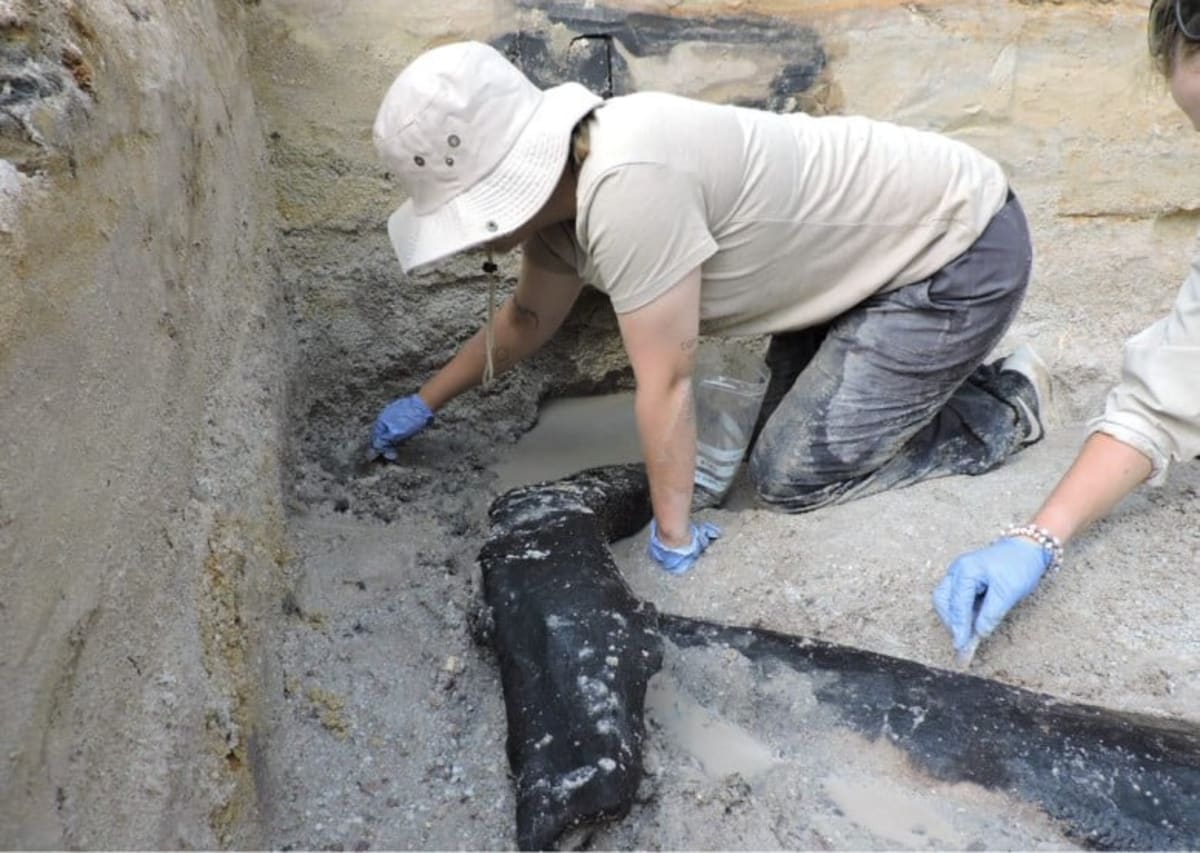
At Kalambo Falls in Zambia, archaeologists discovered a wooden structure dated to at least 476,000 years ago. That's more than 150,000 years before Homo sapiens even evolved.
The builders carefully shaped two large logs using stone tools and fitted them together, possibly creating a platform, walkway, or raised working area. Stone tool cut marks show they deliberately crafted the wood to make the pieces connect.
"This find has changed how I think about our early ancestors," said Larry Barham from the University of Liverpool. "Forget the label 'Stone Age,' look at what these people were doing: they made something new, and large, from wood."
Wood rarely survives this long because it rots away, but the permanently high water levels at Kalambo Falls preserved this precious glimpse into the past. Scientists used luminescence dating, which measures when sand minerals were last exposed to sunlight, to determine the structure's age.
The discovery turned up alongside four wooden tools, including a wedge, dated to 324,000 years old. Nobody knows which ancient human species created these items, but whoever they were possessed sophisticated thinking skills.
The Ripple Effect
Since the Kalambo discovery, more wooden artifacts keep appearing. Researchers found 35 worked wooden objects in China dating back 361,000 to 250,000 years, including digging sticks for harvesting roots and tubers.
In Greece, archaeologists described two wooden tools from 430,000 years ago, making them the oldest known handheld wooden implements. One may have stripped bark or dug into soil.
Together, these sites suggest early humans didn't just live in a Stone Age. They lived in a Wood Age too, one that mostly vanished through decay but was just as important to their daily lives.
The findings also challenge old assumptions about Stone Age mobility. At Kalambo, people stayed long enough and returned often enough to plan and complete a major construction project requiring tools, teamwork, and considerable effort.
They had reliable access to water, woodland, and food at the falls, which sits above a 235-meter waterfall on the Zambia-Tanzania border. The site is now a candidate for UNESCO World Heritage status.
These ancient builders selected suitable materials, shaped heavy timbers, and solved practical engineering problems. Their intelligence and imagination created something entirely new, proving that innovation runs deeper in human history than we ever imagined.
Based on reporting by Google: archaeological discovery
This story was written by BrightWire based on verified news reports.
Spread the positivity!
Share this good news with someone who needs it