AI Database Now Predicts How 1.7M Proteins Work Together
The AlphaFold protein database just added predictions for how proteins pair up, a breakthrough that helps scientists understand how life actually works at the molecular level. The freely available tool now includes 1.7 million protein partnerships across 20 key species.
Scientists just unlocked a crucial missing piece in understanding how life works at its smallest scale.
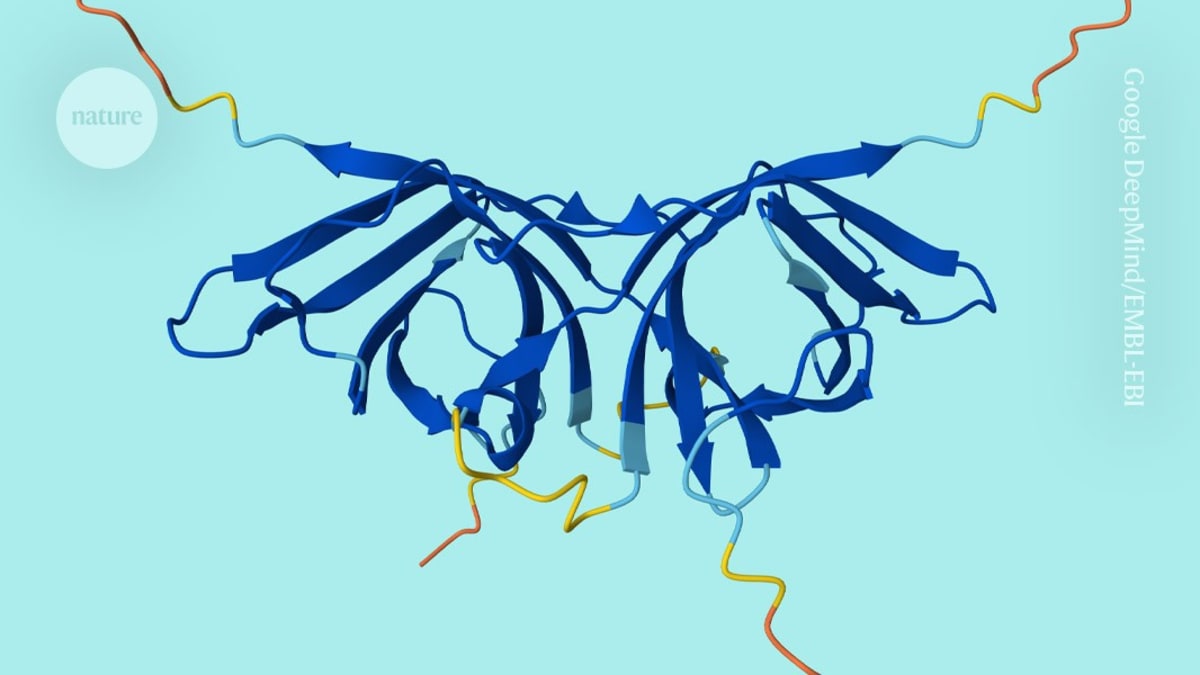
The AlphaFold database, which already contains predictions for 200 million individual protein structures, now includes 1.7 million "homodimers." These are pairs of identical proteins that work together to perform essential functions in living cells.
Think of it like finally seeing how LEGO pieces connect instead of just looking at individual bricks. Many proteins need a partner to do their job, and until now, that information was missing from this revolutionary tool.
"We thought, 'can we bring the AlphaFold database to the next level?'" says Martin Steinegger, a computational biologist at Seoul National University who helped lead the effort.
The upgrade matters because some of biology's most important players only function as pairs. HIV-1 protease, a critical target for AIDS drugs, only becomes an active enzyme when two copies join together. Understanding these partnerships is essential for developing new medicines.
A consortium including Google DeepMind, the European Bioinformatics Institute, and chipmaker NVIDIA tackled the challenge together. Predicting how proteins pair up requires massive computing power, far more intensive than predicting individual structures.
The new predictions cover 20 of the most studied species, including humans, mice, yeast, and bacteria that cause diseases like tuberculosis. Researchers worldwide can access all of it for free.
Why This Inspires
Since launching in 2021, AlphaFold has become the go-to resource for scientists trying to decode life at the molecular level. It's already accelerated drug discovery and helped researchers understand diseases faster than ever before.
Now, by showing how proteins partner up, the tool becomes even more powerful for developing new treatments. Scientists can see not just what proteins look like, but how they actually work together to keep cells healthy or contribute to disease.
The collaboration itself shows what's possible when tech companies, universities, and research institutes pool their resources for the public good. Instead of keeping discoveries private, they're making cutting-edge AI tools freely available to scientists everywhere.
This next-level upgrade means researchers fighting diseases, developing new drugs, or simply trying to understand how life functions now have an even better map to guide their work.
More Images



Based on reporting by Google News - Science
This story was written by BrightWire based on verified news reports.
Spread the positivity!
Share this good news with someone who needs it