AI Finds 1,400 Hidden Cosmic Wonders in Hubble Archive
Scientists used AI to scan 35 years of Hubble images and discovered nearly 1,400 never-before-seen cosmic objects in just three days. The breakthrough shows how smart technology can help us unlock mysteries hiding in plain sight.
Buried in decades of Hubble Space Telescope photos, 1,400 cosmic treasures were waiting to be found.
Two researchers from the European Space Agency just uncovered them using artificial intelligence that scanned through almost 100 million images in just three days. David O'Ryan and Pablo Gómez from the European Space Astronomy Centre in Madrid used a tool called AnomalyMatch to search where human eyes simply couldn't keep up.
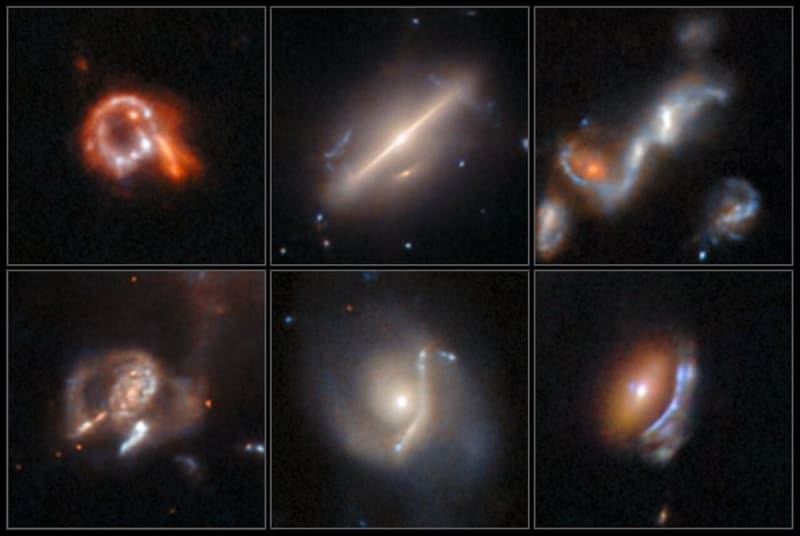
The haul is remarkable. Among the discoveries are 86 new gravitational lenses, which act like cosmic magnifying glasses that bring distant galaxies into view. The AI also spotted 417 colliding galaxies, 35 jellyfish galaxies with glowing tails of star formation, and several strange ring-shaped galaxies that don't fit any known category.
One particularly puzzling find is a bipolar galaxy with a swirling core and mysterious open lobes on each side. Scientists aren't yet sure what type of galaxy it is or how it formed. It's exactly the kind of oddball object that could teach us something new about how the universe works.
The Hubble Legacy Archive stretches back 35 years and keeps growing. Modern telescopes like the James Webb Space Telescope add 57 gigabytes of data every single day, and the upcoming Vera Rubin Observatory will generate 20 terabytes each night. Human astronomers simply can't review it all manually anymore.
That's where this friendly kind of AI comes in. Unlike the controversial language models making headlines, AnomalyMatch is a specialized neural network designed for one job: finding needles in cosmic haystacks. It narrowed 100 million images down to about 1,400 candidates that O'Ryan and Gómez could review by hand.
The best part? More than 800 of these objects have never been documented before. They were always there in publicly available photos, just waiting for the right tool to notice them.
Why This Inspires
This discovery reminds us that we're still at the beginning of understanding our universe. Thirty-five years of careful observations held secrets no one had spotted until now. The same technology that worries us in some contexts can also reveal wonders we'd otherwise miss.
Gravitational lenses help scientists study dark matter and test Einstein's theories. Merging galaxies show us how cosmic structures evolve. Each strange object teaches us something new about the forces shaping space. And there are likely thousands more anomalies still hiding in our archives, waiting for their moment of discovery.
The universe keeps surprising us, and now we have tools that can help us catch what we've been missing.
Based on reporting by Google News - Researchers Find
This story was written by BrightWire based on verified news reports.
Spread the positivity!
Share this good news with someone who needs it