AI Finds 800 Hidden Cosmic Wonders in Old Hubble Photos
Artificial intelligence scanned 35 years of Hubble telescope images and discovered more than 800 cosmic objects no human had ever seen. What took just two and a half days would have taken researchers years to accomplish.
Scientists just unlocked a treasure trove of cosmic secrets hiding in plain sight for over three decades.
Researchers at the European Space Agency built an AI tool that analyzed nearly 100 million images from the Hubble Space Telescope archive. The AI worked through 35 years of space photos in just two and a half days, a task that would have taken human teams exponentially longer to complete.
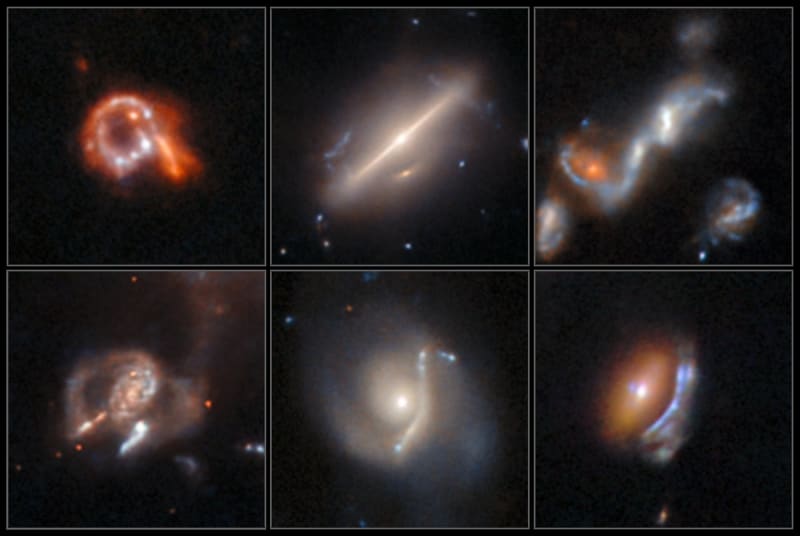
The digital detective work paid off spectacularly. The AI identified more than 1,300 unusual cosmic objects, including galaxy mergers, jellyfish galaxies with trailing tentacles of gas, and gravitational lenses where massive objects bend light from distant sources.
Of all the discoveries, about 800 had never been described before. These cosmic anomalies were there all along, waiting patiently in the archive while human eyes simply couldn't process the mountain of data fast enough.
The findings appeared in the journal Astronomy & Astrophysics last month. The AI didn't just speed up existing research methods but opened entirely new possibilities for exploring space.
Why This Inspires
This breakthrough shows how technology can amplify human curiosity rather than replace it. The AI didn't dream up these discoveries on its own but served as a powerful tool that let scientists see farther and deeper into data they already had.
ESA data scientist Pablo Gómez noted the approach offers a model for exploring other space science archives. Decades of telescope observations sit in databases around the world, each potentially hiding cosmic wonders we haven't had time to find.
The discovery also reminds us that the universe keeps surprising us. We think we've catalogued what's out there, but with better tools and fresh perspectives, we find that space still holds countless secrets.
These 800 newly identified objects aren't just numbers in a database but real phenomena that expand our understanding of how galaxies form, merge, and evolve across billions of years.
The same AI approach could soon reveal hidden patterns in data from the James Webb Space Telescope and other observatories, accelerating discoveries that help us understand our place in the cosmos.
More Images



Based on reporting by Scientific American
This story was written by BrightWire based on verified news reports.
Spread the positivity!
Share this good news with someone who needs it