AI Lab Accelerates LED Breakthrough in Just 5 Hours
Scientists who spent years developing a way to steer LED light just watched artificial intelligence improve their best results fourfold in five hours. The self-driving lab at Sandia National Laboratories shows how AI can speed up discoveries while keeping human understanding at the center.
What took years of careful lab work just got accomplished in an afternoon coffee break.
Physicists at Sandia National Laboratories in Albuquerque made headlines in 2023 when they discovered how to steer LED light, a breakthrough that could eventually replace expensive lasers with cheaper, more efficient LEDs in everything from grocery store scanners to self-driving cars. They figured refining their technique would take years of painstaking experiments. Then they let AI try.
A trio of artificial intelligence systems improved their best results by four times in about five hours.
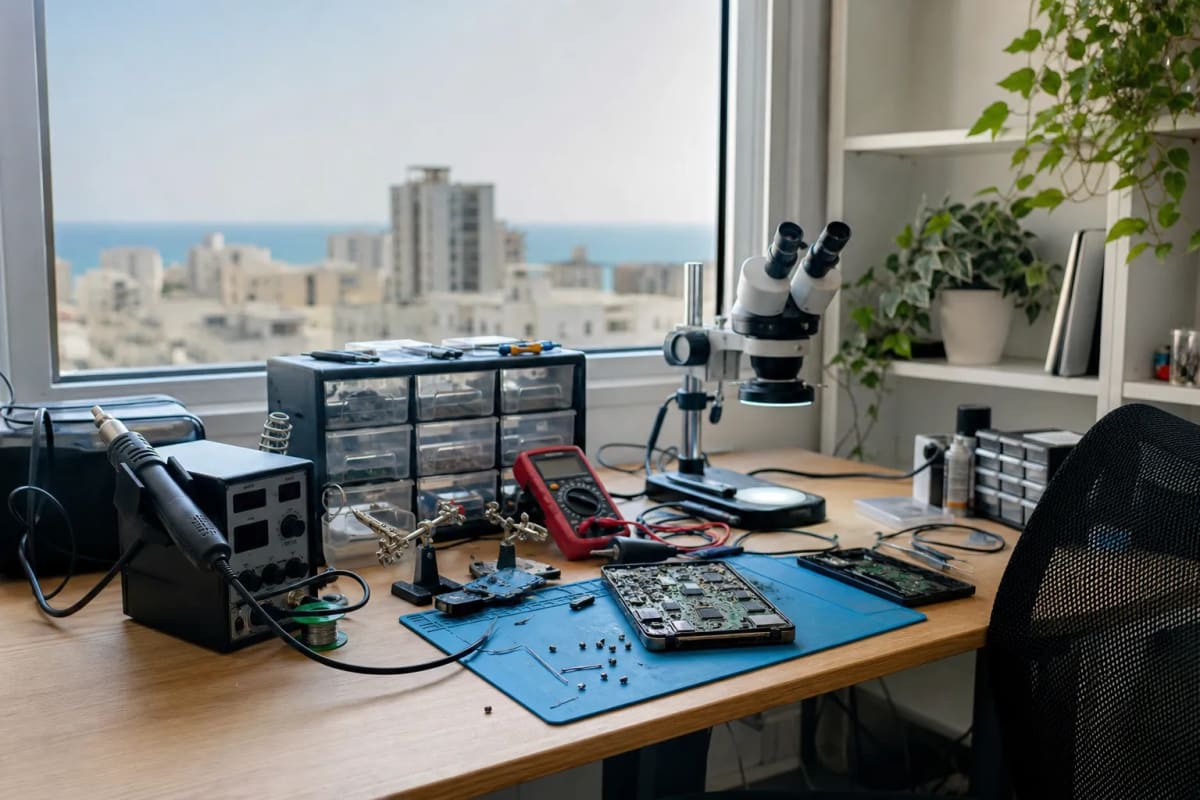
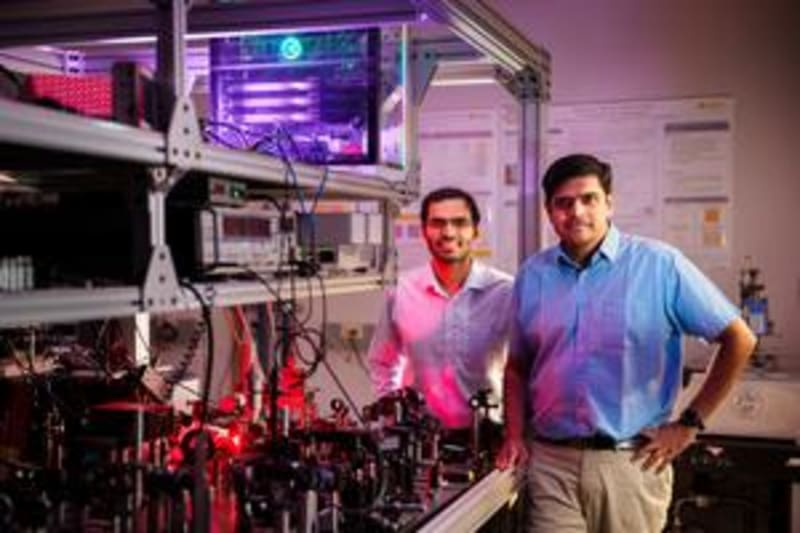
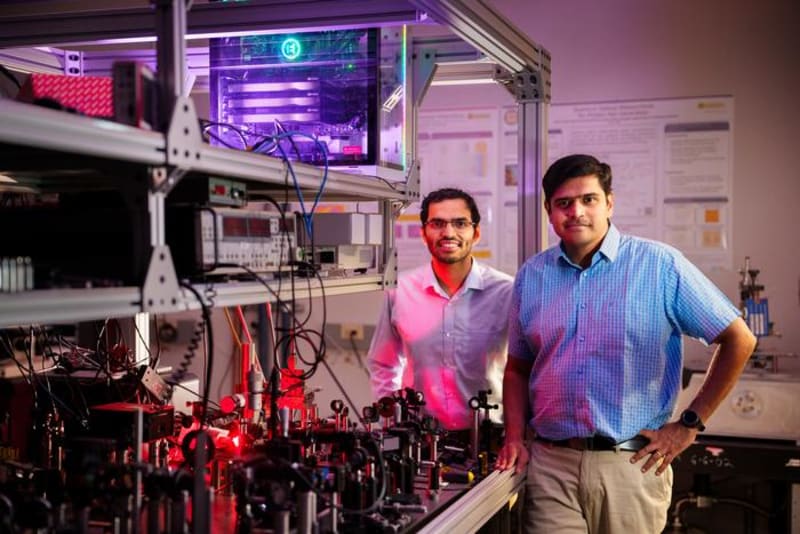
The collaboration started with a lucky office pairing. Prasad Iyer, an optics expert, got a new officemate in Saaketh Desai, a postdoctoral researcher who specialized in machine learning. Together, they transformed Iyer's traditional lab into what they call a self-driving lab.
Their AI team had three members, each with a specific job. The first AI learned and simplified their complex data. The second designed experiments, ran them on actual lab equipment, analyzed results, and then created new experiments based on what it learned. After 300 experiments over five hours, it had dramatically improved what the human team spent years developing.
But here's where it gets really interesting. Scientists don't just need answers. They need to understand why those answers work so other researchers can build on or challenge the findings.
AI has what experts call a black box problem. You ask a question, get an answer, but often can't figure out how the AI reached its conclusion. That's not good enough for science.
Why This Inspires
Desai and Iyer solved this by adding a third AI as a fact-checker. This one created equations to explain the data trends the second AI discovered. Working together, the two AIs generated both new results and mathematical formulas explaining exactly how they achieved them.
The outcome was remarkable. The AI found a way to steer spontaneous emission (the kind of light LEDs produce) 2.2 times more effectively on average than the researchers had previously managed, with some angles showing fourfold improvement. Even better, it accomplished this using a fundamentally new approach the human team had never considered, revealing fresh insights into how light and materials interact at the nanoscale.
The research, published in Nature Communications, was funded by the Department of Energy and performed at the Center for Integrated Nanotechnologies.
Desai acknowledges their setup requires significant computing power that not every lab can access. He used a workstation with three high-end GPUs to make it work. But he's excited about what comes next, exploring how this approach might solve other material science challenges while keeping human understanding central to every discovery.
Science just got a powerful new teammate that works at lightning speed without pushing humans out of the equation.
More Images
Based on reporting by Google: scientific discovery
This story was written by BrightWire based on verified news reports.
Spread the positivity!
Share this good news with someone who needs it