AI Maps Every Possible Human Gene Mutation for Free
Google DeepMind just released a free atlas predicting the effects of 9 billion possible genetic mutations, giving doctors and researchers a powerful new tool to diagnose rare diseases and understand how our DNA works.
Scientists can now see what every possible change to human DNA might do to our bodies, thanks to a groundbreaking new tool from Google DeepMind.
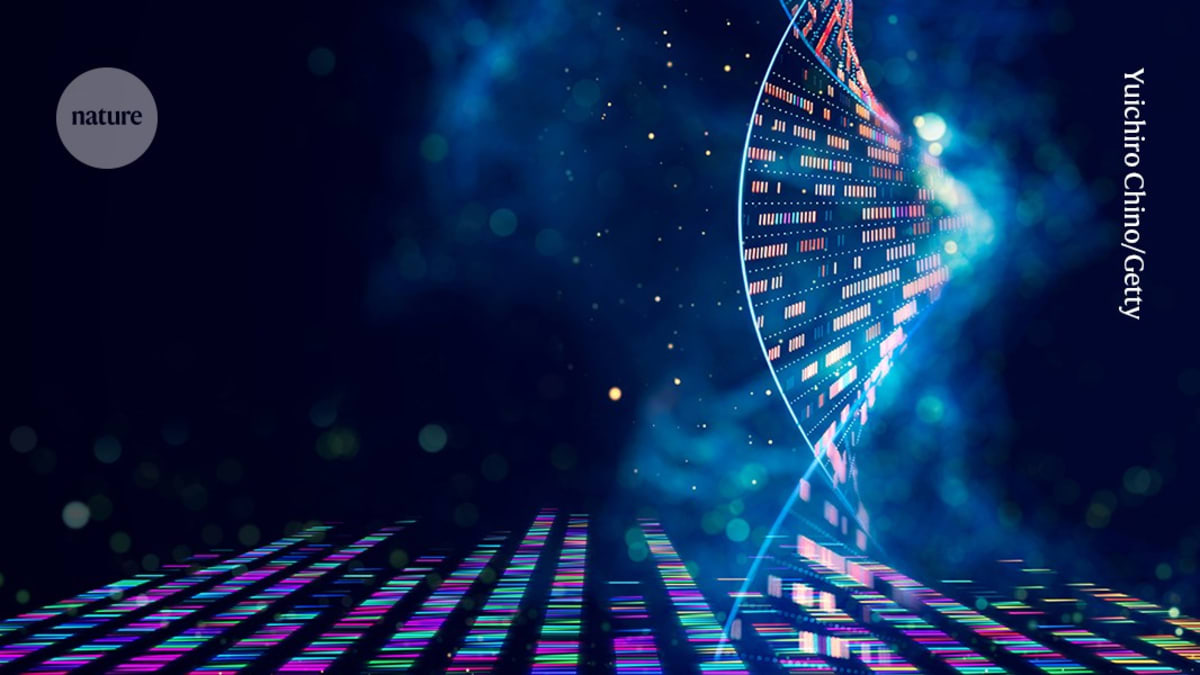
The AlphaGenome Atlas maps all 9 billion possible single-letter changes to the human genome using artificial intelligence. It's like having a complete guidebook to our genetic code, available free for researchers worldwide.
Understanding our DNA has always been incredibly challenging. Only 2% of our 3 billion genetic letters actually encode proteins, and the rest has been stubbornly difficult to decode.
The new atlas removes a major barrier that researchers faced. While 9,000 scientists have already used DeepMind's AlphaGenome AI model since last year, accessing it required writing complex software code that many biologists couldn't handle.
Now anyone can instantly look up how a genetic variant might affect the body. The atlas provides a simple score showing whether a mutation matters, plus detailed predictions about how it could change gene expression in different tissues.
The tool has already proven its worth in real cases. Researchers at the Broad Institute used it to identify a likely cause of severe epilepsy in a patient, pinpointing a variant outside the protein-coding regions that doctors usually focus on.
Martin Kircher, a bioinformatician in Berlin, calls it "a useful and generous way to scale up access to a strong model." He emphasizes it won't replace careful experiments or detailed case analysis, but it gives doctors and researchers a powerful starting point.
The atlas required computing 1 petabyte of data, covering every possible three-letter change across the entire human genome plus over 100 million short insertions and deletions found in real human genomes.
The Ripple Effect
Beyond diagnosing rare diseases, the atlas is helping scientists crack the hidden rules of DNA. Researchers are using it to map thousands of short DNA sequences called motifs that control when and where genes turn on or off.
Julia Zeitlinger, a molecular biologist in Kansas City, describes the work as creating "a searchable dictionary for non-coding DNA." This could unlock understanding of common diseases and biological traits that have puzzled scientists for decades.
The inspiration came from DeepMind's earlier AlphaFold database, which predicted structures for over 200 million proteins and has been accessed by millions of users worldwide. Removing technical barriers, the team found, sparks curiosity and accelerates discovery.
The entire medical research community now has instant access to predictions that would have taken individual labs years to compute on their own.
More Images



Based on reporting by Google News - Business
This story was written by BrightWire based on verified news reports.
Spread the positivity!
Share this good news with someone who needs it