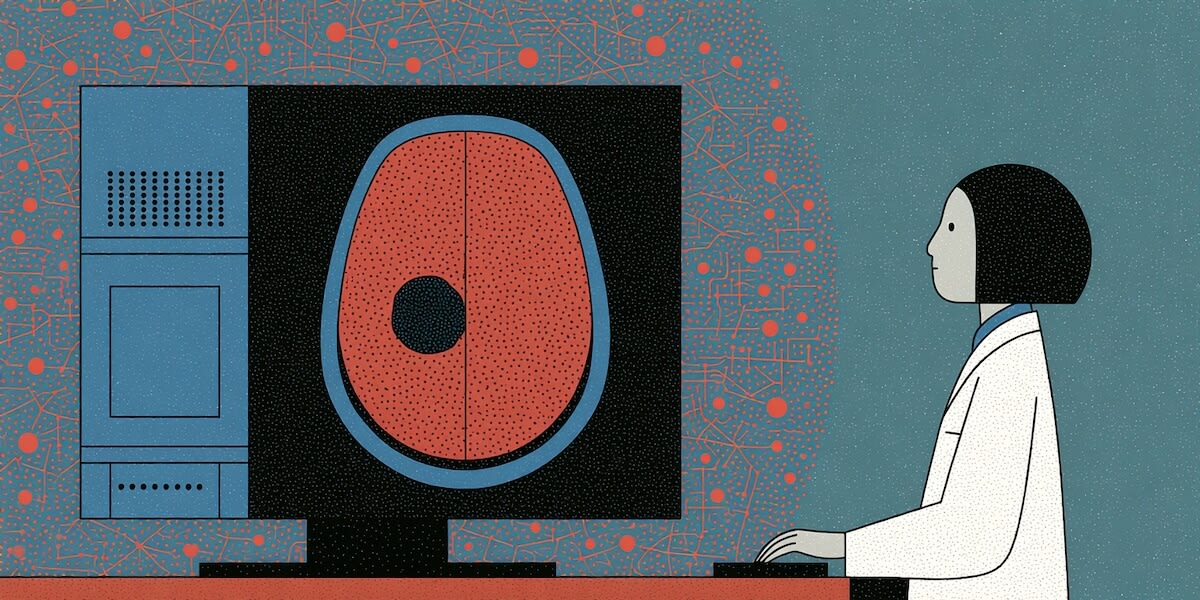
AI Model Helps Scientists Predict ALS Progression Patterns
Researchers developed an AI model that predicts how ALS affects the nervous system, potentially reducing the need for animal testing while speeding up treatment discoveries. The breakthrough combines computer simulations with real-world biology to guide more precise research.
Scientists just took a major step forward in understanding ALS, and it could change how we research treatments for this devastating disease.
Researchers from the University of St Andrews, University of Copenhagen, and Drexel University created AI models that predict how neural networks break down in people with amyotrophic lateral sclerosis (ALS). The models work like digital versions of our nervous system, calculating how nerve cells communicate and what happens when disease strikes.
ALS affects about two out of every 100,000 people worldwide each year. In Scotland alone, approximately 200 people receive this diagnosis annually. The disease typically starts in the spinal cord, causing muscle weakness, stiffness, and cramps as motor neurons gradually die.
Traditional ALS research relies heavily on genetically modified mice, observing specific moments in disease progression. But these studies face limitations: they're expensive, time-consuming, and can only capture snapshots of what's happening. Animal models also involve countless variables that make isolating specific factors nearly impossible.
The new computational models fill in the gaps. Unlike the AI that unlocks your phone or powers ChatGPT, these networks mimic real nerve cells, communicating through electrical spikes just like neurons in our bodies. They're built on actual biological data about which cells exist in the spinal cord and how they connect.
Dr. Beck Strohmer explains that the team models disease by removing neurons from affected areas and reducing connections between them, just as ALS does in real life. The same approach works in reverse: researchers can test treatment strategies by saving neurons or strengthening communication pathways in the model.
The real excitement came when predictions matched reality. The model suggested a specific treatment would save certain neurons, and when researchers tested this on mice, they found the same results. This kind of validation shows these digital tools can guide real-world experiments effectively.
Why This Inspires
This breakthrough means researchers can run countless experiments on computers before involving a single animal. They can test different treatments, adjust variables, and predict outcomes in hours instead of months. When they do move to animal testing, they know exactly where and when to look for changes, making studies more focused and humane.
The technology also offers something money can't buy: the ability to watch disease progression continuously, not just at specific checkpoints. Scientists can now observe what happens between those crucial moments, understanding ALS in far greater detail than ever before.
Dr. Ilary Alodi's team is already expanding this approach to study brain changes in dementia, opening new frontiers in neurological research. What started as an ALS project could revolutionize how we understand and treat multiple brain diseases.
The path to better treatments just got clearer, faster, and more compassionate.
More Images



Based on reporting by Medical Xpress
This story was written by BrightWire based on verified news reports.
Spread the positivity!
Share this good news with someone who needs it