New Liver Chip Could Save Years in Drug Testing
Scientists at Texas A&M have created a "liver-on-a-chip" device that predicts drug side effects better than traditional animal testing. This breakthrough could help safe medications reach patients faster while reducing the need for animal experiments.
Every year, promising new medications fail in human trials because researchers couldn't predict how they'd affect the liver, even after years of animal testing. Now, a tiny chip no bigger than a credit card might change everything about how we test drug safety.
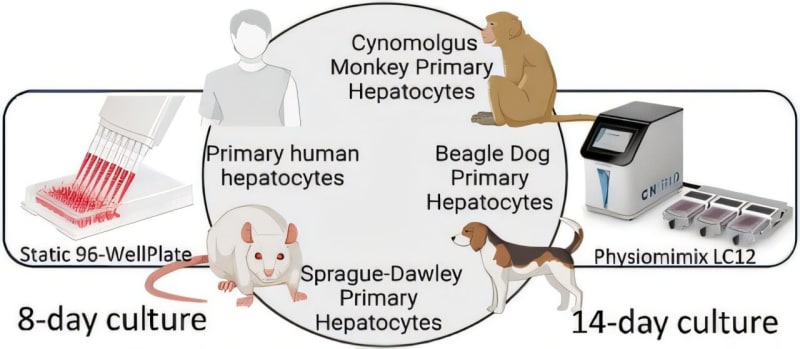
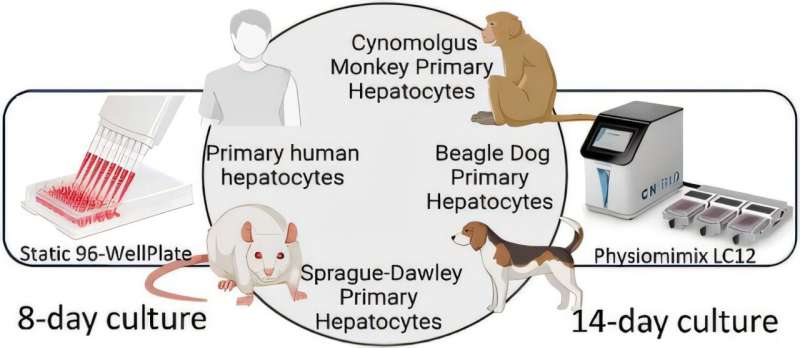
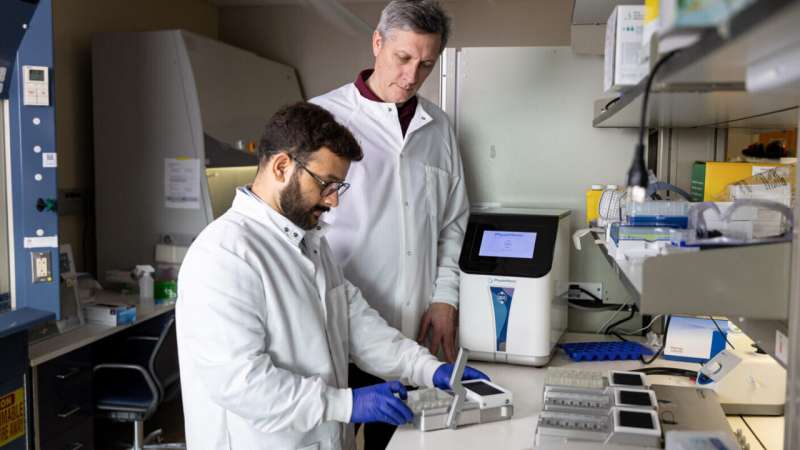
Dr. Chander Negi and Dr. Ivan Rusyn at Texas A&M University have proven that their "liver-on-a-chip" technology outperforms traditional testing methods. The device, called the PhysioMimix LC12, creates a miniature working liver that behaves remarkably like the real thing.
The chip contains 12 tiny wells where human liver cells live and work together, just as they would inside your body. Unlike cells in a dish, which scientists have relied on for decades, these cells receive a constant flow of nutrients and interact with each other naturally. They stay healthy and functional for up to two weeks, giving researchers time to spot problems that might take days to emerge.
When the team tested three drugs known to affect different species in different ways, the chip nailed it. It accurately predicted which drugs would harm humans versus animals, something that's been a major challenge in medical research for generations.
Here's why that matters. Drug-induced liver injury is one of the top reasons promising medications never reach patients who need them. The anatomical differences between human livers and animal livers often lead researchers astray, wasting years of work and billions of dollars.
The new system lets scientists sample and analyze the same chip multiple times over days, tracking exactly how a drug affects liver cells over time. This kind of detailed, long-term observation was nearly impossible with old methods.
The Ripple Effect
Beyond faster, more accurate drug development, this technology could dramatically reduce the number of animals used in medical research. The system works with liver cells from humans, monkeys, rats, and dogs, helping researchers understand species differences without extensive animal testing.
While the device costs more upfront than traditional cell cultures, it could save pharmaceutical companies millions by catching liver problems early. That means fewer failed clinical trials and potentially life-saving medications reaching patients years sooner.
The technology isn't perfect yet. It can't process as many samples as some researchers would like, and higher-capacity versions are still in development. But the accuracy improvements make it worth the investment for many research teams.
The study, published in ACS Pharmacology & Translational Science, has caught the attention of the pharmaceutical industry. Companies are watching closely as this technology proves itself capable of solving one of drug development's oldest problems.
For patients waiting for new treatments, this innovation represents genuine hope that tomorrow's medications will be safer, more effective, and available sooner.
More Images
Based on reporting by Medical Xpress
This story was written by BrightWire based on verified news reports.
Spread the positivity!
Share this good news with someone who needs it