AI Predicts Deadly Storms 4 Hours Early, 15% More Accurate
Scientists in Hong Kong just cracked a problem that's stumped forecasters for decades: predicting dangerous thunderstorms hours before they strike. Their new AI system gives communities four precious hours to prepare for life-threatening weather.
Communities across Asia now have a fighting chance against deadly storms that appear with little warning.
Researchers at Hong Kong University of Science and Technology developed an AI system that predicts severe thunderstorms, flash floods, and extreme rainfall up to four hours before they hit. That's a game changer when most current systems can only forecast these events 20 minutes to two hours ahead.
The timing couldn't be more critical. Hong Kong issued four Black Rainstorm Warnings in just eight days last summer. Deadly floods swept through Bali, southern Thailand, and other Asian regions with minimal warning, killing dozens and destroying homes.
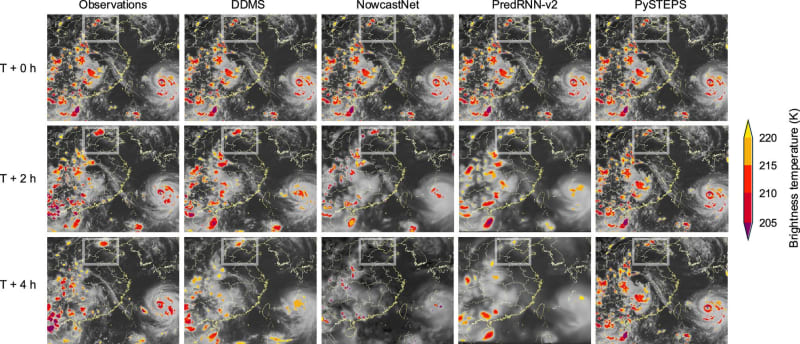
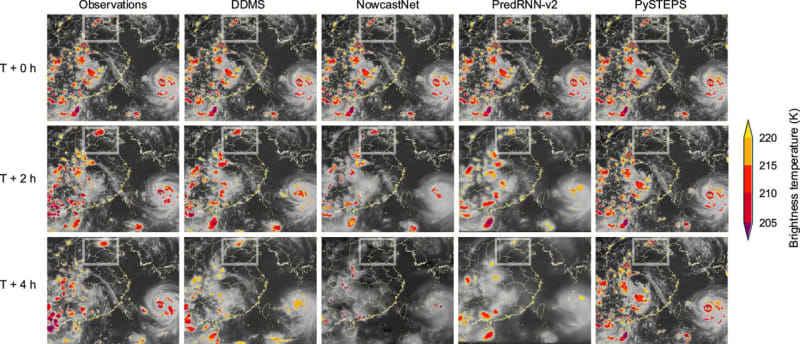
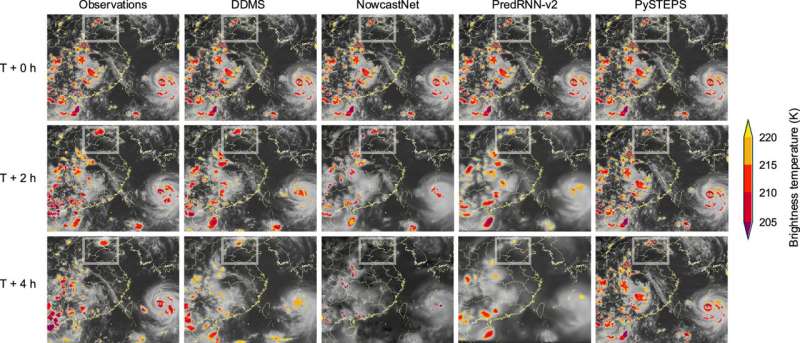
The new system, called Deep Diffusion Model of Satellite Data, improves forecast accuracy by more than 15% compared to existing technology. It analyzes data from China's FengYun 4A satellite, learning to recognize storm patterns that develop into dangerous weather.
Dr. Kuai Dai and his team trained the AI using satellite images from 2018 to 2021, teaching it to spot the warning signs hidden in cloud formations. The model updates predictions every 15 minutes, covering 20 million square kilometers across China, Korea, Southeast Asia, and surrounding waters.
Here's what makes this breakthrough special: it works best exactly when traditional forecasting fails worst. During that critical two to four hour window, the AI delivers accuracy improvements between 3% and 16%, averaging 8.26% better than conventional models.
The Ripple Effect
Four hours might not sound like much, but it's the difference between chaos and coordinated response. Emergency services can move equipment to flood-prone areas. Schools can dismiss students safely. Families in vulnerable neighborhoods have time to reach higher ground.
The system operates through the State Key Laboratory of Climate Resilience for Coastal Cities, which China's Ministry of Science and Technology approved last year specifically to tackle these challenges. Professor Hui Su, who leads the climate change research direction, collaborated with scientists from multiple Chinese meteorological institutions to make this work.
Traditional weather forecasting relies on complex mathematical equations that simulate atmospheric conditions, requiring massive computing power and extreme precision. These models struggle with rapidly developing storms because small-scale weather systems evolve faster than the equations can keep up.
The AI sidesteps this problem entirely by learning patterns directly from satellite data rather than trying to calculate every atmospheric variable. It recognizes what dangerous weather looks like as it begins forming, not after it's already developed.
The research, published in the Proceedings of the National Academy of Sciences, represents years of work bringing together satellite technology, meteorological expertise, and cutting-edge artificial intelligence. The team validated their system using data from spring and summer 2022 and 2023, proving it works reliably across different seasons.
Millions of people living in flood-prone regions now have a stronger shield against nature's fastest-moving threats.
More Images

Based on reporting by Phys.org
This story was written by BrightWire based on verified news reports.
Spread the positivity!
Share this good news with someone who needs it