
AI Slashes Fashion Waste to Zero in Cutting Process
A startup's AI software redesigns clothing patterns to eliminate the 10-15% of fabric wasted when cutting garments, potentially saving the fashion industry billions while protecting the environment. The technology works with existing factory equipment and already has partnerships with H&M and major brands.
Every time a factory cuts fabric to make your clothes, up to 15% of the material ends up swept into the trash. Those slivers around sleeves and curves add up to massive waste across billions of garments worldwide.
Shelly Xu saw a problem hiding in plain sight. Her company, Shelly Xu Design, just raised $4.5 million to solve one of fashion's most expensive and environmentally damaging issues with software that costs nothing to implement.
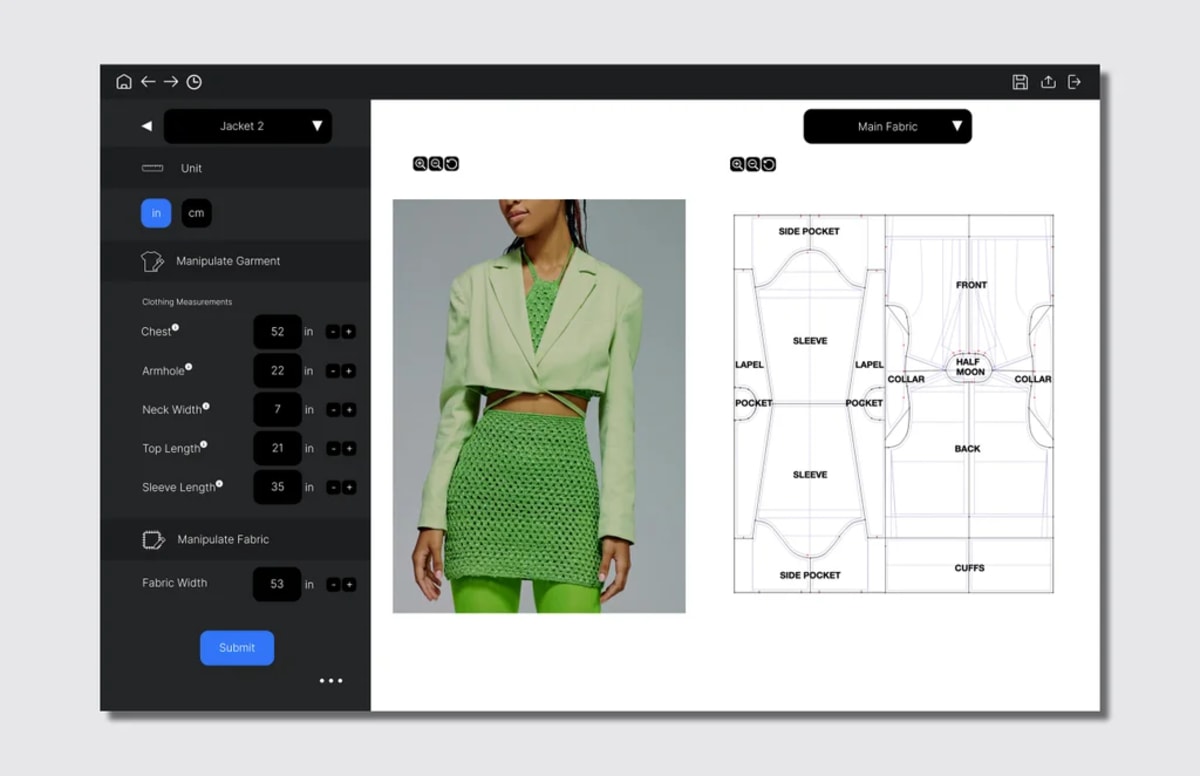
The solution sounds almost too simple. SXD's AI reimagines clothing patterns so the pieces fit together like puzzle parts, leaving zero gaps and zero waste. A factory doesn't need new equipment or training. They just cut the redesigned patterns using their existing machines.
The impact goes beyond environmental wins. Fabric makes up 70% of the cost to produce a garment. When factories stop throwing away 15% of their most expensive material, the savings flow down the entire supply chain.
SXD spent four years perfecting the technology with a 15-person team. Now they're ready to scale with partnerships that span from university bookstores to one of the world's largest record labels converting tour merchandise to zero waste production.
The European apparel group they just signed works with household names like Uniqlo and Ralph Lauren. The H&M Foundation came on board early to support the mission. These aren't pilot programs or experiments. They're multiyear commitments to transform how clothes get made.
The Ripple Effect
Think about every t-shirt, dress, and jacket produced globally each year. Between 10-15% of the fabric used to make them never reaches a customer. That waste represents not just lost money, but wasted water, energy, and carbon emissions from producing material destined for landfills.
Xu's approach works because it doesn't ask an industry to reinvent itself overnight. Factories keep their equipment, their workers, and their processes. The only change is the shape of the pattern pieces they cut. Same garment, same quality, zero waste.
The music industry partnership shows how broadly this applies. Concert merchandise produces millions of garments annually across every tour and festival. Converting that entire supply chain to zero waste production multiplies the environmental benefit exponentially.
Small changes in massive industries create outsized impact, and fashion is one of the world's largest polluters. This technology proves that solving environmental problems doesn't require sacrifice or compromise. Sometimes it just requires looking at an old problem with fresh eyes and better tools.
More Images

Based on reporting by Fast Company
This story was written by BrightWire based on verified news reports.
Spread the positivity!
Share this good news with someone who needs it


%2Ffile%2Fattachments%2Forphans%2FIMG_6399_134346.jpg)