AI Telescope Teaches Stargazers About Deep Space for $549
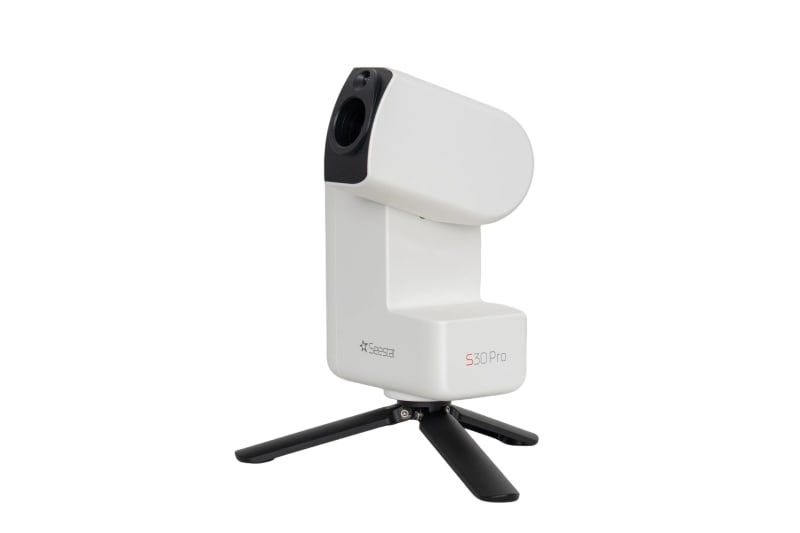
A new smart telescope uses AI to guide amateur astronomers through the night sky while automatically capturing stunning images of galaxies and nebulae. The Seestar S30 Pro makes exploring the universe as simple as pointing your phone at the stars.
Stargazing just got a whole lot easier thanks to a telescope that acts more like a knowledgeable friend than a complicated piece of equipment.
ZWO's Seestar S30 Pro combines artificial intelligence with powerful imaging technology to bring deep-sky exploration to everyone. Whether you're a curious student or a backyard astronomy enthusiast, this compact telescope handles all the technical heavy lifting while teaching you about what you're seeing in real time.
The device weighs just 3.6 pounds and pairs with your smartphone or tablet through a simple tap. Once connected, you select what you want to see, and the telescope automatically locates, tracks, and photographs distant celestial objects. No manual adjustments, no complicated star charts, no frustration.
What makes the S30 Pro special isn't just the automation. As you point it at nebulae, galaxies, or star clusters, the built-in AI describes each object, explaining what you're looking at and why it matters. It's like having an astronomy professor in your pocket, turning every stargazing session into a learning experience.
The telescope comes equipped with two Sony 4K imaging sensors that work together to capture both detailed close-ups of distant galaxies and sweeping panoramic views of the Milky Way. Its specialized lens design reduces image distortion, producing clear photos even in cities with significant light pollution. Creative modes let users automatically stitch together 8K Milky Way mosaics or capture mesmerizing star trail images with one tap.
Why This Inspires
The S30 Pro earned recognition as a CES Innovation Awards Honoree in Educational Technology for good reason. Teachers are already using it in classrooms and science clubs to make astronomy tangible for students who might never have access to traditional observatory equipment.
Public outreach programs can now host stargazing events without requiring extensive technical expertise. The six-hour battery life means long observation sessions, while 128 GB of storage ensures you won't run out of space for your cosmic captures.
At $549 during the current pre-order period (rising to $599 after), the telescope costs less than many traditional models that require far more skill to operate. It democratizes access to one of humanity's oldest pursuits, making the wonders of deep space available to anyone with curiosity and a smartphone.
The universe just became a lot more accessible to explore.
More Images


Based on reporting by New Atlas
This story was written by BrightWire based on verified news reports.
Spread the positivity!
Share this good news with someone who needs it