AI Unlocks Birdsong Secrets to Study How Brains Learn Language
Scientists created TweetyBERT, an AI that analyzes birdsong with expert-level accuracy to reveal how brains learn language. The breakthrough could help us understand everything from human speech development to how climate change affects wildlife.
A breakthrough AI tool is letting scientists decode the complex songs of canaries, opening new doors to understanding how our own brains learn and produce language.
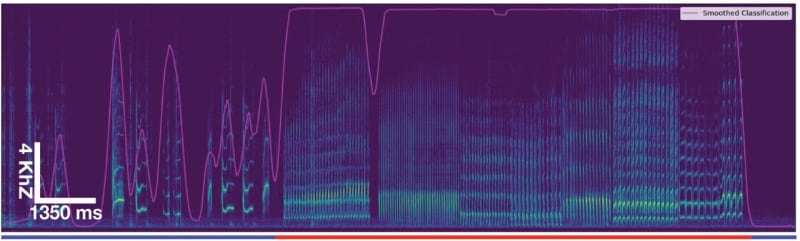
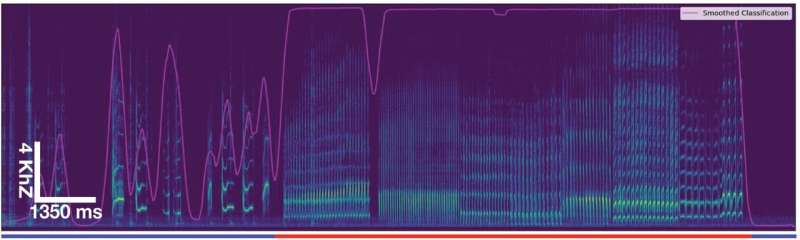
Researchers at the University of Oregon developed TweetyBERT, a machine learning model that can automatically analyze birdsong with the same accuracy as expert scientists. The tool solves a major bottleneck that has slowed neuroscience research for years.
Until now, studying how canaries learn their elaborate songs required researchers to painstakingly label every sound by hand. Canaries learn 30 to 40 distinct syllables and string them into complex sequences throughout their lives, making them perfect models for studying how brains master complicated skills like language.
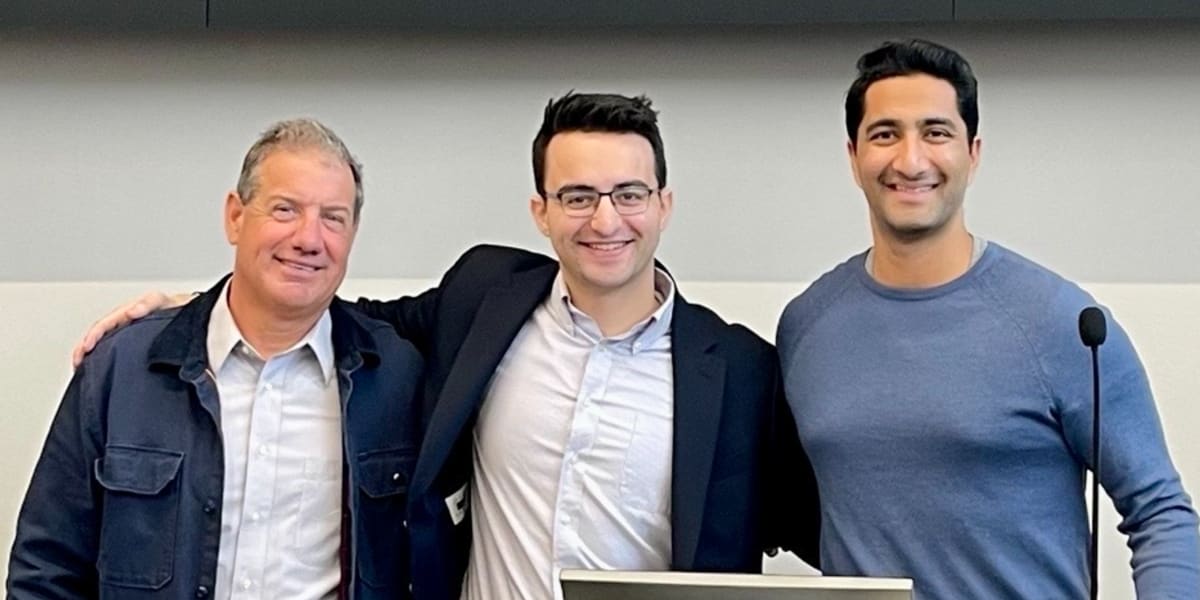
Graduate student George Vengrovski built TweetyBERT by adapting the same AI architecture that powers ChatGPT to handle the unique structure of birdsong. The self-supervised system teaches itself to identify notes, syllables, and phrases without any human instruction, processing recordings in a fraction of the time it would take a human expert.
"Current AI methods for analyzing animal vocalizations require human-labeled training data, a slow and labor-intensive process," says Tim Gardner, associate professor of bioengineering at the University of Oregon's Knight Campus. TweetyBERT changes that by learning directly from unlabeled recordings.
The Ripple Effect spreads far beyond the lab. With some modifications, TweetyBERT could monitor wild bird populations and detect changes in their vocal patterns, potentially revealing how birds respond to expanding cities and shifting climates. The same approach is already being tested on dolphins and whales, suggesting it could transform how we understand animal communication across species.
For neuroscientists, the tool offers something even more valuable: the ability to track how individual birds' songs change over time and spot subtle differences between singers. These insights could reveal the neural circuitry behind how brains learn complex behaviors, including human speech.
"We built this for canaries, but the underlying approach isn't species-specific, and the world is full of birds whose vocal behavior we're barely tracking," Gardner says. "With some modifications, the applications of TweetyBERT start to look very different."
The study appears in the journal Patterns, bringing peer-reviewed scientific rigor to a tool that could accelerate discovery across multiple fields.
What started as a solution to analyze canary songs in the lab might soon help us listen to the natural world in ways we never could before.
More Images



Based on reporting by Phys.org - Technology
This story was written by BrightWire based on verified news reports.
Spread the positivity!
Share this good news with someone who needs it