Airships May Connect 2.2 Billion People Without Internet
High-altitude airships and solar-powered aircraft could finally bring internet to 2.2 billion people in remote areas, with major tests launching this year in Japan and Indonesia. After Google's balloon project failed, new companies claim they've cracked the code with steerable designs that stay in place.
Imagine being one of 2.2 billion people who can't video chat with loved ones, access online education, or look up health information because reliable internet simply doesn't reach your home. That reality could start changing this year.
Companies are preparing to test a new wave of internet delivery systems floating 12 miles above Earth. These aren't satellites, they're solar-powered airships and aircraft that hover in the stratosphere, beaming down connectivity directly to regular smartphones in places too remote for cell towers.
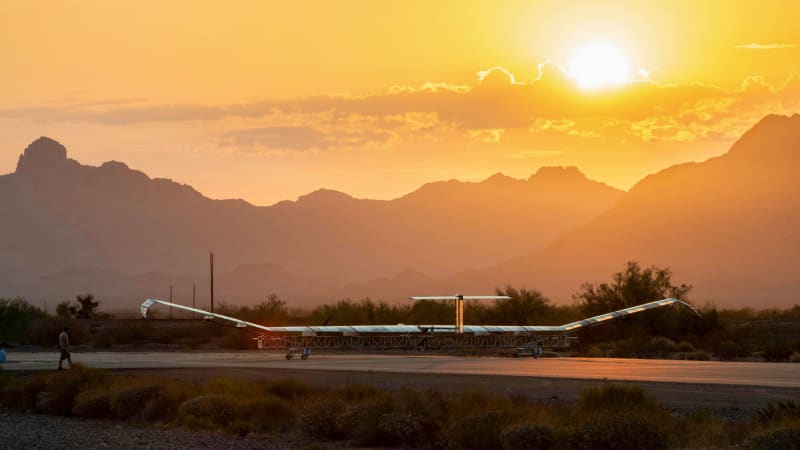
Japan will be ground zero for the first major tests. Starting in early 2026, a solar-powered aircraft called Zephyr will fly over Japan's smallest inhabited islands, bringing 5G service to communities that mobile operators often ignore because laying cables costs too much. The aircraft broke records in April 2025 by staying airborne for 67 consecutive days straight.
The approach isn't entirely new. Google tried something similar with Project Loon, launching balloons into the stratosphere in 2011. But those balloons kept drifting away with the wind, forcing Google to constantly release new ones. The project shut down in 2021 because it couldn't make economic sense.
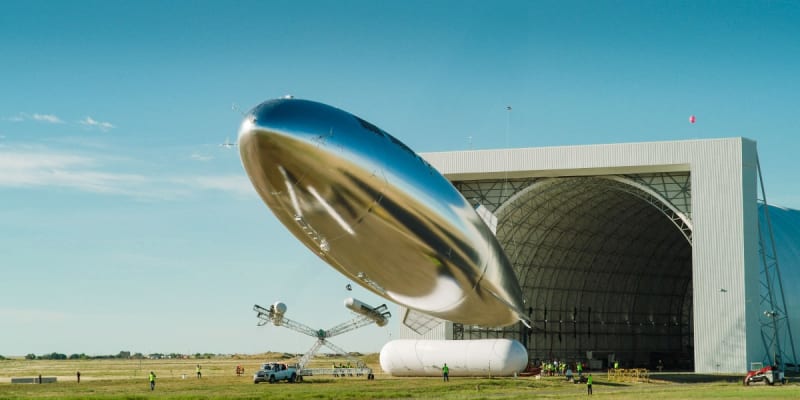
This time feels different. New Mexico-based Sceye built a 65-meter airship with intelligent controls and an electric fan that keeps it stationed over target areas. Another company, Aalto HAPS, designed aircraft with 25-meter wingspans that can hold position for months at a time. Both are partnering with major telecom companies in Japan eager to expand their networks.
For smartphone users on the ground, the experience will be seamless. They'll connect to these stratospheric platforms exactly like they connect to regular cell towers, using the same frequencies and networks. No special equipment needed.
Why This Inspires
What makes this moment special is how it tackles a problem that affects billions. In the US alone, 8 million households live completely offline. Traditional solutions like fiber-optic cables or ground-based towers cost too much in sparsely populated areas, so those communities simply get left behind.
These floating platforms change the math entirely. A single airship or aircraft can cover vast areas from its perch in the stratosphere, reaching mountainous terrain, remote islands, and scattered communities that would require dozens of expensive ground-based towers.
Japan's geography makes it the perfect testing ground. The country has roughly 430 inhabited islands, many too remote and mountainous to justify traditional infrastructure. Mobile operators there sometimes prefer paying fines rather than extending service to these areas. Now they're betting on stratospheric platforms to make rural connectivity profitable for the first time.
Indonesia will host additional tests, with companies racing to prove their technology works at scale. The US Federal Aviation Administration is already preparing regulations for how these platforms will share American airspace, signaling serious momentum behind the technology.
Some analysts remain cautious, noting that high-altitude platforms have promised connectivity breakthroughs before without delivering. But the companies involved say they've learned from past failures, building more controllable craft with better batteries and smarter navigation systems.
If these tests succeed, millions of people could gain their first reliable internet access without waiting decades for traditional infrastructure to reach them.
More Images
Based on reporting by MIT Technology Review
This story was written by BrightWire based on verified news reports.
Spread the positivity!
Share this good news with someone who needs it