Ancient Bees Built Nurseries in Fossil Teeth 20,000 Years Ago
Scientists discovered that prehistoric bees turned empty tooth sockets in mammal bones into tiny nests 20,000 years ago, revealing a survival strategy never seen before. The fossil find in a Dominican cave shows nature's remarkable creativity in action.
Twenty thousand years ago, resourceful bees discovered an unusual place to raise their young: inside the empty tooth sockets of fossilized animal bones scattered across a Caribbean cave floor.
Scientists working in a limestone cave on the island of Hispaniola made the stunning discovery while studying ancient mammal bones. The cave had been home to generations of owls that regularly coughed up pellets containing the bones of their prey, creating an accidental resource center for other creatures.
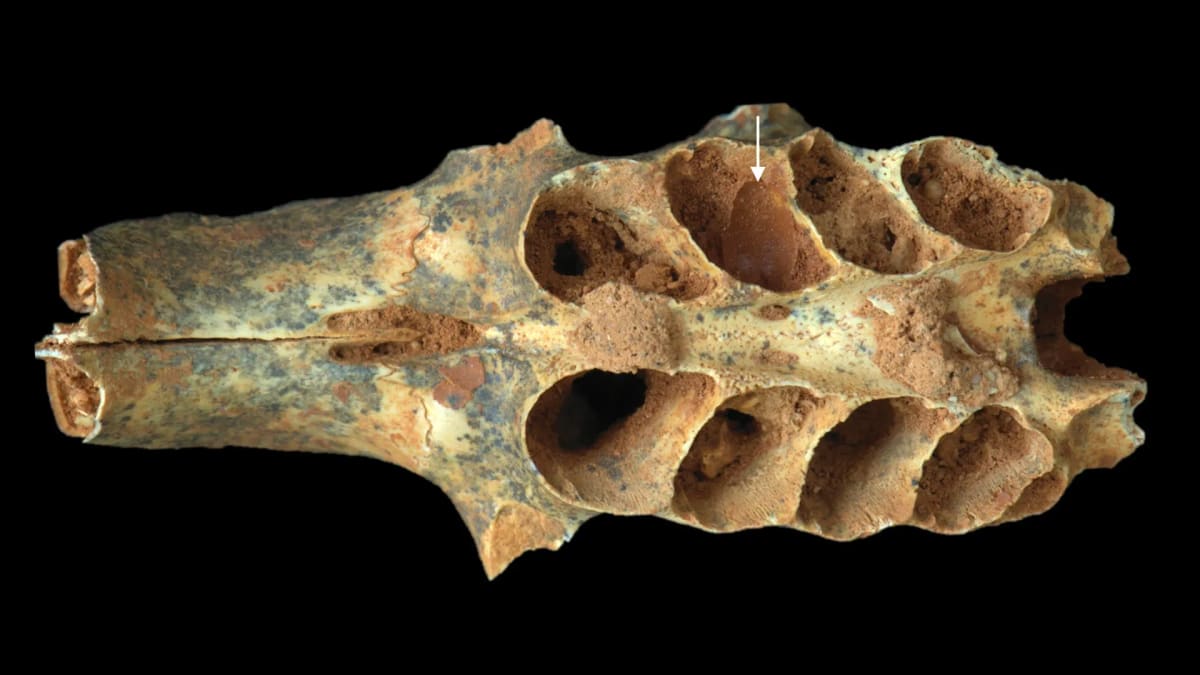
Lazaro Viñola López, a researcher at Chicago's Field Museum, noticed something odd while cleaning the fossil jawbones. Several tooth sockets contained smooth, concave deposits that looked nothing like naturally accumulated dirt.
The observation reminded him of fossilized wasp cocoons he'd seen years earlier. This time, though, the tiny chambers told a different story.
CT scans revealed that ancient bees had constructed miniature mud nests inside the hollow tooth sockets, each smaller than a pencil eraser. Some nests even preserved grains of pollen that mother bees had stored as food for their babies.
The bees likely mixed dirt with saliva to build each nest, creating a safe shelter that protected their offspring from predators like wasps. Nesting inside larger animal bones was an ingenious solution to a common problem.
Most bee species actually live alone, unlike the communal honey bees most people know. Solitary bees lay their eggs in small cavities wherever they can find them: holes in wood, burrows in the ground, or even empty snail shells in some parts of the world.
But nesting in animal bones? That had never been documented until now.
The research team couldn't find any fossilized bees in the nests, which makes sense given the cave's warm, humid conditions. Without preserved bodies, they couldn't identify the exact species responsible.
Still, the nest structures were distinctive enough to earn their own scientific name: Osnidum almontei, honoring Juan Almonte Milan, the Dominican paleontologist who first identified the fossil-rich cave.
Why This Inspires
This discovery reminds us that creativity isn't just a human trait. When faced with challenges, nature finds solutions that scientists never imagined possible.
The bees didn't have an instruction manual for building homes in bones. They simply adapted to their environment, turning leftover scraps from an owl's dinner into safe nurseries for the next generation.
Today's wild bees face habitat loss and declining nest sites, making this ancient lesson especially relevant. Understanding how bees have adapted throughout history could help conservation efforts protect the pollinators our planet depends on.
The fossil nests prove that life finds a way, even in the most unexpected places.
Based on reporting by Google: fossil discovery
This story was written by BrightWire based on verified news reports.
Spread the positivity!
Share this good news with someone who needs it