Ancient Cities Found: Lasers Reveal 60,000 Maya Structures
Laser technology has uncovered entire civilizations hidden beneath jungle canopies, revealing more than 60,000 previously unknown Maya structures in Guatemala alone. These discoveries are rewriting history books about how millions of ancient people lived, worked, and thrived.
Entire cities have been hiding in plain sight for centuries, buried under thick jungle growth across Guatemala and Cambodia.
Scientists using LiDAR technology have discovered more than 60,000 previously unknown structures in Guatemala's Maya Biosphere Reserve. These aren't scattered ruins but sprawling urban centers connected by highways, complete with pyramids, water systems, and residential neighborhoods that rival medieval European cities.
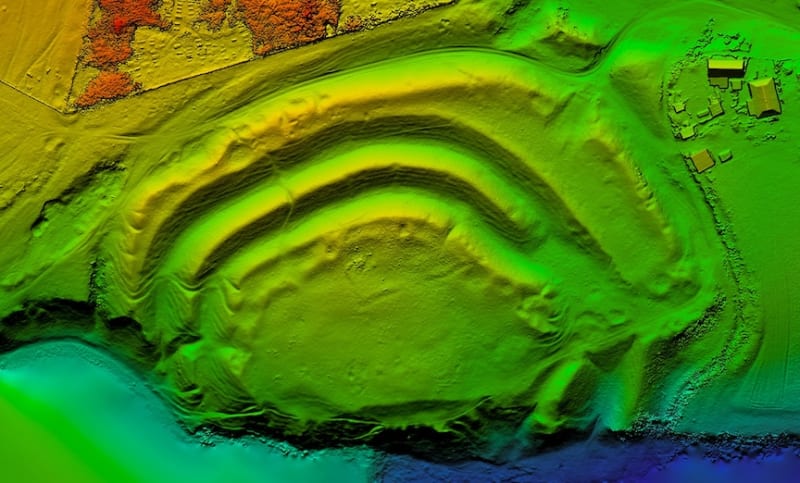
LiDAR works like X-ray vision for the ground. Aircraft fire 150,000 laser pulses per second toward the earth below, with some beams bouncing off treetops while others slip through gaps to hit the actual surface. Computer programs then strip away all the vegetation data, revealing every bump and structure hidden beneath centuries of forest growth.
The results are stunning. In 2023 alone, researchers found Ocomtún in Mexico, a previously unknown city featuring pyramids over 50 feet tall and residential areas stretching for miles. They also discovered Valeriana near a modern highway, containing 6,674 structures that nobody knew existed.
Today's systems can survey 50 square miles in a single day, work that would take ground teams years to complete. The precision reaches within four inches, detecting subtle features like ancient farming terraces and defensive walls.
The discoveries keep coming faster than researchers can investigate them. The Mirador Basin revealed 417 interconnected cities, not simple villages but genuine urban complexes with monumental architecture. Cambodia's famous Angkor Wat turned out to be just the tip of the iceberg, with LiDAR exposing over 1,000 square kilometers of hidden neighborhoods, water systems, and roads connecting dozens of temple sites.
The Ripple Effect
These findings are completely changing what historians thought they knew about ancient populations. The Maya lowlands likely housed 10 to 15 million people at their peak, roughly double previous estimates and matching the population density of medieval England.
These weren't struggling communities barely surviving in the jungle. They were sophisticated civilizations with advanced engineering, managing complex water systems that controlled flow during wet and dry seasons. They built extensive highway networks linking urban centers and developed intensive farming operations that supported millions.
The technology allows modern research teams to make smarter decisions about where to dig. With limited resources, archaeologists can now focus on sites with the highest potential rather than spending years searching blindly through dense vegetation.
Every new scan reveals more evidence of human ingenuity and resilience. Civilizations once thought lost forever are emerging from beneath the forest canopy, showing us that our ancestors accomplished far more than we ever imagined possible.
More Images
Based on reporting by Google: archaeological discovery
This story was written by BrightWire based on verified news reports.
Spread the positivity!
Share this good news with someone who needs it

%2Fhttps%3A%2F%2Ftf-cmsv2-smithsonianmag-media.s3.amazonaws.com%2Ffiler_public%2F4e%2F9f%2F4e9f0fe8-aa48-438a-b88f-3a29cd71107e%2Fhttps___wwwfrontiersinorg_files_articles_1758862_xml-images_fmats-13-1758862-g001.jpeg)
%2Fhttps%3A%2F%2Ftf-cmsv2-smithsonianmag-media.s3.amazonaws.com%2Ffiler_public%2F8e%2F83%2F8e837bc6-e2b3-4bb6-bb1c-4f1287b45a6f%2Fcastillo-39-rincon_de_los_signos.jpg)